SC Involves AG, SG in BCI Policy Decisions
SC orders involvement of top law officers, AG and SG, in policy decisions.
'%3E%3Crect%20width%3D'96'%20height%3D'96'%20fill%3D'%231A5276'%2F%3E%3Ccircle%20cx%3D'30'%20cy%3D'24'%20r%3D'44'%20fill%3D'%23fff'%20opacity%3D'.12'%2F%3E%3Ccircle%20cx%3D'60'%20cy%3D'74'%20r%3D'40'%20fill%3D'%23000'%20opacity%3D'.10'%2F%3E%3C%2Fg%3E%3Cg%20fill%3D'%23fff'%3E%3Cpath%20d%3D'M31%2041%20L48%2031%20L65%2041%20Z'%2F%3E%3Crect%20x%3D'33'%20y%3D'43'%20width%3D'4'%20height%3D'17'%2F%3E%3Crect%20x%3D'41'%20y%3D'43'%20width%3D'4'%20height%3D'17'%2F%3E%3Crect%20x%3D'51'%20y%3D'43'%20width%3D'4'%20height%3D'17'%2F%3E%3Crect%20x%3D'59'%20y%3D'43'%20width%3D'4'%20height%3D'17'%2F%3E%3Crect%20x%3D'30'%20y%3D'62'%20width%3D'36'%20height%3D'4'%20rx%3D'1'%2F%3E%3C%2Fg%3E%3C%2Fsvg%3E)
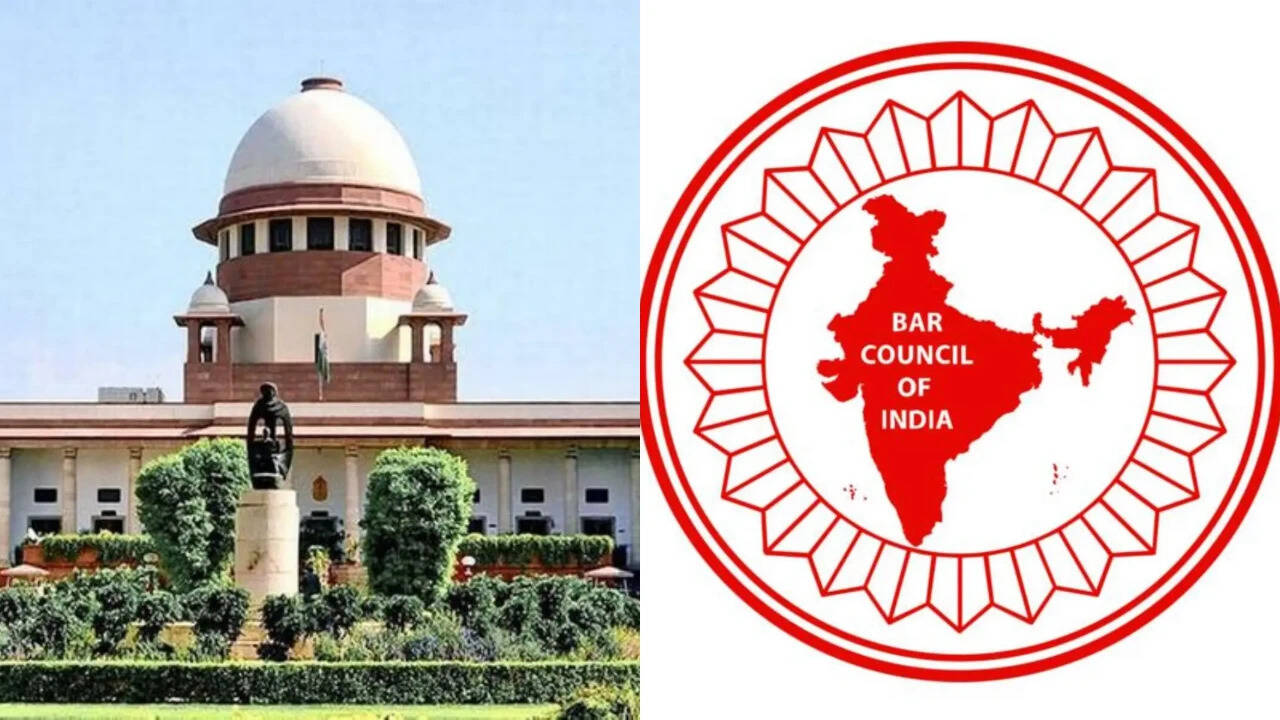
The Supreme Court has ruled that the Attorney General (AG) and Solicitor General (SG) shall be associated with every policy decision related to the tenure of the Bar Council of India (BCI) chief.
This decision aims to bring transparency and accountability to the decision-making process. The BCI is a statutory body that regulates the legal profession in India.
The Supreme Court's order is a significant development in the ongoing debate about the tenure of the BCI chief. The court's involvement of the AG and SG in policy decisions ensures that the decision-making process is fair and unbiased.
The AG and SG are the top law officers of the government, responsible for advising the government on legal matters. Their involvement in BCI policy decisions will provide an additional layer of scrutiny and oversight.
The BCI is responsible for regulating the legal profession, including the enrollment of lawyers, discipline, and ethics. The tenure of the BCI chief is a critical aspect of the organization's functioning, as it affects the stability and continuity of the organization.
The Supreme Court's order is expected to have a significant impact on the functioning of the BCI and the legal profession as a whole. It will ensure that policy decisions are made in a transparent and accountable manner, with the involvement of top law officers.
The decision is also expected to enhance the credibility of the BCI and the legal profession. The involvement of the AG and SG will provide an additional layer of scrutiny and oversight, ensuring that policy decisions are fair and unbiased.
In conclusion, the Supreme Court's order involving the AG and SG in BCI policy decisions is a significant development that aims to bring transparency and accountability to the decision-making process. It will have a positive impact on the functioning of the BCI and the legal profession as a whole.
The Supreme Court's decision highlights the importance of transparency and accountability in the decision-making process. It ensures that policy decisions are made in a fair and unbiased manner, with the involvement of top law officers.
This decision will have far-reaching implications for the legal profession and the functioning of the BCI. It will enhance the credibility of the organization and ensure that policy decisions are made in a transparent and accountable manner.
The legal profession in India will benefit from this decision, as it will ensure that the BCI functions in a fair and transparent manner. The involvement of the AG and SG will provide an additional layer of scrutiny and oversight, ensuring that policy decisions are fair and unbiased.
In the end, the Supreme Court's order is a significant step towards ensuring transparency and accountability in the decision-making process of the BCI. It will have a positive impact on the functioning of the organization and the legal profession as a whole.
What it means for India is that the legal profession will be more transparent and accountable, with the involvement of top law officers in policy decisions. This will enhance the credibility of the BCI and the legal profession, ensuring that policy decisions are made in a fair and unbiased manner.
Frequently asked questions
What is the role of the AG and SG in BCI policy decisions?
The AG and SG will be associated with every policy decision related to the tenure of the BCI chief, providing an additional layer of scrutiny and oversight.
How will the Supreme Court's order affect the BCI?
The order will ensure transparency and accountability in the decision-making process, enhancing the credibility of the BCI and the legal profession.