Deep-Sea Pressure Releases Nutrients For Microbes
Scientists discover new food source for deep-sea microbes, impacting carbon cycle.
'%3E%3Crect%20width%3D'96'%20height%3D'96'%20fill%3D'%23B3261E'%2F%3E%3Ccircle%20cx%3D'30'%20cy%3D'24'%20r%3D'44'%20fill%3D'%23fff'%20opacity%3D'.12'%2F%3E%3Ccircle%20cx%3D'60'%20cy%3D'74'%20r%3D'40'%20fill%3D'%23000'%20opacity%3D'.10'%2F%3E%3C%2Fg%3E%3Cg%20fill%3D'%23fff'%3E%3Crect%20x%3D'29'%20y%3D'49'%20width%3D'8'%20height%3D'19'%20rx%3D'1'%2F%3E%3Crect%20x%3D'39'%20y%3D'40'%20width%3D'9'%20height%3D'28'%20rx%3D'1'%2F%3E%3Crect%20x%3D'50'%20y%3D'45'%20width%3D'8'%20height%3D'23'%20rx%3D'1'%2F%3E%3Crect%20x%3D'60'%20y%3D'53'%20width%3D'7'%20height%3D'15'%20rx%3D'1'%2F%3E%3Crect%20x%3D'41'%20y%3D'34'%20width%3D'5'%20height%3D'6'%2F%3E%3C%2Fg%3E%3C%2Fsvg%3E)
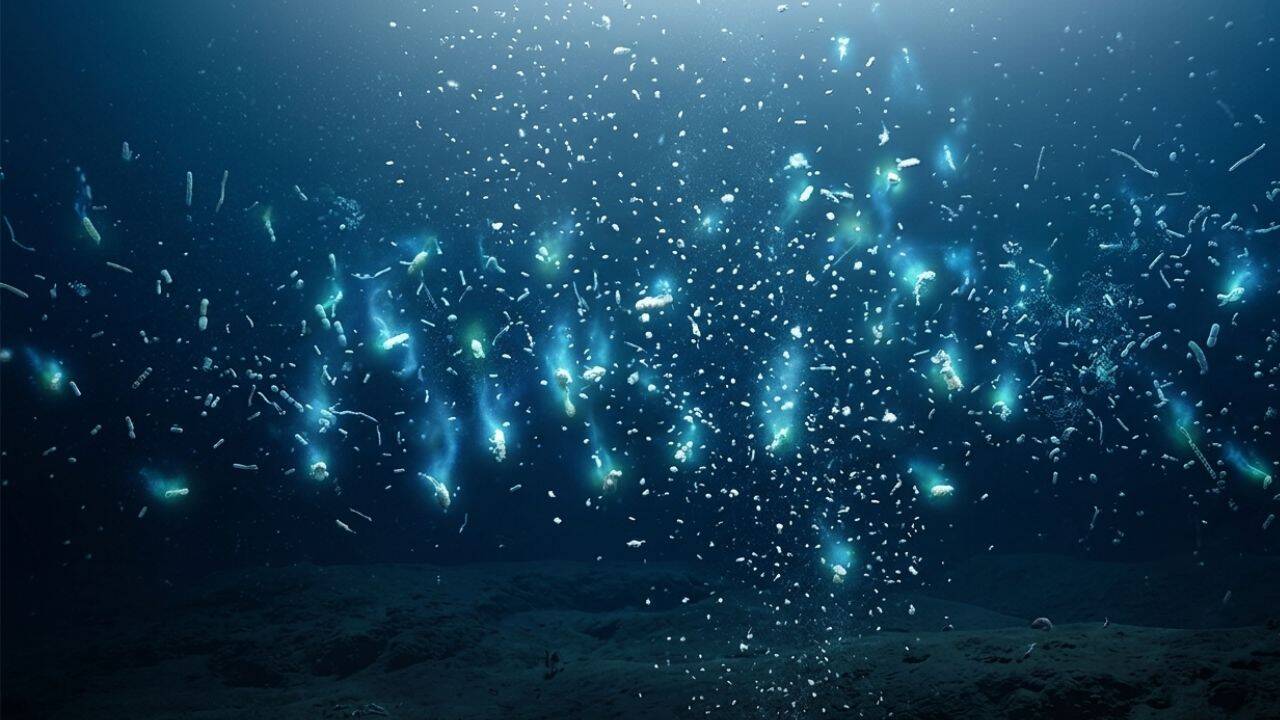
Scientists have made a groundbreaking discovery in the deep ocean, where immense pressure squeezes nutrients out of sinking marine snow. This process provides a previously unknown food source for deep-sea microbes.
The research team found that the pressure in the deep ocean is so great that it releases hidden nutrients from tiny particles of dead algae and organic matter. These nutrients are then used by deep-sea microbes, which play a crucial role in the ocean's ecosystem.
According to the scientists, this discovery suggests that more carbon escapes into deep ocean water than previously believed. This has significant implications for our understanding of Earth's carbon cycle and could lead to improvements in future climate models.
The carbon cycle is the process by which carbon is exchanged between the atmosphere, oceans, land, and living things. It is a critical component of the Earth's system, and understanding it is essential for predicting future climate change.
The deep ocean is a vast and largely unexplored environment, covering over 70% of the Earth's surface. It is home to a unique community of microbes that thrive in the harsh conditions found at great depths.
The discovery of this new food source for deep-sea microbes highlights the importance of continued research into the deep ocean and its role in the Earth's system. By improving our understanding of the carbon cycle and the processes that occur in the deep ocean, scientists can develop more accurate climate models and better predict future changes to the Earth's climate.
The findings of this study have significant implications for the scientific community and could lead to a greater understanding of the Earth's system. The research team's discovery is a testament to the importance of continued exploration and research into the deep ocean and its many mysteries.
In recent years, there has been a growing recognition of the importance of the deep ocean in the Earth's system. This has led to increased research efforts, including the use of advanced technologies such as autonomous underwater vehicles and remote-operated vehicles.
As scientists continue to explore the deep ocean and its many wonders, they are gaining a greater understanding of the complex processes that occur in this environment. This knowledge is essential for predicting future changes to the Earth's climate and for developing effective strategies for mitigating the impacts of climate change.
The discovery of this new food source for deep-sea microbes is a significant step forward in our understanding of the deep ocean and its role in the Earth's system. It highlights the importance of continued research and exploration into this vast and largely unexplored environment.
In conclusion, the discovery of deep-sea pressure releasing hidden nutrients for microbes is a groundbreaking finding that has significant implications for our understanding of the Earth's carbon cycle and climate models. It highlights the importance of continued research into the deep ocean and its many mysteries, and demonstrates the need for further exploration and discovery in this vast and largely unexplored environment.
What this means for the planet is that our understanding of the carbon cycle is more complex than previously thought, and that the deep ocean plays a critical role in this process. This new knowledge will help scientists to develop more accurate climate models, which will inform policy decisions and help to mitigate the impacts of climate change.