Frequent Transfers Harm Mumbai Police System: Ex-Commissioner M.N. Singh
Former Mumbai Police Commissioner M.N. Singh criticizes frequent transfers, citing harm to policing system.
'%3E%3Crect%20width%3D'96'%20height%3D'96'%20fill%3D'%23B3261E'%2F%3E%3Ccircle%20cx%3D'30'%20cy%3D'24'%20r%3D'44'%20fill%3D'%23fff'%20opacity%3D'.12'%2F%3E%3Ccircle%20cx%3D'60'%20cy%3D'74'%20r%3D'40'%20fill%3D'%23000'%20opacity%3D'.10'%2F%3E%3C%2Fg%3E%3Cg%20fill%3D'%23fff'%3E%3Crect%20x%3D'29'%20y%3D'49'%20width%3D'8'%20height%3D'19'%20rx%3D'1'%2F%3E%3Crect%20x%3D'39'%20y%3D'40'%20width%3D'9'%20height%3D'28'%20rx%3D'1'%2F%3E%3Crect%20x%3D'50'%20y%3D'45'%20width%3D'8'%20height%3D'23'%20rx%3D'1'%2F%3E%3Crect%20x%3D'60'%20y%3D'53'%20width%3D'7'%20height%3D'15'%20rx%3D'1'%2F%3E%3Crect%20x%3D'41'%20y%3D'34'%20width%3D'5'%20height%3D'6'%2F%3E%3C%2Fg%3E%3C%2Fsvg%3E)
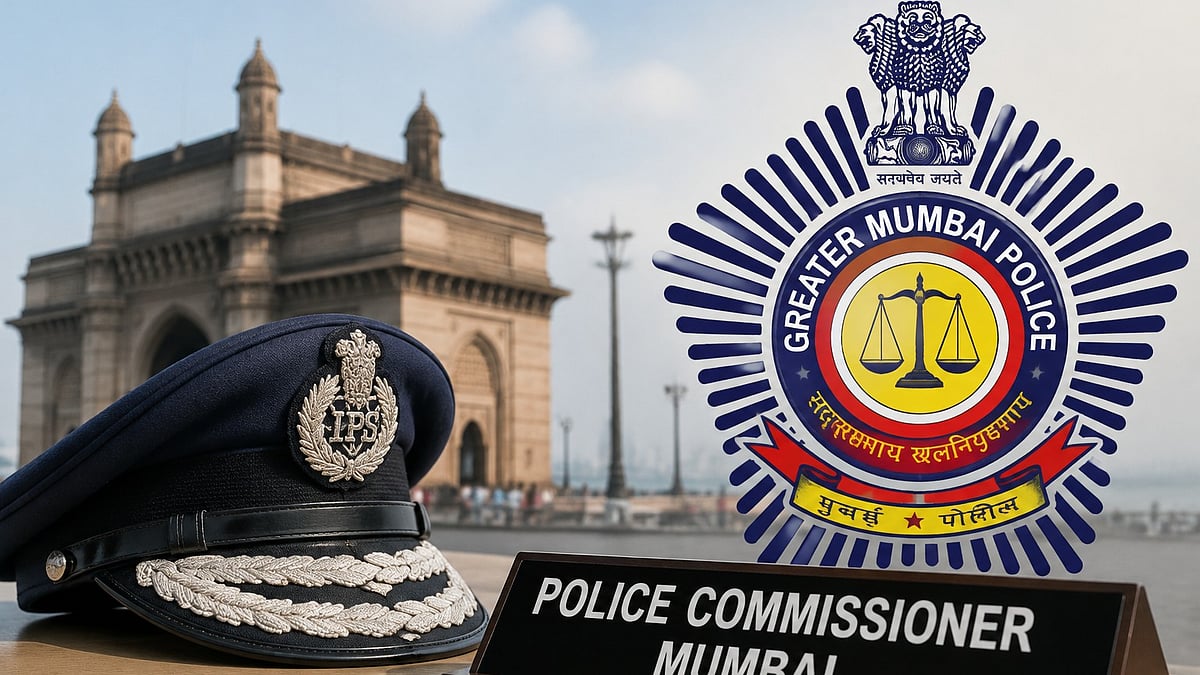
Former Mumbai Police Commissioner M.N. Singh stated that the frequent transfers of Mumbai Police Commissioners have an adverse impact on the policing system in the city. He made this statement while speaking at the launch of senior journalist Prabhakar Pawar's book, History of Mumbai Police Commissioners.
The event was attended by several notable figures, including Rajya Sabha MP Sanjay Raut and current Mumbai Police Commissioner Deven Bharti. Singh praised Pawar's work, noting that his books are still read by Mumbai Police officers as reference material.
Singh emphasized the need for stability in police leadership, saying that frequent transfers prevent officers from implementing long-term measures. He noted that the average tenure of a Mumbai Police Commissioner has decreased significantly since India's independence in 1947.
Between 1864 and 1947, around 25 to 31 commissioners served the city, with relatively long tenures. However, since 1947, around 15 commissioners have served for less than a year, with five having tenures of less than six months. Some officers remained in the post for only a few months.
Singh argued that such short tenures do not give commissioners enough time to implement long-term strategies to combat crime or introduce sustainable policing measures. He stressed that the post of Mumbai Police Commissioner is extremely important and carries enormous responsibility.
The former commissioner also recalled his own career, noting that he had served as an officer of Director General of Police (DGP) rank before becoming Mumbai Police Commissioner. He believed that an officer of at least DGP rank should be appointed as Mumbai Police Commissioner.
Singh's comments highlight the challenges faced by the Mumbai Police department in maintaining stability and effectiveness in its leadership. The frequent transfers of commissioners can have a significant impact on the department's ability to implement long-term plans and strategies.
In recent years, the Mumbai Police department has faced several challenges, including rising crime rates and increasing pressure to maintain law and order in the city. The department has also been working to implement new technologies and strategies to improve its effectiveness.
However, the frequent transfers of commissioners can undermine these efforts and create uncertainty among officers and personnel. Singh's comments emphasize the need for stability and continuity in police leadership, which is essential for maintaining effective policing in a sensitive city like Mumbai.
The issue of frequent transfers is not unique to the Mumbai Police department, but it is particularly significant in a city like Mumbai, which faces a unique set of challenges and pressures. The city's police department must be able to respond effectively to these challenges, and stability in leadership is essential for achieving this goal.
In conclusion, Singh's comments highlight the importance of stability in police leadership and the need for continuity in the post of Mumbai Police Commissioner. The frequent transfers of commissioners can have a significant impact on the department's ability to implement long-term plans and strategies, and it is essential to address this issue to maintain effective policing in Mumbai.
The city's police department plays a critical role in maintaining law and order, and it is essential to ensure that it has the stability and leadership it needs to perform its duties effectively. By appointing officers of sufficient rank and experience to the post of Mumbai Police Commissioner, the department can maintain the stability and continuity it needs to address the challenges it faces.
Overall, Singh's comments emphasize the need for stability and continuity in police leadership, which is essential for maintaining effective policing in a sensitive city like Mumbai. The issue of frequent transfers is a significant challenge that must be addressed to ensure that the Mumbai Police department can perform its duties effectively and maintain law and order in the city.
Frequently asked questions
What is the average tenure of a Mumbai Police Commissioner since 1947?
Around 15 commissioners have served for less than a year, with five having tenures of less than six months.
What rank does M.N. Singh believe should be appointed as Mumbai Police Commissioner?
An officer of at least DGP rank should be appointed as Mumbai Police Commissioner.