India Raises 5G Tower Radiation Limit to 10 Watts
India doubles 5G radiation limit, aligns with international standards. Telecom operators to benefit from relaxed rules.
'%3E%3Crect%20width%3D'96'%20height%3D'96'%20fill%3D'%230B6E4F'%2F%3E%3Ccircle%20cx%3D'30'%20cy%3D'24'%20r%3D'44'%20fill%3D'%23fff'%20opacity%3D'.12'%2F%3E%3Ccircle%20cx%3D'60'%20cy%3D'74'%20r%3D'40'%20fill%3D'%23000'%20opacity%3D'.10'%2F%3E%3C%2Fg%3E%3Cg%20fill%3D'none'%20stroke%3D'%23fff'%20stroke-width%3D'3.2'%20stroke-linecap%3D'round'%20stroke-linejoin%3D'round'%3E%3Cpolyline%20points%3D'31%2C59%2041%2C49%2049%2C54%2063%2C37'%2F%3E%3Cpolyline%20points%3D'55%2C37%2063%2C37%2063%2C45'%2F%3E%3C%2Fg%3E%3C%2Fsvg%3E)
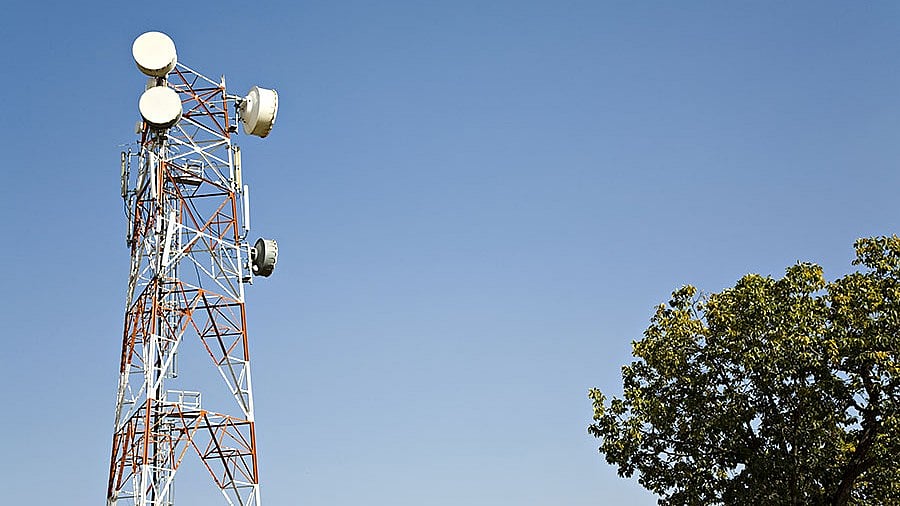
The Indian government has announced plans to relax the electromagnetic field (EMF) limits for mobile networks, allowing telecom operators to deploy 5G infrastructure more efficiently.
The revised rules, which will take effect next month, will increase the permitted power density for a 5G base transceiver station (BTS) to 10 watts per square metre from the existing 5 watts. This change is expected to enable operators to serve larger areas from individual tower sites, reducing the need for new sites and potentially lowering capital expenditure.
The telecom industry has been seeking higher EMF limits, arguing that stricter regulations made 5G network expansion more expensive and complicated. India had historically maintained tighter radiation standards than those recommended internationally, but the latest revision brings the ceiling to 10 watts per square metre, matching the level recommended by the International Commission on Non-Ionizing Radiation Protection (ICNIRP).
The change could benefit telecom operators such as Airtel, Jio, and Vodafone Idea, which are expanding their 5G networks. Vodafone Idea, in particular, could use the higher limit while planning new infrastructure, while Reliance Jio and Bharti Airtel may benefit from greater coverage from existing sites and reduced incremental network investment.
The revised 10-watt limit is consistent with standards followed in around 137 countries, including the UK, Australia, Japan, South Korea, and Singapore. India had adopted ICNIRP-based norms in 2008 but subsequently made them stricter in 2012. Telecom companies have argued that standards designed around earlier generations of mobile technology were less suited to the requirements of large-scale 5G deployment, prompting the government to gradually ease the limits.
The relaxation of EMF limits is expected to improve network coverage and reduce the number of new sites operators need to establish. This could lead to better connectivity and faster data speeds for consumers, as well as reduced costs for telecom operators.
The government's decision to relax EMF limits is a significant development for the telecom industry, which has been seeking more flexible regulations to support the rollout of 5G services. The change is expected to have a positive impact on the industry, enabling operators to deploy 5G infrastructure more efficiently and effectively.
In the context of India's rapidly growing demand for high-speed connectivity, the relaxation of EMF limits is a timely move. The country's mobile gaming market, for example, is shifting towards AI-powered phones, with devices like the Realme P4s 5G targeting performance, display, and battery life. The improved network coverage and faster data speeds enabled by the relaxed EMF limits could support the growth of this market and other applications that rely on high-speed connectivity.
Overall, the government's decision to raise the 5G tower radiation limit to 10 watts is a significant development for the telecom industry and consumers alike. It is expected to improve network coverage, reduce costs, and support the growth of India's digital economy.
The impact of this decision will be closely watched by the industry and consumers, as it has the potential to shape the future of 5G deployment in India. With the revised rules set to take effect next month, telecom operators are likely to begin planning their 5G infrastructure deployments accordingly, with a focus on improving network coverage and reducing costs.
In conclusion, the relaxation of EMF limits is a positive development for the telecom industry and consumers in India. It is expected to improve network coverage, reduce costs, and support the growth of the country's digital economy. As the industry continues to evolve and grow, it will be important to monitor the impact of this decision and ensure that it supports the development of a robust and reliable 5G network in India.
The decision to relax EMF limits is also significant in the context of India's international relations, as it brings the country's standards in line with those of other nations. This could facilitate greater cooperation and collaboration between Indian telecom operators and their international counterparts, supporting the growth of global connectivity and trade.
As India continues to develop its 5G network, it is likely that the relaxation of EMF limits will play a key role in supporting the growth of the country's digital economy. The government's decision to raise the 5G tower radiation limit to 10 watts is a significant step forward for the industry, and it will be important to monitor its impact in the months and years to come.
In terms of the broader implications of this decision, it is likely that the relaxation of EMF limits will have a positive impact on the Indian economy as a whole. By supporting the growth of the telecom industry and improving network coverage, the government's decision could help to drive economic growth and development in a range of sectors, from finance and commerce to education and healthcare.
The decision to relax EMF limits is also significant in the context of India's urban development, as it could support the growth of smart cities and other urban initiatives. By improving network coverage and reducing costs, the government's decision could help to facilitate the development of more efficient and sustainable urban infrastructure, supporting the growth of India's cities and the well-being of their residents.
Overall, the government's decision to raise the 5G tower radiation limit to 10 watts is a significant development for the telecom industry and the Indian economy as a whole. It is expected to improve network coverage, reduce costs, and support the growth of the country's digital economy, with positive implications for a range of sectors and initiatives.
Frequently asked questions
What is the new 5G radiation limit in India?
The new limit is 10 watts per square metre.
How will the relaxed rules benefit telecom operators?
The relaxed rules will enable operators to serve larger areas from individual tower sites, reducing the need for new sites and potentially lowering capital expenditure.