Oman Rejects Iran's Strait of Hormuz Toll Plan
Oman opposes Iranian toll plan, Strait of Hormuz remains free. Iran's proposal faces rejection.
'%3E%3Crect%20width%3D'96'%20height%3D'96'%20fill%3D'%234A235A'%2F%3E%3Ccircle%20cx%3D'30'%20cy%3D'24'%20r%3D'44'%20fill%3D'%23fff'%20opacity%3D'.12'%2F%3E%3Ccircle%20cx%3D'60'%20cy%3D'74'%20r%3D'40'%20fill%3D'%23000'%20opacity%3D'.10'%2F%3E%3C%2Fg%3E%3Cg%20fill%3D'none'%20stroke%3D'%23fff'%20stroke-width%3D'3'%3E%3Ccircle%20cx%3D'48'%20cy%3D'48'%20r%3D'16'%2F%3E%3Cellipse%20cx%3D'48'%20cy%3D'48'%20rx%3D'6.5'%20ry%3D'16'%2F%3E%3Cline%20x1%3D'32'%20y1%3D'42'%20x2%3D'64'%20y2%3D'42'%2F%3E%3Cline%20x1%3D'32'%20y1%3D'54'%20x2%3D'64'%20y2%3D'54'%2F%3E%3C%2Fg%3E%3C%2Fsvg%3E)
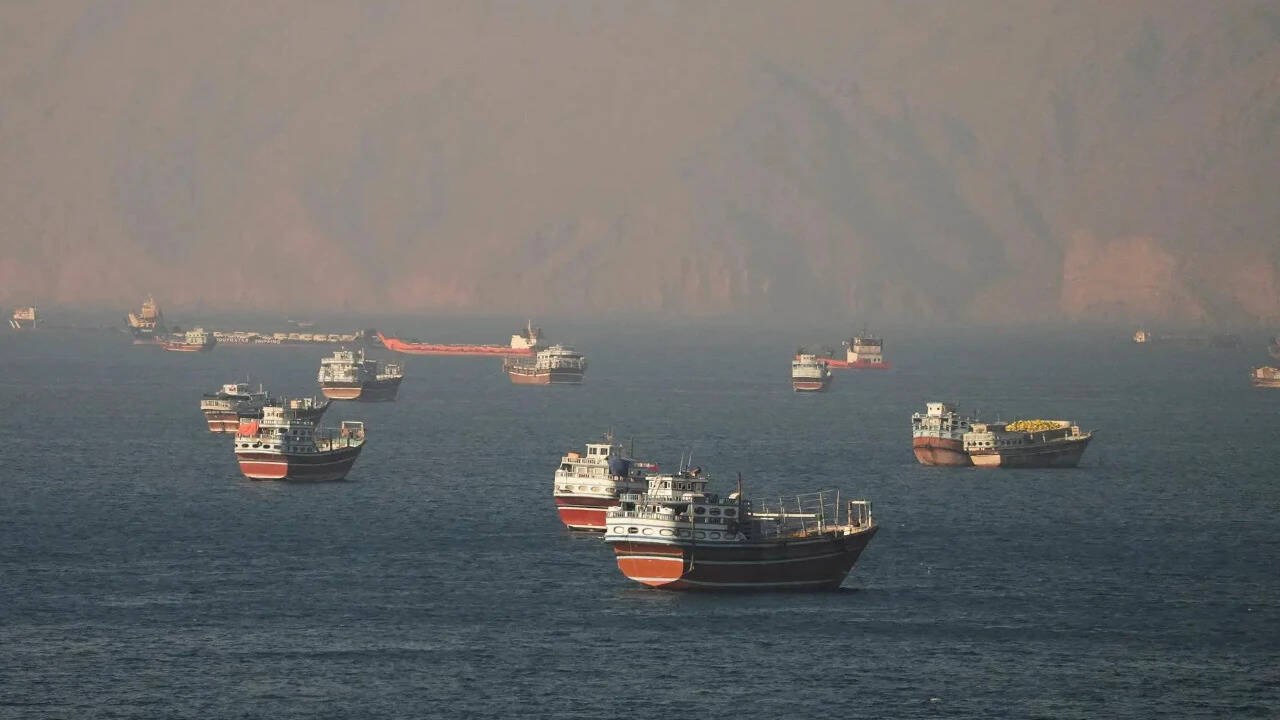
Oman has rejected a proposal by Iran to impose a toll on ships passing through the Strait of Hormuz, a vital shipping lane in the Middle East. The Strait of Hormuz is a strategic waterway that connects the Persian Gulf to the Arabian Sea, and it is a key route for international oil shipments.
The Iranian government had proposed the toll plan as a way to generate revenue and exert control over the waterway. However, Oman's rejection of the plan is a significant setback for Iran's efforts to impose its will on the region.
The Strait of Hormuz is a critical chokepoint for global oil supplies, with approximately 20% of the world's oil passing through it every day. The waterway is also a sensitive geopolitical flashpoint, with several countries in the region vying for influence and control.
Oman's decision to reject the toll plan is likely to be welcomed by other countries in the region, including the United Arab Emirates and Saudi Arabia, which have long been wary of Iran's intentions. The United States and other Western countries have also expressed concerns about Iran's efforts to exert control over the Strait of Hormuz.
The rejection of the toll plan is a significant development in the ongoing geopolitical tensions in the Middle East. It highlights the complex web of alliances and rivalries in the region, and it underscores the importance of the Strait of Hormuz as a critical waterway for global trade.
The Strait of Hormuz is approximately 90 miles long and 21 miles wide at its narrowest point. It is a vital shipping lane that connects the Persian Gulf to the Arabian Sea, and it is used by thousands of ships every year. The waterway is also an important route for international oil shipments, with many of the world's largest oil tankers passing through it every day.
In recent years, the Strait of Hormuz has become an increasingly sensitive geopolitical flashpoint. Iran has sought to exert control over the waterway, while other countries in the region have pushed back against its efforts. The United States and other Western countries have also become involved in the dispute, with some calling for increased military presence in the region to protect international shipping lanes.
The rejection of the toll plan by Oman is likely to have significant implications for the region. It may lead to increased tensions between Iran and other countries in the region, and it may also lead to increased military presence in the area. However, it is also a significant victory for those who have pushed for the Strait of Hormuz to remain a free and open waterway.
In conclusion, Oman's rejection of Iran's toll plan for the Strait of Hormuz is a significant development in the ongoing geopolitical tensions in the Middle East. It highlights the complex web of alliances and rivalries in the region, and it underscores the importance of the Strait of Hormuz as a critical waterway for global trade.
Frequently asked questions
What is the Strait of Hormuz and why is it important?
The Strait of Hormuz is a vital shipping lane in the Middle East that connects the Persian Gulf to the Arabian Sea. It is a key route for international oil shipments and is used by thousands of ships every year.
Why did Oman reject Iran's toll plan?
Oman rejected Iran's toll plan because it would have given Iran control over the Strait of Hormuz and would have imposed a significant financial burden on ships passing through the waterway.