Chandigarh Sinks in Rain Due to Inadequate Drainage
Chandigarh faces recurring monsoon flooding. Heavy downpours strand vehicles and submerge markets.
'%3E%3Crect%20width%3D'96'%20height%3D'96'%20fill%3D'%23B3261E'%2F%3E%3Ccircle%20cx%3D'30'%20cy%3D'24'%20r%3D'44'%20fill%3D'%23fff'%20opacity%3D'.12'%2F%3E%3Ccircle%20cx%3D'60'%20cy%3D'74'%20r%3D'40'%20fill%3D'%23000'%20opacity%3D'.10'%2F%3E%3C%2Fg%3E%3Cg%20fill%3D'%23fff'%3E%3Crect%20x%3D'29'%20y%3D'49'%20width%3D'8'%20height%3D'19'%20rx%3D'1'%2F%3E%3Crect%20x%3D'39'%20y%3D'40'%20width%3D'9'%20height%3D'28'%20rx%3D'1'%2F%3E%3Crect%20x%3D'50'%20y%3D'45'%20width%3D'8'%20height%3D'23'%20rx%3D'1'%2F%3E%3Crect%20x%3D'60'%20y%3D'53'%20width%3D'7'%20height%3D'15'%20rx%3D'1'%2F%3E%3Crect%20x%3D'41'%20y%3D'34'%20width%3D'5'%20height%3D'6'%2F%3E%3C%2Fg%3E%3C%2Fsvg%3E)
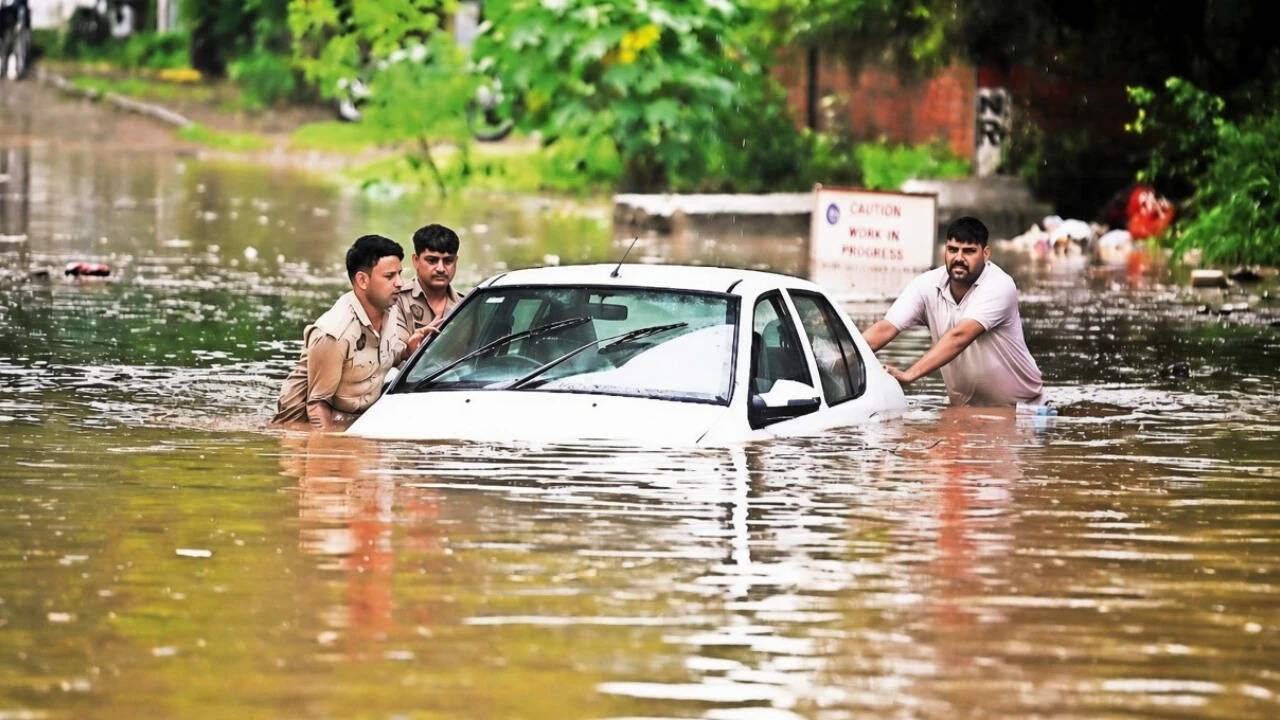
Chandigarh, a city designed with meticulous planning, is struggling to cope with the consequences of intense rainfall. Recently, a short but heavy downpour exposed the vulnerabilities of the city's infrastructure, resulting in widespread flooding. Various sectors and major roads were inundated, leaving vehicles stranded and markets submerged. The city's drainage system, which was once considered adequate, now appears to be insufficient to handle the current intensity of rainfall and the effects of urbanization.
The flooding issue in Chandigarh is not a new phenomenon. The city has been experiencing recurring monsoon flooding, which has raised concerns about the need for infrastructure upgrades. The existing drainage system, which was designed to handle a certain amount of rainfall, is no longer capable of coping with the increased intensity and frequency of heavy downpours. This has resulted in a range of problems, including waterlogging, traffic congestion, and damage to property.
The city's planners and administrators have been criticized for their failure to address the issue effectively. While emergency responses, such as evacuating people and providing relief, are necessary, they do not provide a long-term solution to the problem. There is a need for a more comprehensive approach, which includes upgrading the drainage system, improving urban planning, and enhancing the city's resilience to extreme weather events.
Chandigarh's flooding issue is also a reflection of the broader challenges facing Indian cities. Many urban areas in the country are struggling to cope with the consequences of rapid urbanization, climate change, and inadequate infrastructure. The city's experience serves as a reminder of the need for sustainable and resilient urban planning, which takes into account the potential risks and challenges associated with extreme weather events.
In order to address the flooding issue, the city's authorities will need to invest in upgrading the drainage system, improving urban planning, and enhancing the city's resilience to extreme weather events. This will require a coordinated effort from various stakeholders, including government agencies, urban planners, and residents. By working together, it is possible to create a more sustainable and resilient city, which is better equipped to cope with the challenges of the 21st century.
The flooding issue in Chandigarh is a complex problem, which requires a comprehensive and sustainable solution. While it is a challenging task, it is not impossible. With the right approach and a commitment to sustainable urban planning, it is possible to create a city that is resilient, sustainable, and capable of coping with the consequences of extreme weather events.
In conclusion, Chandigarh's flooding issue is a wake-up call for the city's authorities and residents. It highlights the need for infrastructure upgrades, improved urban planning, and enhanced resilience to extreme weather events. By working together and adopting a comprehensive approach, it is possible to create a more sustainable and resilient city, which is better equipped to cope with the challenges of the 21st century.
Frequently asked questions
Why does Chandigarh flood during monsoon season?
Chandigarh floods due to its inadequate drainage system, which is unable to handle the current intensity of rainfall and urbanization.
What is needed to address Chandigarh's flooding issue?
A comprehensive approach, including upgrading the drainage system, improving urban planning, and enhancing the city's resilience to extreme weather events, is needed to address the issue.