Tamil Nadu Assembly Urges Centre To Abolish NEET
Tamil Nadu to pass resolution against NEET, citing student concerns.
'%3E%3Crect%20width%3D'96'%20height%3D'96'%20fill%3D'%231A5276'%2F%3E%3Ccircle%20cx%3D'30'%20cy%3D'24'%20r%3D'44'%20fill%3D'%23fff'%20opacity%3D'.12'%2F%3E%3Ccircle%20cx%3D'60'%20cy%3D'74'%20r%3D'40'%20fill%3D'%23000'%20opacity%3D'.10'%2F%3E%3C%2Fg%3E%3Cg%20fill%3D'%23fff'%3E%3Cpath%20d%3D'M31%2041%20L48%2031%20L65%2041%20Z'%2F%3E%3Crect%20x%3D'33'%20y%3D'43'%20width%3D'4'%20height%3D'17'%2F%3E%3Crect%20x%3D'41'%20y%3D'43'%20width%3D'4'%20height%3D'17'%2F%3E%3Crect%20x%3D'51'%20y%3D'43'%20width%3D'4'%20height%3D'17'%2F%3E%3Crect%20x%3D'59'%20y%3D'43'%20width%3D'4'%20height%3D'17'%2F%3E%3Crect%20x%3D'30'%20y%3D'62'%20width%3D'36'%20height%3D'4'%20rx%3D'1'%2F%3E%3C%2Fg%3E%3C%2Fsvg%3E)
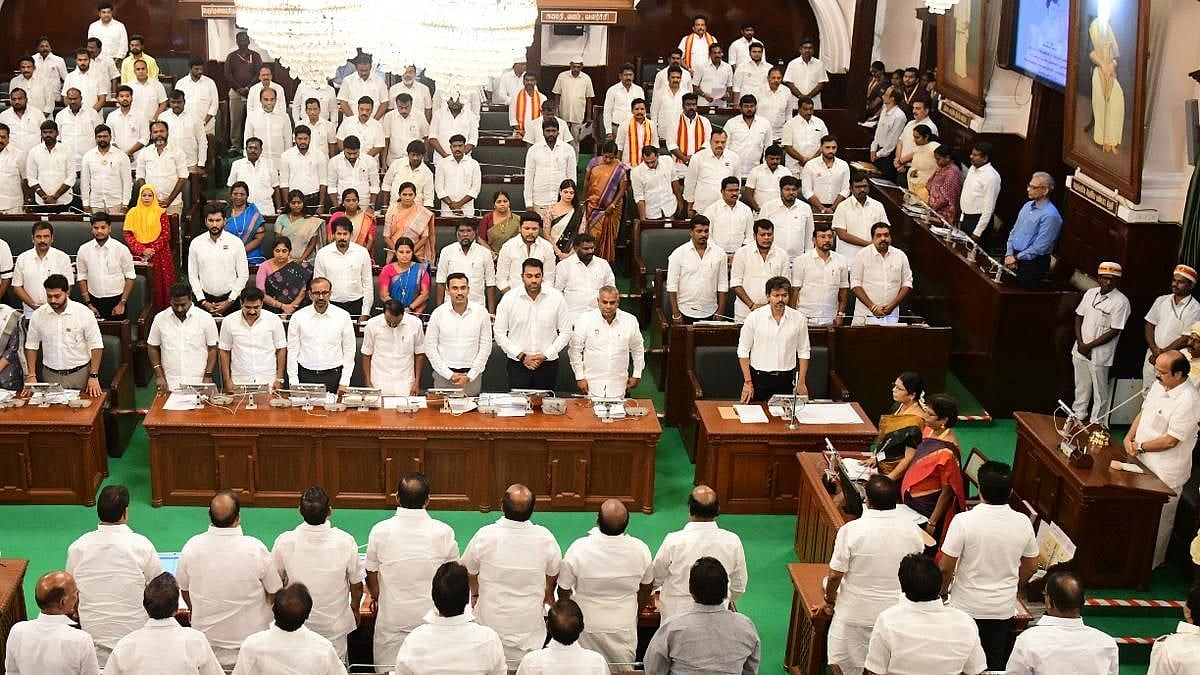
The Tamil Nadu Legislative Assembly is set to pass a resolution urging the Union government to abolish the National Eligibility cum Entrance Test (NEET) system for undergraduate medical admissions. The resolution states that the NEET system severely affects students studying in Tamil medium as well as those from rural and economically backward backgrounds in accessing medical education.
According to the Tamil Nadu government, the NEET system has led to a growing dependence on expensive coaching centres, which has a negative impact on students' school education. The resolution also points out that unregulated coaching centres charging exorbitant fees for NEET have increased, forcing students to divert their attention from the school curriculum and focus primarily on NEET preparation.
The Tamil Nadu Assembly had unanimously passed Bill No. 43 of 2021, seeking exemption for the state from NEET for admission to undergraduate medical courses. However, the Bill has been kept pending without presidential approval. The resolution also cites continuous question paper leaks and irregularities in the examination system, stating that NEET-UG 2024 was cancelled and re-conducted, causing immense distress to eligible students and eroding their trust in the examination system.
The resolution also refers to student suicides linked to the examination-related distress and concludes that the system must be abolished. The Assembly will urge the Centre to amend the National Medical Commission Act, 2019, the National Commission for Indian System of Medicine Act, 2020, the National Commission for Homoeopathy Act, 2020, and other relevant laws to discontinue NEET at the national level.
The Tamil Nadu government has proposed that admissions to medical courses in the state be based on Class 12 examination marks. This proposal is aimed at reducing the stress and burden on students and promoting a more equitable and accessible medical education system.
In addition to the resolution against NEET, the Assembly will also pass a resolution opposing the Foreign Contribution (Regulation) Amendment Bill, 2026, in its present form. The resolution expresses concern over provisions that could allow the government to take over, manage, dispose of or sell assets of charitable organisations following the expiry, non-renewal, refusal, or cancellation of their registration.
The Tamil Nadu government's move to abolish NEET and oppose the FCRA Amendment Bill reflects its commitment to promoting the welfare and interests of its students and citizens. The state government's efforts to create a more equitable and accessible education system are likely to have a positive impact on the lives of many students and families in Tamil Nadu.
The abolition of NEET and the opposition to the FCRA Amendment Bill are significant developments that highlight the importance of protecting the rights and interests of students and citizens. These moves are likely to have far-reaching consequences and will be closely watched by other states and the Centre.
In conclusion, the Tamil Nadu Assembly's resolution to abolish NEET and oppose the FCRA Amendment Bill is a significant step towards promoting a more equitable and accessible education system. The state government's commitment to protecting the rights and interests of its students and citizens is commendable, and its efforts are likely to have a positive impact on the lives of many people in Tamil Nadu.
The implications of this resolution are significant, and it will be interesting to see how the Centre responds to the Tamil Nadu government's demands. The abolition of NEET could have a major impact on the medical education system in India, and it will be closely watched by other states and the medical community.
Overall, the Tamil Nadu Assembly's resolution to abolish NEET and oppose the FCRA Amendment Bill is a significant development that highlights the importance of protecting the rights and interests of students and citizens. It is a step towards creating a more equitable and accessible education system, and it is likely to have far-reaching consequences.
Frequently asked questions
What is the main reason for Tamil Nadu's opposition to NEET?
The main reason is that NEET severely affects students studying in Tamil medium and those from rural and economically backward backgrounds.
What is the proposed alternative to NEET?
The Tamil Nadu government has proposed that admissions to medical courses in the state be based on Class 12 examination marks.