
Rupee Falls 12 Paise Against US Dollar
Rupee declines, crude prices rise, Middle East tensions escalate.
'%3E%3Crect%20width%3D'96'%20height%3D'96'%20fill%3D'%230B6E4F'%2F%3E%3Ccircle%20cx%3D'30'%20cy%3D'24'%20r%3D'44'%20fill%3D'%23fff'%20opacity%3D'.12'%2F%3E%3Ccircle%20cx%3D'60'%20cy%3D'74'%20r%3D'40'%20fill%3D'%23000'%20opacity%3D'.10'%2F%3E%3C%2Fg%3E%3Cg%20fill%3D'none'%20stroke%3D'%23fff'%20stroke-width%3D'3.2'%20stroke-linecap%3D'round'%20stroke-linejoin%3D'round'%3E%3Cpolyline%20points%3D'31%2C59%2041%2C49%2049%2C54%2063%2C37'%2F%3E%3Cpolyline%20points%3D'55%2C37%2063%2C37%2063%2C45'%2F%3E%3C%2Fg%3E%3C%2Fsvg%3E)
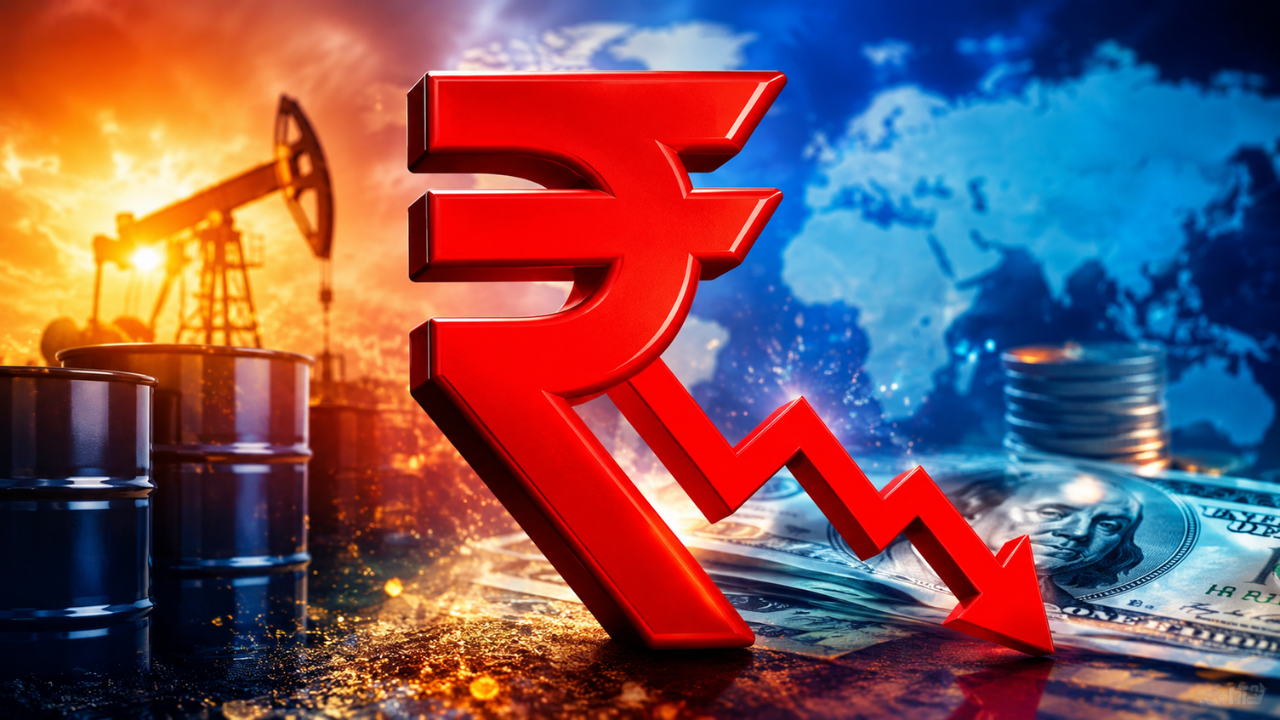
The Indian Rupee started the week on a low note, falling 12 paise against the US dollar on Monday. This decline was largely driven by rising crude oil prices and escalating tensions in the Middle East, which led to an increased demand for the dollar.
Additionally, foreign investors pulled out capital from Indian equity markets, further weakening the local currency. As a result, the Indian stock markets also traded lower, with both the Sensex and Nifty experiencing declines.
The rise in crude oil prices is particularly concerning for India, as the country relies heavily on imports to meet its oil needs. Higher oil prices can lead to increased inflation and negatively impact the country's trade deficit.
Despite the current decline, India's foreign exchange reserves saw a significant increase in the previous week. This increase provides a cushion against potential future declines in the value of the Rupee.
The Middle East tensions have been escalating over the past few weeks, leading to concerns about the global oil supply. This has resulted in higher crude oil prices, which in turn have put pressure on the Indian Rupee.
The Indian economy is closely tied to the global economy, and any changes in the global market can have a significant impact on the country's currency. The current decline in the Rupee is a reflection of this, and it remains to be seen how the situation will unfold in the coming days.
In recent times, the Indian Rupee has been volatile, with its value fluctuating against the US dollar. This volatility can make it challenging for businesses and individuals to predict the future value of the currency, making it essential to keep a close eye on the market trends.
The increase in foreign exchange reserves is a positive sign for the Indian economy, as it provides a buffer against any potential economic shocks. However, the current decline in the Rupee highlights the need for continued monitoring of the global market and the potential impact on the Indian economy.
The situation will be closely watched by economists and policymakers, as the value of the Rupee has a significant impact on the country's trade and economy. Any further escalation in Middle East tensions or increase in crude oil prices could lead to additional pressure on the Rupee, making it essential to have a plan in place to mitigate any potential negative effects.
In conclusion, the decline in the Rupee is a reflection of the current global market trends and the escalating tensions in the Middle East. While the increase in foreign exchange reserves is a positive sign, it is crucial to continue monitoring the situation and be prepared for any potential future declines in the value of the Rupee.
The impact of the decline in the Rupee will be felt across various sectors of the economy, including trade, commerce, and industry. It is essential for businesses and individuals to be aware of the current market trends and to plan accordingly to minimize any potential negative effects.
As the situation continues to unfold, it will be interesting to see how the Indian economy responds to the current challenges. The government and policymakers will need to be proactive in addressing the issues and finding ways to mitigate the negative effects of the decline in the Rupee.
The current decline in the Rupee is a reminder of the complex and interconnected nature of the global economy. As India continues to grow and develop, it is essential to be aware of the potential risks and challenges that can impact the economy and to have strategies in place to address them.
In the coming days, it will be crucial to watch the market trends and the situation in the Middle East, as any further escalation in tensions or increase in crude oil prices could lead to additional pressure on the Rupee. The Indian economy is resilient, and with the right policies and strategies in place, it can navigate the current challenges and continue to grow and develop.
The decline in the Rupee is a significant development, and its impact will be felt across the country. It is essential to continue monitoring the situation and to be prepared for any potential future declines in the value of the Rupee. With the right approach and strategies, India can mitigate the negative effects of the decline in the Rupee and continue to move forward on the path of growth and development.
The Indian Rupee's value against the US dollar is a critical indicator of the country's economic health. The current decline in the Rupee is a cause for concern, and it is essential to address the underlying issues and find ways to stabilize the currency. The government and policymakers must work together to develop strategies to mitigate the negative effects of the decline in the Rupee and to promote economic growth and development.
The situation highlights the need for continued vigilance and monitoring of the global market trends and their potential impact on the Indian economy. The decline in the Rupee is a reminder that the Indian economy is closely tied to the global economy, and any changes in the global market can have a significant impact on the country's currency.
In the end, the decline in the Rupee is a challenge that needs to be addressed. With the right policies and strategies in place, India can navigate the current challenges and continue to grow and develop. The country's economic resilience and the increase in foreign exchange reserves are positive signs, and with continued monitoring and planning, the Indian economy can overcome the current decline in the Rupee and move forward on the path of growth and development.
The current situation is a test of the Indian economy's resilience and its ability to navigate the challenges of the global market. The decline in the Rupee is a significant development, and its impact will be felt across the country. However, with the right approach and strategies, India can mitigate the negative effects of the decline in the Rupee and continue to move forward on the path of growth and development.
The Indian economy is strong, and with the right policies and strategies in place, it can overcome the current challenges and continue to grow and develop. The decline in the Rupee is a reminder of the complex and interconnected nature of the global economy, and the need for continued vigilance and monitoring of the market trends.
The situation will continue to unfold in the coming days, and it is essential to watch the market trends and the situation in the Middle East. Any further escalation in tensions or increase in crude oil prices could lead to additional pressure on the Rupee, making it essential to have a plan in place to mitigate any potential negative effects.
The Indian Rupee's value against the US dollar is a critical indicator of the country's economic health, and the current decline in the Rupee is a cause for concern. However, with the right policies and strategies in place, India can stabilize the currency and promote economic growth and development.
The increase in foreign exchange reserves is a positive sign, and it provides a buffer against any potential economic shocks. The Indian economy is resilient, and with continued monitoring and planning, it can navigate the current challenges and continue to grow and develop.
The decline in the Rupee is a significant development, and its impact will be felt across the country. However, with the right approach and strategies, India can mitigate the negative effects of the decline in the Rupee and continue to move forward on the path of growth and development.
The situation highlights the need for continued vigilance and monitoring of the global market trends and their potential impact on the Indian economy. The decline in the Rupee is a reminder that the Indian economy is closely tied to the global economy, and any changes in the global market can have a significant impact on the country's currency.
In conclusion, the decline in the Rupee is a challenge that needs to be addressed. With the right policies and strategies in place, India can navigate the current challenges and continue to grow and develop. The country's economic resilience and the increase in foreign exchange reserves are positive signs, and with continued monitoring and planning, the Indian economy can overcome the current decline in the Rupee and move forward on the path of growth and development.
What it means for Mumbai and India is that the decline in the Rupee will have a significant impact on the country's trade and economy. The increase in crude oil prices will lead to higher inflation, and the decline in the Rupee will make imports more expensive. This will have a negative impact on the country's trade deficit and will make it challenging for businesses and individuals to predict the future value of the currency.
However, the increase in foreign exchange reserves is a positive sign, and it provides a buffer against any potential economic shocks. The Indian economy is resilient, and with continued monitoring and planning, it can navigate the current challenges and continue to grow and develop.
The situation will continue to unfold in the coming days, and it is essential to watch the market trends and the situation in the Middle East. Any further escalation in tensions or increase in crude oil prices could lead to additional pressure on the Rupee, making it essential to have a plan in place to mitigate any potential negative effects.
The Indian Rupee's value against the US dollar is a critical indicator of the country's economic health, and the current decline in the Rupee is a cause for concern. However, with the right policies and strategies in place, India can stabilize the currency and promote economic growth and development.
The decline in the Rupee is a significant development, and its impact will be felt across the country. However, with the right approach and strategies, India can mitigate the negative effects of the decline in the Rupee and continue to move forward on the path of growth and development.
The situation highlights the need for continued vigilance and monitoring of the global market trends and their potential impact on the Indian economy. The decline in the Rupee is a reminder that the Indian economy is closely tied to the global economy, and any changes in the global market can have a significant impact on the country's currency.
In the end, the decline in the Rupee is a challenge that needs to be addressed. With the right policies and strategies in place, India can navigate the current challenges and continue to grow and develop. The country's economic resilience and the increase in foreign exchange reserves are positive signs, and with continued monitoring and planning, the Indian economy can overcome the current decline in the Rupee and move forward on the path of growth and development.