Gilgit-Baltistan Assembly Seeks Province Status
Gilgit-Baltistan assembly passes resolution, Pakistan's fifth province possible
'%3E%3Crect%20width%3D'96'%20height%3D'96'%20fill%3D'%234A235A'%2F%3E%3Ccircle%20cx%3D'30'%20cy%3D'24'%20r%3D'44'%20fill%3D'%23fff'%20opacity%3D'.12'%2F%3E%3Ccircle%20cx%3D'60'%20cy%3D'74'%20r%3D'40'%20fill%3D'%23000'%20opacity%3D'.10'%2F%3E%3C%2Fg%3E%3Cg%20fill%3D'none'%20stroke%3D'%23fff'%20stroke-width%3D'3'%3E%3Ccircle%20cx%3D'48'%20cy%3D'48'%20r%3D'16'%2F%3E%3Cellipse%20cx%3D'48'%20cy%3D'48'%20rx%3D'6.5'%20ry%3D'16'%2F%3E%3Cline%20x1%3D'32'%20y1%3D'42'%20x2%3D'64'%20y2%3D'42'%2F%3E%3Cline%20x1%3D'32'%20y1%3D'54'%20x2%3D'64'%20y2%3D'54'%2F%3E%3C%2Fg%3E%3C%2Fsvg%3E)
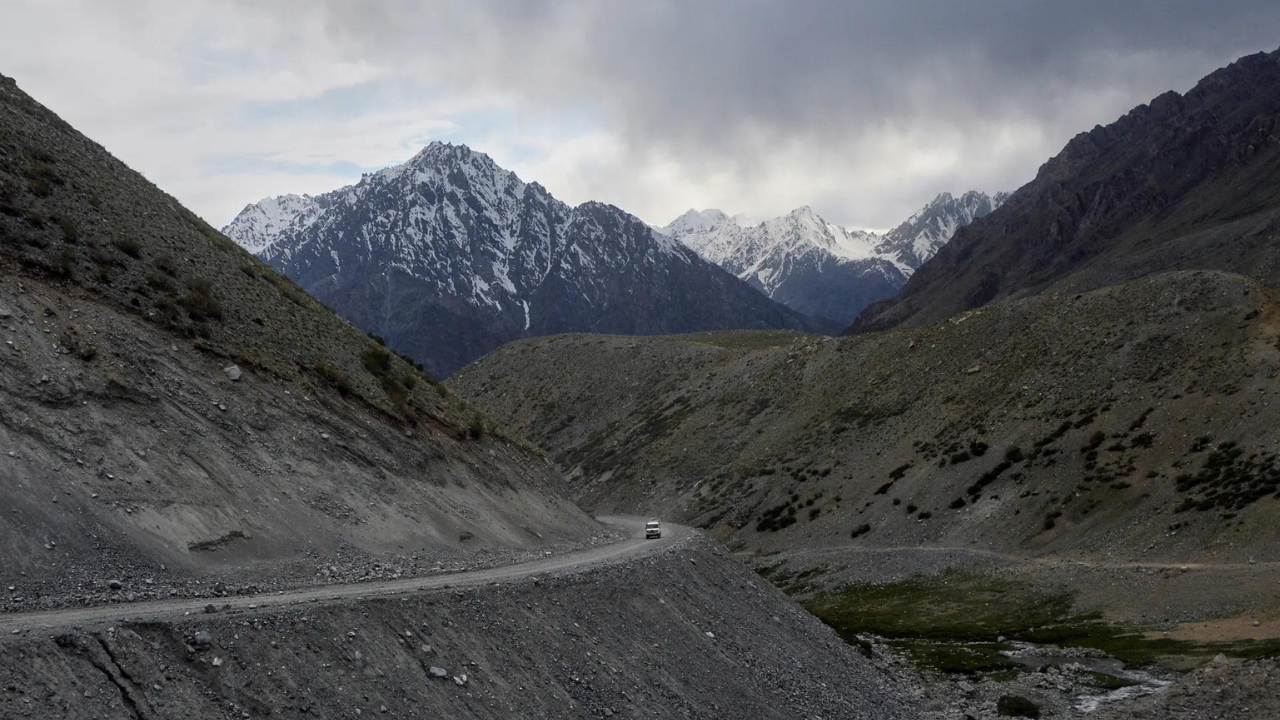
The Gilgit-Baltistan assembly has passed a resolution seeking province status for the region. This development comes amid unrest in Pakistan-occupied Kashmir (PoK).
The resolution was passed to make Gilgit-Baltistan the fifth province of Pakistan. Currently, Gilgit-Baltistan has a semi-autonomous status with its own assembly and council.
The move is seen as an attempt to address the long-standing demand of the people of Gilgit-Baltistan for greater autonomy and representation. However, the decision is likely to have significant implications for the region's relationship with Pakistan and India.
Gilgit-Baltistan is a strategically important region, bordering China, India, and Afghanistan. The region has been a point of contention between India and Pakistan, with both countries claiming it as their own.
The Pakistan government has been facing unrest in PoK, with many residents demanding greater autonomy and rights. The passage of the resolution is seen as an attempt to placate the protesters and address their grievances.
The Indian government has maintained that Gilgit-Baltistan is an integral part of India and has opposed any attempts by Pakistan to change its status. The move is likely to escalate tensions between India and Pakistan, which have been strained in recent years.
The people of Gilgit-Baltistan have been demanding greater autonomy and representation for decades. The region has its own distinct culture and language, and many residents feel that they are not adequately represented in the Pakistani government.
The implications of the resolution are still unclear, and it remains to be seen how the Pakistani government will respond to the demand for province status. However, one thing is certain - the move has the potential to significantly alter the dynamics of the region and its relationship with India and Pakistan.
In the context of India-Pakistan relations, the development is significant. The two countries have been engaged in a longstanding dispute over Kashmir, and the move is likely to add another layer of complexity to the issue. The Indian government will likely oppose the move, citing its claim over the region.
The move also has implications for China, which has invested heavily in the region through the China-Pakistan Economic Corridor (CPEC). The CPEC passes through Gilgit-Baltistan, and any change in the region's status could have significant implications for China's interests in the region.
In conclusion, the passage of the resolution by the Gilgit-Baltistan assembly is a significant development with far-reaching implications for the region and its relationship with India, Pakistan, and China. The move has the potential to alter the dynamics of the region and escalate tensions between India and Pakistan.
The development is a reminder of the complex and sensitive nature of the Kashmir dispute, which has been a point of contention between India and Pakistan for decades. The move is likely to add another layer of complexity to the issue, and it remains to be seen how the situation will unfold in the coming days and weeks.