Mayawati Expels Nephew Akash Anand Again
Mayawati expels nephew, Mamata's nephew faces probes
'%3E%3Crect%20width%3D'96'%20height%3D'96'%20fill%3D'%231A5276'%2F%3E%3Ccircle%20cx%3D'30'%20cy%3D'24'%20r%3D'44'%20fill%3D'%23fff'%20opacity%3D'.12'%2F%3E%3Ccircle%20cx%3D'60'%20cy%3D'74'%20r%3D'40'%20fill%3D'%23000'%20opacity%3D'.10'%2F%3E%3C%2Fg%3E%3Cg%20fill%3D'%23fff'%3E%3Cpath%20d%3D'M31%2041%20L48%2031%20L65%2041%20Z'%2F%3E%3Crect%20x%3D'33'%20y%3D'43'%20width%3D'4'%20height%3D'17'%2F%3E%3Crect%20x%3D'41'%20y%3D'43'%20width%3D'4'%20height%3D'17'%2F%3E%3Crect%20x%3D'51'%20y%3D'43'%20width%3D'4'%20height%3D'17'%2F%3E%3Crect%20x%3D'59'%20y%3D'43'%20width%3D'4'%20height%3D'17'%2F%3E%3Crect%20x%3D'30'%20y%3D'62'%20width%3D'36'%20height%3D'4'%20rx%3D'1'%2F%3E%3C%2Fg%3E%3C%2Fsvg%3E)
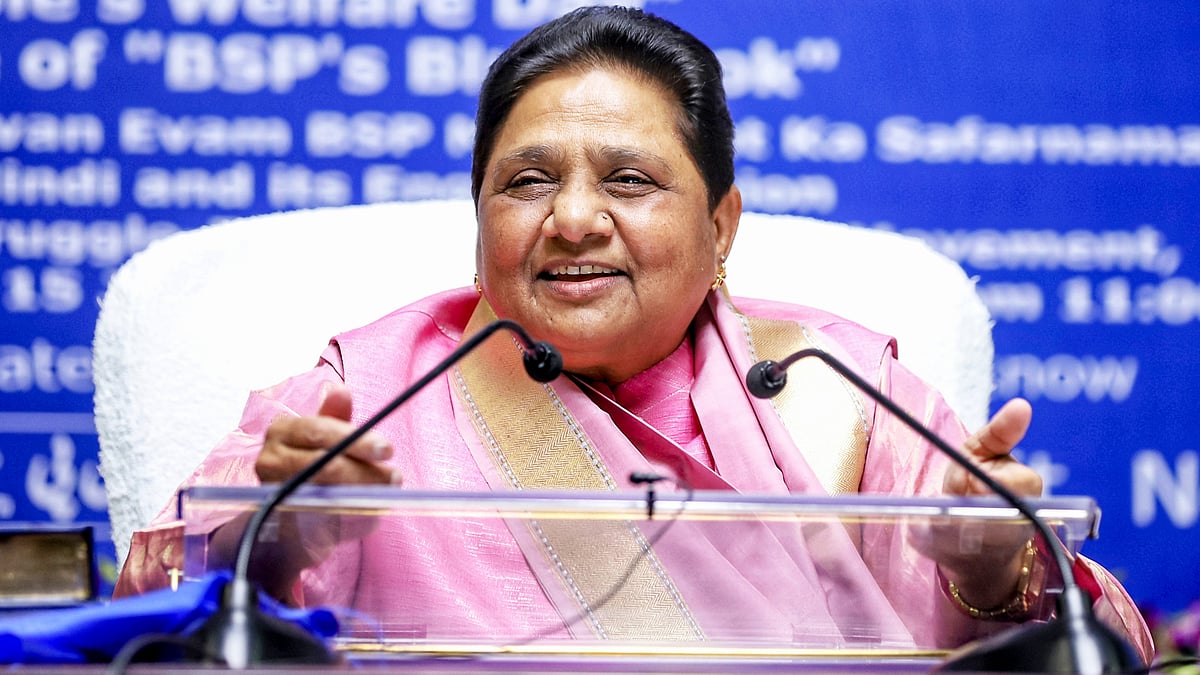
Mayawati, the chief of Bahujan Samaj Party and former Uttar Pradesh chief minister, has expelled her nephew Akash Anand for the third time in two years. This decision comes after she had previously removed him as national coordinator and cancelled his primary membership.
Mayawati had first removed Akash in May 2024, following a speech case in Sitapur during the Lok Sabha campaign. However, she brought him back in June and named him her political successor. In March 2025, she expelled him again, blaming the influence of his father-in-law Ashok Siddharth, a former Rajya Sabha member.
After a public apology, Mayawati restored Akash's position, but on September 3, 2026, she stripped him of the coordinator's post once more. On September 10, she expelled him altogether, stating that his father-in-law's announcement of retirement from politics came too late and that Akash had not shown loyalty in the way she demanded.
This incident is not isolated to the BSP, as another firebrand woman, Mamata Banerjee, founder of the Trinamool Congress and former chief minister of West Bengal, is also facing challenges with her nephew Abhishek Banerjee. Abhishek has been at the centre of discussion and scrutiny, and is currently facing probes by the new BJP government.
After the assembly results of May 4, 2026, when the BJP won 207 seats and the TMC was reduced to 80, the party tore itself apart. Senior leaders turned on Abhishek, blaming him for high-handedness and the party's poor performance. Allegations of forged signatures and FIRs against Abhishek have followed, with agencies questioning him for hours.
Despite the challenges, Mamata has stood by her nephew, stating that he had fought like a tiger. However, the party has continued to fracture around him. The stories of Akash and Abhishek are not merely the stories of two nephews, but are chapters in a politics that has long been male-dominated.
Women like Mayawati and Mamata have risen to power without the support of husbands or sons, building organisations with their own scars and crowds. Their experiences highlight the complexities of dynastic politics in India, where family members often play a crucial role in shaping the trajectory of political parties.
The expulsion of Akash Anand and the probes against Abhishek Banerjee are significant developments in the Indian political landscape. They underscore the challenges faced by women in politics, particularly when it comes to navigating family dynamics and maintaining control over their parties.
As the BSP and TMC continue to navigate these challenges, it remains to be seen how the parties will evolve and whether the nephews will play a role in their future. One thing is certain, however - the stories of Akash and Abhishek will continue to be closely watched, as they offer a glimpse into the intricate world of Indian politics.
The decline of the BSP and the rise of the BJP in Uttar Pradesh have significant implications for the Indian political landscape. The shift in the Dalit vote and the fragmentation of the party have created new challenges for Mayawati, who must now navigate a changing political landscape.
In West Bengal, the TMC's poor performance in the assembly elections has raised questions about the party's future and the role of Abhishek Banerjee. As the party continues to fracture, it remains to be seen whether Mamata will be able to maintain control and lead the party to victory in future elections.
In conclusion, the stories of Akash Anand and Abhishek Banerjee offer a fascinating glimpse into the world of Indian politics. They highlight the complexities of dynastic politics, the challenges faced by women in power, and the ever-changing landscape of Indian politics.
Frequently asked questions
Why was Akash Anand expelled by Mayawati?
Akash Anand was expelled by Mayawati due to his lack of loyalty and the influence of his father-in-law Ashok Siddharth.
What are the allegations against Abhishek Banerjee?
Abhishek Banerjee is facing allegations of forged signatures, soil excavation, and inflammatory campaign remarks, among others.