NGT Seeks Accountability for Indore Water Tragedy
NGT directs MP govt to fix accountability, 36 dead in Indore cholera outbreak
'%3E%3Crect%20width%3D'96'%20height%3D'96'%20fill%3D'%23B3261E'%2F%3E%3Ccircle%20cx%3D'30'%20cy%3D'24'%20r%3D'44'%20fill%3D'%23fff'%20opacity%3D'.12'%2F%3E%3Ccircle%20cx%3D'60'%20cy%3D'74'%20r%3D'40'%20fill%3D'%23000'%20opacity%3D'.10'%2F%3E%3C%2Fg%3E%3Cg%20fill%3D'%23fff'%3E%3Crect%20x%3D'29'%20y%3D'49'%20width%3D'8'%20height%3D'19'%20rx%3D'1'%2F%3E%3Crect%20x%3D'39'%20y%3D'40'%20width%3D'9'%20height%3D'28'%20rx%3D'1'%2F%3E%3Crect%20x%3D'50'%20y%3D'45'%20width%3D'8'%20height%3D'23'%20rx%3D'1'%2F%3E%3Crect%20x%3D'60'%20y%3D'53'%20width%3D'7'%20height%3D'15'%20rx%3D'1'%2F%3E%3Crect%20x%3D'41'%20y%3D'34'%20width%3D'5'%20height%3D'6'%2F%3E%3C%2Fg%3E%3C%2Fsvg%3E)
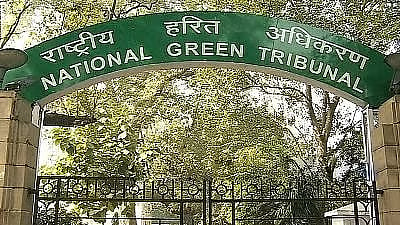
The National Green Tribunal (NGT) has directed the Madhya Pradesh government to fix accountability for negligence in the management of drinking water supply following the cholera outbreak linked to contaminated water in Indore's Bhagirathpura area.
The directions come in the wake of the Bhagirathpura tragedy in Indore last December, in which 36 people died and hundreds fell ill after consuming contaminated drinking water.
The NGT's Central Zone Bench is hearing the matter on separate petitions filed by Rashid Noor Khan and Kamal Kumar Rathi. During the hearing, reports submitted by the Health Department and the Madhya Pradesh Pollution Control Board (MPPCB) revealed serious deficiencies in the drinking water supply system.
According to the Health Department, the outbreak was most likely caused by sewage entering municipal drinking water pipelines, but timely action was not taken. The MPPCB's investigation found total coliform bacteria in 50 of the 52 water samples and E. coli bacteria in 40 samples, confirming extensive contamination.
The Tribunal directed that accountability be fixed wherever negligence is established in the operation, maintenance or monitoring of the water supply network. The next hearing has been scheduled for September 16.
A judicial commission constituted by the High Court is already investigating the Bhagirathpura incident to identify the officials and agencies responsible for the contamination. As the inquiry is underway, the Tribunal directed the MPPCB to provide copies of its report to all parties, who have been given three weeks to file their responses.
To improve drinking water systems across urban local bodies, the Tribunal issued 29 directives. These include replacing dilapidated pipelines, separating sewer and water lines, preventing leakages, regular cleaning of water reservoirs, water quality testing through NABL-accredited laboratories, public disclosure of test reports, real-time monitoring, third-party audits, expansion of sewer networks, establishment of new sewage treatment plants, rainwater harvesting, geo-tagging of government borewells, and fixing accountability for officials responsible for water pollution.
The directives aim to strengthen the state's urban drinking water supply system and prevent similar incidents. The Tribunal stressed that citizens should not suffer due to administrative lapses and ordered immediate corrective measures.
The NGT's decision is significant as it highlights the need for accountability and improved management of drinking water supply systems. The incident in Indore's Bhagirathpura area is a wake-up call for the authorities to take immediate action to prevent such tragedies in the future.
The Madhya Pradesh government must take the NGT's directives seriously and work towards improving the state's drinking water supply system. The citizens of Madhya Pradesh have the right to access safe and clean drinking water, and it is the responsibility of the government to ensure that this right is protected.
In conclusion, the NGT's decision is a step in the right direction towards ensuring that the authorities are held accountable for their negligence and that the citizens of Madhya Pradesh have access to safe and clean drinking water.
The incident in Indore's Bhagirathpura area is a reminder that the management of drinking water supply systems is a critical issue that requires immediate attention. The NGT's directives provide a roadmap for the authorities to follow, and it is essential that they are implemented in a timely and effective manner.
Frequently asked questions
What was the cause of the cholera outbreak in Indore's Bhagirathpura area?
The outbreak was most likely caused by sewage entering municipal drinking water pipelines.
What directives has the NGT issued to improve drinking water systems?
The NGT has issued 29 directives, including replacing dilapidated pipelines, separating sewer and water lines, and regular cleaning of water reservoirs.