Pakistan Threatens India Over Indus Water Treaty
Pakistan PM warns of direct response, India yet to react.
'%3E%3Crect%20width%3D'96'%20height%3D'96'%20fill%3D'%234A235A'%2F%3E%3Ccircle%20cx%3D'30'%20cy%3D'24'%20r%3D'44'%20fill%3D'%23fff'%20opacity%3D'.12'%2F%3E%3Ccircle%20cx%3D'60'%20cy%3D'74'%20r%3D'40'%20fill%3D'%23000'%20opacity%3D'.10'%2F%3E%3C%2Fg%3E%3Cg%20fill%3D'none'%20stroke%3D'%23fff'%20stroke-width%3D'3'%3E%3Ccircle%20cx%3D'48'%20cy%3D'48'%20r%3D'16'%2F%3E%3Cellipse%20cx%3D'48'%20cy%3D'48'%20rx%3D'6.5'%20ry%3D'16'%2F%3E%3Cline%20x1%3D'32'%20y1%3D'42'%20x2%3D'64'%20y2%3D'42'%2F%3E%3Cline%20x1%3D'32'%20y1%3D'54'%20x2%3D'64'%20y2%3D'54'%2F%3E%3C%2Fg%3E%3C%2Fsvg%3E)
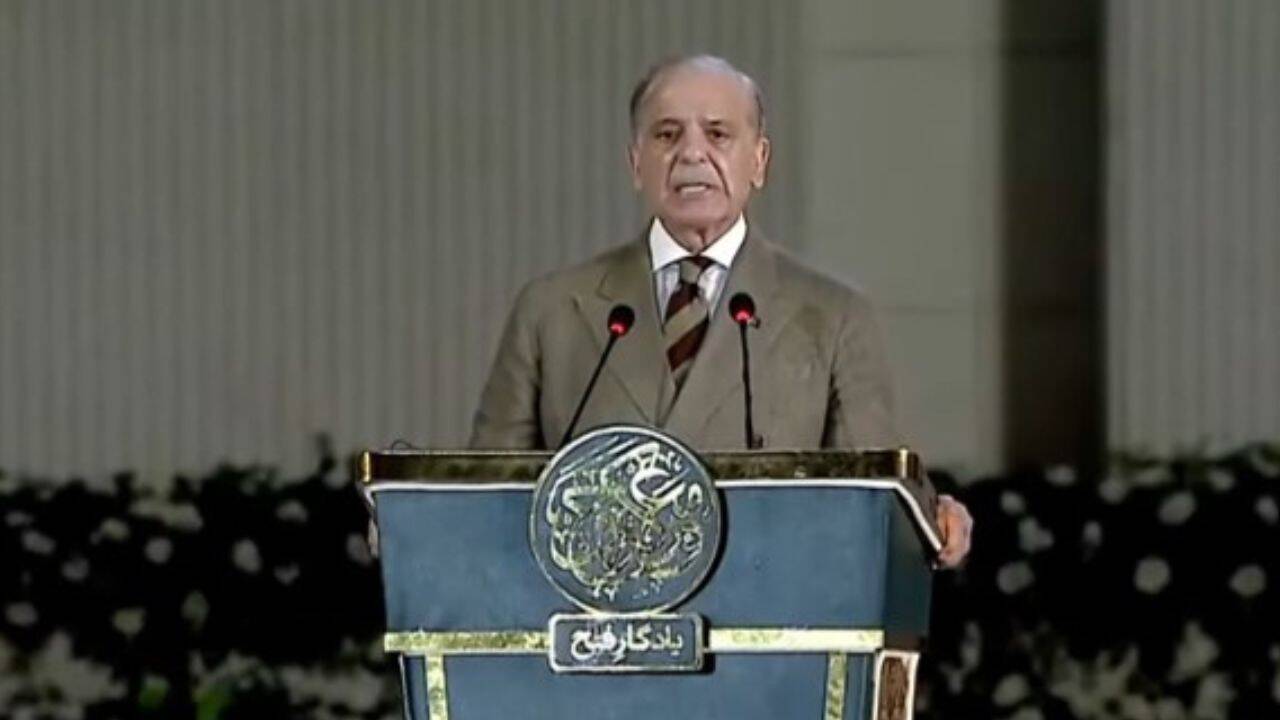
Pakistan Prime Minister Shehbaz Sharif has warned India of a direct response if it violates the Indus Water Treaty.
The treaty, signed in 1960, regulates the sharing of water resources between India and Pakistan. Sharif's statement comes amid rising tensions between the two nations.
Shehbaz Sharif stated that the Indus Water Treaty is a red line for Pakistan, implying that any violation would have severe consequences. The Pakistani government has been critical of India's actions regarding the treaty, claiming that India has been violating its terms.
The Indus Water Treaty has been a point of contention between India and Pakistan for many years. The treaty allocates the waters of the Indus River and its tributaries between the two countries. India has been constructing several hydroelectric projects on the rivers allocated to it, which Pakistan claims are against the treaty's terms.
India has maintained that its projects are within the parameters of the treaty and has offered to engage in dialogue with Pakistan to resolve the issue. However, Pakistan has been insisting on a more concrete response from India.
The situation remains tense, with both countries refusing to back down. The international community has been calling for calm and urging both nations to resolve their differences peacefully.
The Indus Water Treaty is a critical component of the relationship between India and Pakistan. Any violation of the treaty could have far-reaching consequences, including the escalation of tensions between the two nuclear-armed nations.
In recent years, there have been several instances of tensions between India and Pakistan over the treaty. The situation has been exacerbated by the lack of trust between the two countries, which has made it difficult to find a resolution.
The Pakistani government has been under pressure from its citizens to take a strong stance against India over the treaty. The opposition parties in Pakistan have also been critical of the government's handling of the situation, claiming that it has not done enough to protect the country's interests.
The Indian government has maintained that it is committed to the treaty and is willing to engage in dialogue with Pakistan to resolve the issue. However, the situation remains uncertain, and it is unclear how the situation will unfold.
The international community has a significant role to play in resolving the issue. The World Bank, which facilitated the signing of the treaty, has been urging both countries to resolve their differences peacefully.
In conclusion, the situation between India and Pakistan over the Indus Water Treaty remains tense. Pakistan's threat of a direct response has added to the uncertainty, and it is unclear how the situation will unfold. The international community must continue to urge both nations to resolve their differences peacefully and find a solution that works for both countries.
Frequently asked questions
What is the Indus Water Treaty
The Indus Water Treaty is a treaty signed in 1960 that regulates the sharing of water resources between India and Pakistan.
Why is the treaty a point of contention between India and Pakistan
The treaty is a point of contention because Pakistan claims that India has been violating its terms by constructing hydroelectric projects on the rivers allocated to it.