Indonesian Musician Ngartini Huang Performs Guzheng in Delhi
Ngartini Huang plays traditional Chinese instrument, Indonesian musician performs in Delhi, Guzheng maestro
'%3E%3Crect%20width%3D'96'%20height%3D'96'%20fill%3D'%23B3261E'%2F%3E%3Ccircle%20cx%3D'30'%20cy%3D'24'%20r%3D'44'%20fill%3D'%23fff'%20opacity%3D'.12'%2F%3E%3Ccircle%20cx%3D'60'%20cy%3D'74'%20r%3D'40'%20fill%3D'%23000'%20opacity%3D'.10'%2F%3E%3C%2Fg%3E%3Cg%20fill%3D'%23fff'%3E%3Crect%20x%3D'29'%20y%3D'49'%20width%3D'8'%20height%3D'19'%20rx%3D'1'%2F%3E%3Crect%20x%3D'39'%20y%3D'40'%20width%3D'9'%20height%3D'28'%20rx%3D'1'%2F%3E%3Crect%20x%3D'50'%20y%3D'45'%20width%3D'8'%20height%3D'23'%20rx%3D'1'%2F%3E%3Crect%20x%3D'60'%20y%3D'53'%20width%3D'7'%20height%3D'15'%20rx%3D'1'%2F%3E%3Crect%20x%3D'41'%20y%3D'34'%20width%3D'5'%20height%3D'6'%2F%3E%3C%2Fg%3E%3C%2Fsvg%3E)
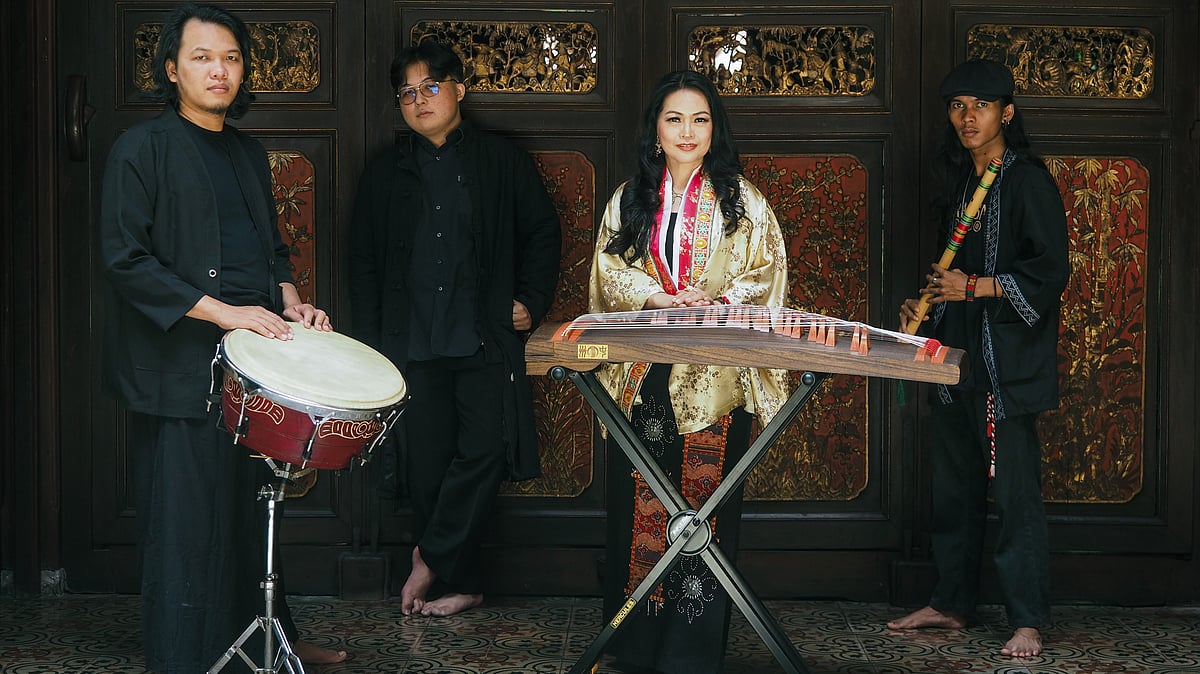
Ngartini Huang, an Indonesian musician, recently performed at the Soundscapes of India showcase festival in New Delhi. Growing up in Medan, Indonesia, Huang was inspired by the background music of martial arts movies, which led her to learn traditional Chinese instruments like the guzheng and pipa.
Huang's musical journey took her to the prestigious Sun Wen Yen Music School in Shanghai, China, where she honed her skills in playing the guzheng. Also known as the Chinese zither, the guzheng is an ancient instrument with a minimum of 21 strings stretched over moveable bridges on a soundboard made of Paulownia wood.
At her show in Delhi's Dr Ambedkar International Centre, Huang played the guzheng, accompanied by Aldo on flute, Zakky on keyboards, and Lana on multi-percussion. She performed several compositions, including Jadeite, inspired by her love for jade, and Au Revoir, a song she wrote for her daughter's wedding.
Huang's music is a unique blend of traditional Chinese and Indonesian elements, with a focus on creating a peaceful and serene atmosphere. She has tried to break away from the traditional formal expressions of guzheng players, instead aiming to make her audience feel happy and joyful.
The Delhi set also included a tune called Pink Raga, inspired by the city of Jaipur, and featured the addition of the right drum of the tabla to the percussion kit. Huang's other notable pieces include Whisper in the Night and Take No Niva, a song inspired by a bamboo garden in the Japanese mountains.
Huang's performance in Delhi was part of the Soundscapes of India showcase festival, organised by the Indian Performing Right Society (IPRS) and curated by MusiConnect India. The festival aimed to create awareness about the beautiful instrument guzheng and its rich cultural heritage.
Ngartini Huang's musical journey is a testament to the power of cultural exchange and the beauty of traditional instruments. Her performance in Delhi was a unique opportunity for Indian audiences to experience the guzheng and its serene music.
The guzheng is an instrument with a rich history, dating back over 2,200 years. Its peaceful and serene nature has made it a popular instrument in classical Chinese music. Huang's efforts to make the instrument more accessible and joyful have been well-received by audiences around the world.
In conclusion, Ngartini Huang's performance in Delhi was a memorable event that showcased the beauty of the guzheng and its rich cultural heritage. Her music is a unique blend of traditional Chinese and Indonesian elements, with a focus on creating a peaceful and serene atmosphere.
As Huang continues to perform and compose music, she is likely to inspire a new generation of musicians and music lovers to appreciate the beauty of the guzheng. Her musical journey is a testament to the power of cultural exchange and the importance of preserving traditional instruments and their rich cultural heritage.
The success of Huang's performance in Delhi is a positive sign for the future of cultural exchange between India and Indonesia. It highlights the importance of promoting traditional instruments and their rich cultural heritage, and the need to create more opportunities for musicians to showcase their talents.
In the end, Ngartini Huang's music is a reminder of the beauty and richness of traditional instruments, and the importance of preserving their cultural heritage. Her performance in Delhi was a unique opportunity for Indian audiences to experience the guzheng and its serene music, and it is likely to be remembered for a long time to come.
Frequently asked questions
What is the guzheng instrument?
The guzheng is an ancient Chinese instrument, also known as the Chinese zither, with a minimum of 21 strings stretched over moveable bridges on a soundboard made of Paulownia wood.
What inspired Ngartini Huang to learn the guzheng?
Ngartini Huang was inspired to learn the guzheng by the background music of martial arts movies she watched growing up in Indonesia.