Sperm Whales Found To Have Dialects
AI study reveals sperm whales have dialects and alphabet. Researchers made the discovery in the Mediterranean.

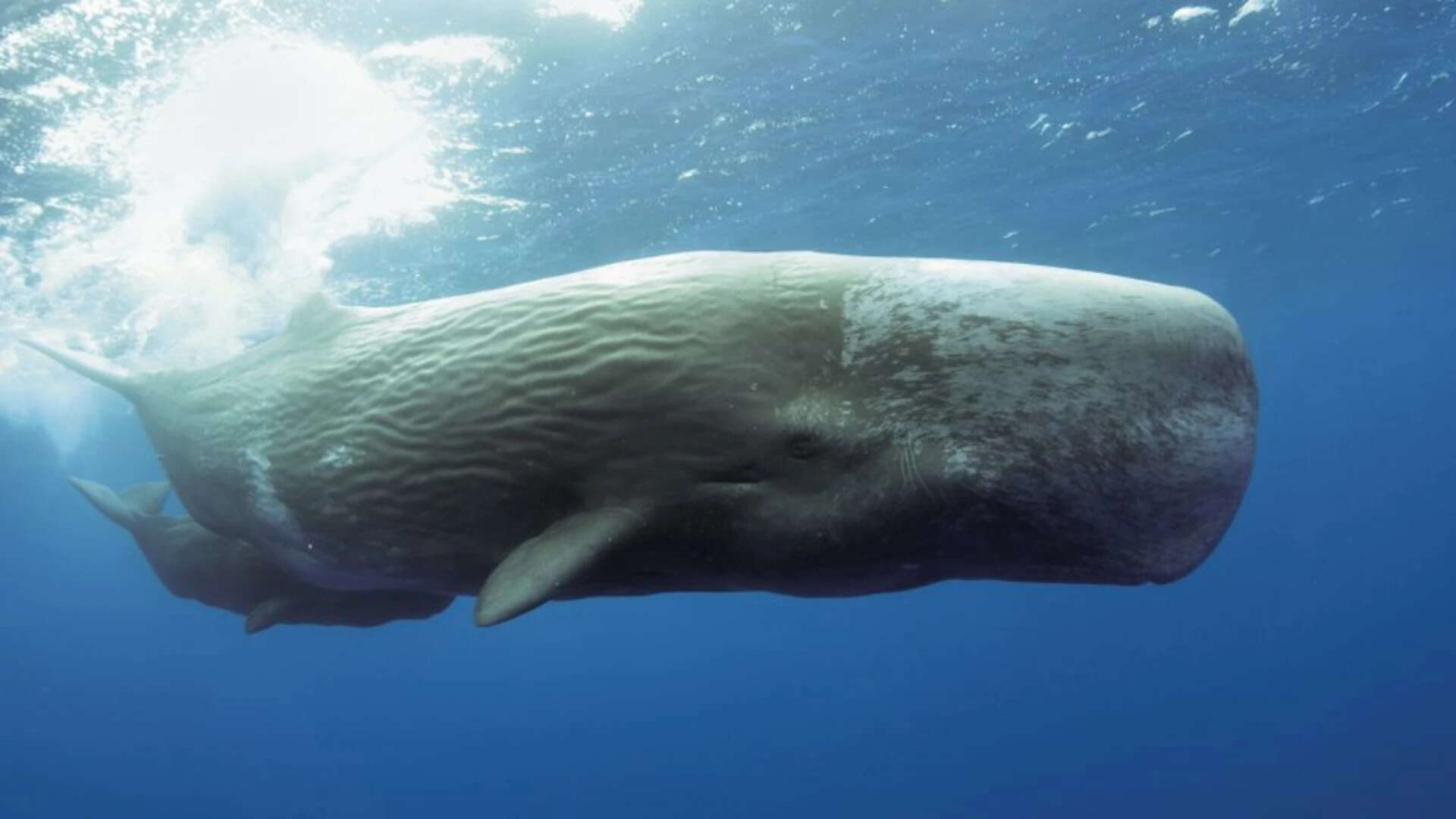
A recent study has made a groundbreaking discovery about the communication system of sperm whales. Using artificial intelligence, scientists were able to decode the complex system of clicks and vocalizations used by these marine mammals. The research revealed that sperm whales in the eastern Mediterranean Sea have a unique regional dialect, as well as a phonetic alphabet and combinations of clicks that resemble words.
The study's findings are significant, as they suggest that sperm whales are capable of complex communication. The discovery of a phonetic alphabet and dialects among these animals challenges our current understanding of non-human communication and highlights the importance of continued research into this area.
The researchers used AI to analyze the vocalizations of sperm whales in the eastern Mediterranean Sea. By studying the patterns and combinations of clicks, they were able to identify a unique dialect among the whales in this region. This dialect is distinct from those found in other parts of the world, suggesting that sperm whales may have developed different communication systems in different regions.
The discovery of a phonetic alphabet among sperm whales is also a significant finding. This alphabet is made up of a series of clicks and vocalizations that can be combined to form words or phrases. The researchers believe that this alphabet may be used by sperm whales to convey complex information, such as the location of food or the presence of predators.
The study's findings have important implications for conservation efforts. By understanding the communication systems of sperm whales, researchers may be able to develop more effective strategies for protecting these animals and their habitats. For example, by analyzing the vocalizations of sperm whales, researchers may be able to identify areas where these animals are most active and target conservation efforts accordingly.
The study also highlights the importance of continued research into the communication systems of non-human animals. By studying the complex vocalizations of sperm whales and other animals, researchers may be able to gain a deeper understanding of the evolution of language and the development of complex communication systems.
In addition to its implications for conservation, the study's findings also have significant implications for our understanding of animal cognition and intelligence. The discovery of complex communication systems among sperm whales suggests that these animals are capable of complex thought and problem-solving, challenging our current understanding of the cognitive abilities of non-human animals.
Overall, the study's findings are a significant contribution to our understanding of the communication systems of sperm whales and other non-human animals. By continuing to research and study these complex systems, we may be able to gain a deeper understanding of the evolution of language and the development of complex communication systems.
The discovery of dialects and a phonetic alphabet among sperm whales is a groundbreaking finding that challenges our current understanding of non-human communication. As researchers continue to study the complex vocalizations of these animals, we may be able to gain a deeper understanding of the evolution of language and the development of complex communication systems.
In conclusion, the study's findings are a significant step forward in our understanding of the communication systems of sperm whales. The discovery of dialects and a phonetic alphabet among these animals highlights the importance of continued research into this area and has significant implications for conservation efforts and our understanding of animal cognition and intelligence.