Thousands Visit Wadala's Vitthal Temple On Ashadhi Ekadashi
Devotees throng Prati Pandharpur, Mayor Ritu Tawde prays for good rains
'%3E%3Crect%20width%3D'96'%20height%3D'96'%20fill%3D'%23B3261E'%2F%3E%3Ccircle%20cx%3D'30'%20cy%3D'24'%20r%3D'44'%20fill%3D'%23fff'%20opacity%3D'.12'%2F%3E%3Ccircle%20cx%3D'60'%20cy%3D'74'%20r%3D'40'%20fill%3D'%23000'%20opacity%3D'.10'%2F%3E%3C%2Fg%3E%3Cg%20fill%3D'%23fff'%3E%3Crect%20x%3D'29'%20y%3D'49'%20width%3D'8'%20height%3D'19'%20rx%3D'1'%2F%3E%3Crect%20x%3D'39'%20y%3D'40'%20width%3D'9'%20height%3D'28'%20rx%3D'1'%2F%3E%3Crect%20x%3D'50'%20y%3D'45'%20width%3D'8'%20height%3D'23'%20rx%3D'1'%2F%3E%3Crect%20x%3D'60'%20y%3D'53'%20width%3D'7'%20height%3D'15'%20rx%3D'1'%2F%3E%3Crect%20x%3D'41'%20y%3D'34'%20width%3D'5'%20height%3D'6'%2F%3E%3C%2Fg%3E%3C%2Fsvg%3E)
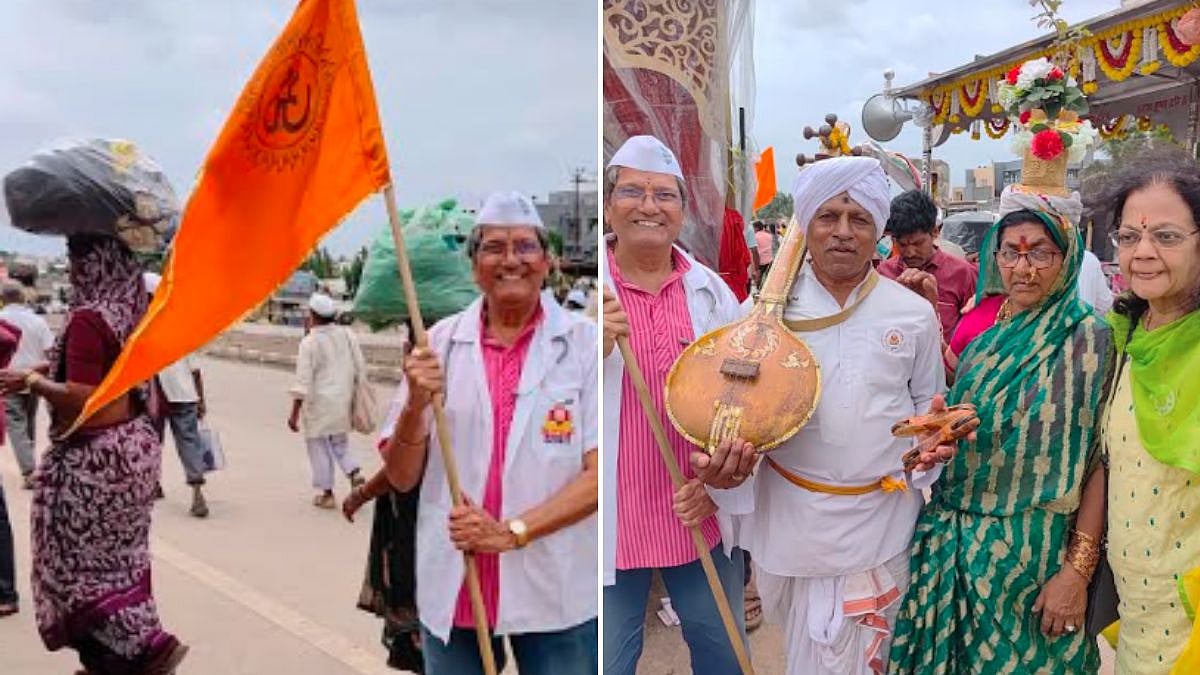
On Saturday, thousands of devotees flocked to the historic Vitthal temple in Wadala, known as Prati Pandharpur, to mark Ashadhi Ekadashi, the spiritual culmination of the annual Wari pilgrimage to Pandharpur.
The temple, which serves as an important place of worship for devotees unable to undertake the pilgrimage to Pandharpur, saw devotees queuing from midnight for darshan of Lord Vitthal and his consort, Rakhumai.
Mumbai Mayor Ritu Tawde visited the temple and prayed for good rains to ease the city's water scarcity. She told the media that she had prayed for the well-being of the city and its residents.
According to Dr Suresh Bhat, a Vitthal devotee and former medical practitioner from Bandra East, the temple's origins date back more than 400 years. The legend has it that a group of Koli and Agri devotees travelling on the Wari discovered an idol of Lord Vitthal in the Chandrabhaga river after their Guru injured his foot while bathing.
Ashadhi Ekadashi marks the high point of Maharashtra's centuries-old Wari tradition. Every year, during the month of Ashadh, lakhs of warkaris dressed in white walk to Pandharpur behind the two principal palkhis—the Sant Dnyaneshwar Maharaj Palkhi from Alandi and the Sant Tukaram Maharaj Palkhi from Dehu.
The Wari tradition is a centuries-old practice where devotees walk to Pandharpur, singing devotional songs and carrying saffron flags. The procession comprises organised groups known as dindis, with musicians playing the tal and mridang. Women balance tulsi vrindavans on their heads throughout the journey, while men carry saffron flags, veenas and other instruments.
The Ringan ceremony is one of the most revered traditions of the pilgrimage. During the Gol Ringan, the riderless Maulincha Ashva, believed to embody the saint's spirit, gallops in a circle amid chants, while in the Ubhe Ringan, it races through two rows of waiting pilgrims.
As night falls, cooking fires illuminate the camps, where meals and tea are shared in a spirit of devotion and community. The Wari tradition is a testament to the devotion and faith of the people of Maharashtra.
The visit of Mayor Ritu Tawde to the temple highlights the importance of the Wari tradition and the role it plays in the cultural and spiritual heritage of Maharashtra. The prayer for good rains is also a reminder of the challenges faced by the city and the need for divine intervention to ease the water scarcity.
In conclusion, the thousands of devotees who visited the Vitthal temple in Wadala on Ashadhi Ekadashi are a testament to the enduring power of faith and devotion. The Wari tradition is a unique and important part of Maharashtra's cultural heritage, and its continuation is a reminder of the state's rich spiritual history.
The event also underscores the significance of the Vitthal temple in Wadala, which serves as a vital place of worship for devotees who cannot make the pilgrimage to Pandharpur. The temple's 400-year-old history and its association with Sant Tukaram make it a revered site for devotees.
Overall, the celebration of Ashadhi Ekadashi at the Vitthal temple in Wadala is a significant event that highlights the importance of faith, devotion, and community in Maharashtra's cultural heritage.
Frequently asked questions
What is the significance of Ashadhi Ekadashi in Maharashtra's Wari tradition?
Ashadhi Ekadashi marks the high point of Maharashtra's centuries-old Wari tradition, where lakhs of warkaris walk to Pandharpur behind the two principal palkhis.
What is the history of the Vitthal temple in Wadala?
The temple's origins date back more than 400 years, with the legend stating that a group of Koli and Agri devotees discovered an idol of Lord Vitthal in the Chandrabhaga river.