Tapeworm Turns Worker Ants into Queen-Like Creatures
A parasitic tapeworm extends worker ants' lifespan, making them queen-like. Research in Germany reveals the tapeworm's clever manipulation.
'%3E%3Crect%20width%3D'96'%20height%3D'96'%20fill%3D'%23B3261E'%2F%3E%3Ccircle%20cx%3D'30'%20cy%3D'24'%20r%3D'44'%20fill%3D'%23fff'%20opacity%3D'.12'%2F%3E%3Ccircle%20cx%3D'60'%20cy%3D'74'%20r%3D'40'%20fill%3D'%23000'%20opacity%3D'.10'%2F%3E%3C%2Fg%3E%3Cg%20fill%3D'%23fff'%3E%3Crect%20x%3D'29'%20y%3D'49'%20width%3D'8'%20height%3D'19'%20rx%3D'1'%2F%3E%3Crect%20x%3D'39'%20y%3D'40'%20width%3D'9'%20height%3D'28'%20rx%3D'1'%2F%3E%3Crect%20x%3D'50'%20y%3D'45'%20width%3D'8'%20height%3D'23'%20rx%3D'1'%2F%3E%3Crect%20x%3D'60'%20y%3D'53'%20width%3D'7'%20height%3D'15'%20rx%3D'1'%2F%3E%3Crect%20x%3D'41'%20y%3D'34'%20width%3D'5'%20height%3D'6'%2F%3E%3C%2Fg%3E%3C%2Fsvg%3E)
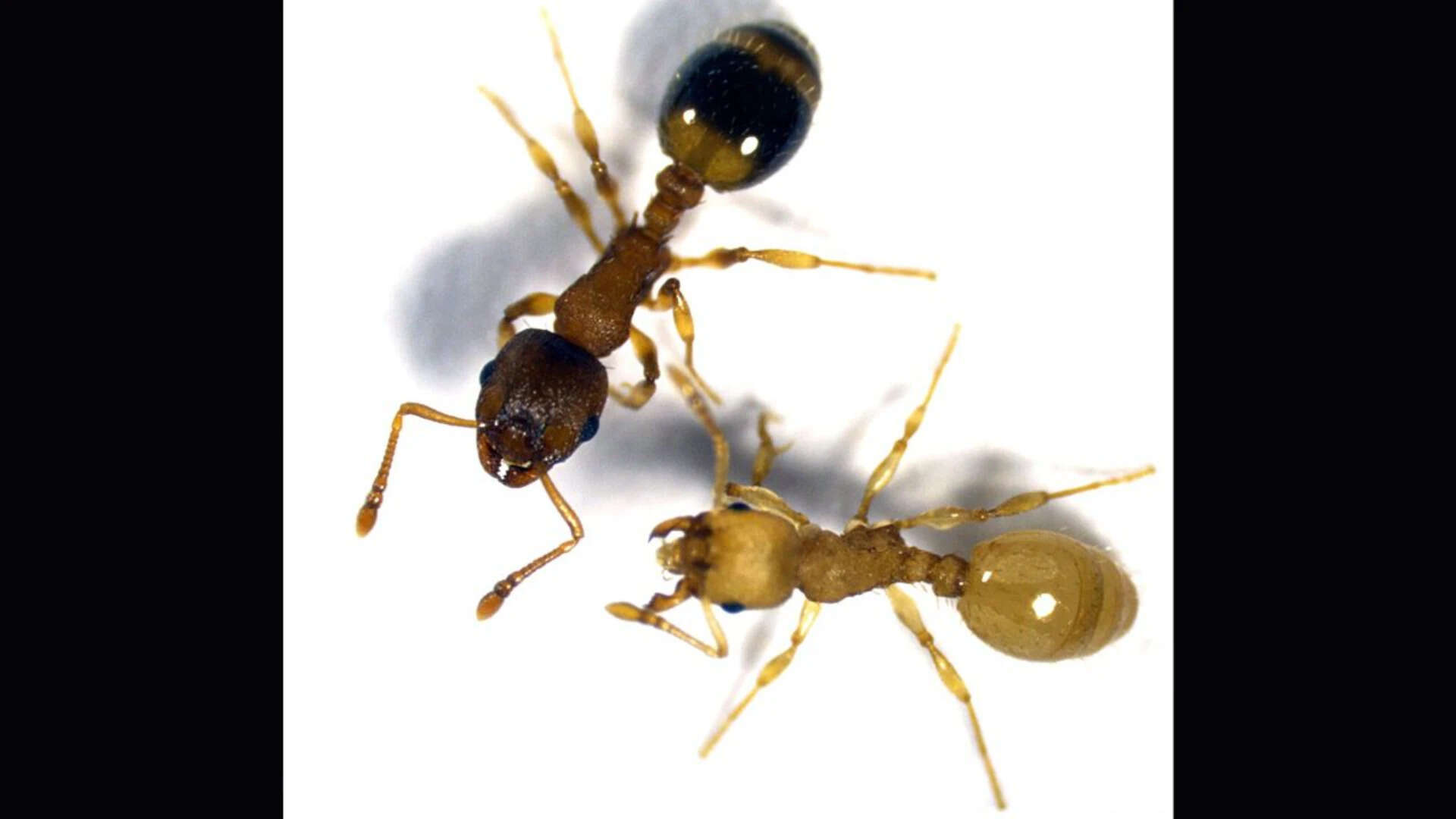
In a fascinating discovery, researchers in Germany have found that a parasitic tapeworm can extend the lifespan of worker ants by altering their genetics to mimic those of queen ants. This phenomenon has significant implications for our understanding of the aging process and genetic control.
The tapeworm, which infects the ants, manipulates their regulatory networks to make them less active and quieter in their nests. This transformation not only extends the ants' lifespan but also enhances the parasite's chances of survival. By making the worker ants more queen-like, the tapeworm is able to better ensure its own survival and propagation.
The research, which was conducted in Germany, sheds light on the complex relationships between parasites and their hosts. It also highlights the intricate mechanisms that govern genetic control and aging processes in living organisms. The study's findings have significant implications for our understanding of the biology of aging and may potentially lead to new insights into the development of therapies for age-related diseases.
The phenomenon of parasites manipulating their hosts' behavior is not new, but the specific mechanism by which the tapeworm alters the ants' genetics is a significant discovery. The research team's findings suggest that the tapeworm is able to hijack the ants' regulatory networks, effectively reprogramming their behavior and physiology.
The study's lead author noted that the research has significant implications for our understanding of the complex interactions between parasites and their hosts. The team's findings may also have potential applications in the development of new therapies for age-related diseases.
In the context of aging research, the study's findings are particularly significant. The discovery that a parasitic tapeworm can extend the lifespan of worker ants by manipulating their genetics raises important questions about the mechanisms that govern aging processes in living organisms.
The research team's study is a significant contribution to our understanding of the biology of aging and the complex relationships between parasites and their hosts. The findings may potentially lead to new insights into the development of therapies for age-related diseases and highlight the importance of continued research into the mechanisms that govern genetic control and aging processes.
In conclusion, the discovery that a parasitic tapeworm can extend the lifespan of worker ants by altering their genetics is a significant finding with important implications for our understanding of the aging process and genetic control. The research team's study highlights the complex relationships between parasites and their hosts and may potentially lead to new insights into the development of therapies for age-related diseases.
The study's findings are a reminder of the fascinating and complex world of biology, where parasites and hosts interact in intricate and often surprising ways. The research team's discovery is a significant contribution to our understanding of the natural world and may have important implications for our understanding of the aging process and the development of new therapies for age-related diseases.
What this means for us is that the study of parasites and their hosts can lead to new insights into the biology of aging and the development of new therapies for age-related diseases. The research team's findings highlight the importance of continued research into the mechanisms that govern genetic control and aging processes, and may potentially lead to new breakthroughs in our understanding of the aging process.
Frequently asked questions
What is the effect of the tapeworm on worker ants?
The tapeworm extends the lifespan of worker ants and makes them less active and quieter in their nests.
How does the tapeworm manipulate the ants' behavior?
The tapeworm hijacks the ants' regulatory networks, effectively reprogramming their behavior and physiology.