SC To Direct CBSE To Add Opt-Out Option For APAAR
SC to modify APAAR consent form, raise focus on student data privacy. Parents to get opt-out option.
'%3E%3Crect%20width%3D'96'%20height%3D'96'%20fill%3D'%231A5276'%2F%3E%3Ccircle%20cx%3D'30'%20cy%3D'24'%20r%3D'44'%20fill%3D'%23fff'%20opacity%3D'.12'%2F%3E%3Ccircle%20cx%3D'60'%20cy%3D'74'%20r%3D'40'%20fill%3D'%23000'%20opacity%3D'.10'%2F%3E%3C%2Fg%3E%3Cg%20fill%3D'%23fff'%3E%3Cpath%20d%3D'M31%2041%20L48%2031%20L65%2041%20Z'%2F%3E%3Crect%20x%3D'33'%20y%3D'43'%20width%3D'4'%20height%3D'17'%2F%3E%3Crect%20x%3D'41'%20y%3D'43'%20width%3D'4'%20height%3D'17'%2F%3E%3Crect%20x%3D'51'%20y%3D'43'%20width%3D'4'%20height%3D'17'%2F%3E%3Crect%20x%3D'59'%20y%3D'43'%20width%3D'4'%20height%3D'17'%2F%3E%3Crect%20x%3D'30'%20y%3D'62'%20width%3D'36'%20height%3D'4'%20rx%3D'1'%2F%3E%3C%2Fg%3E%3C%2Fsvg%3E)
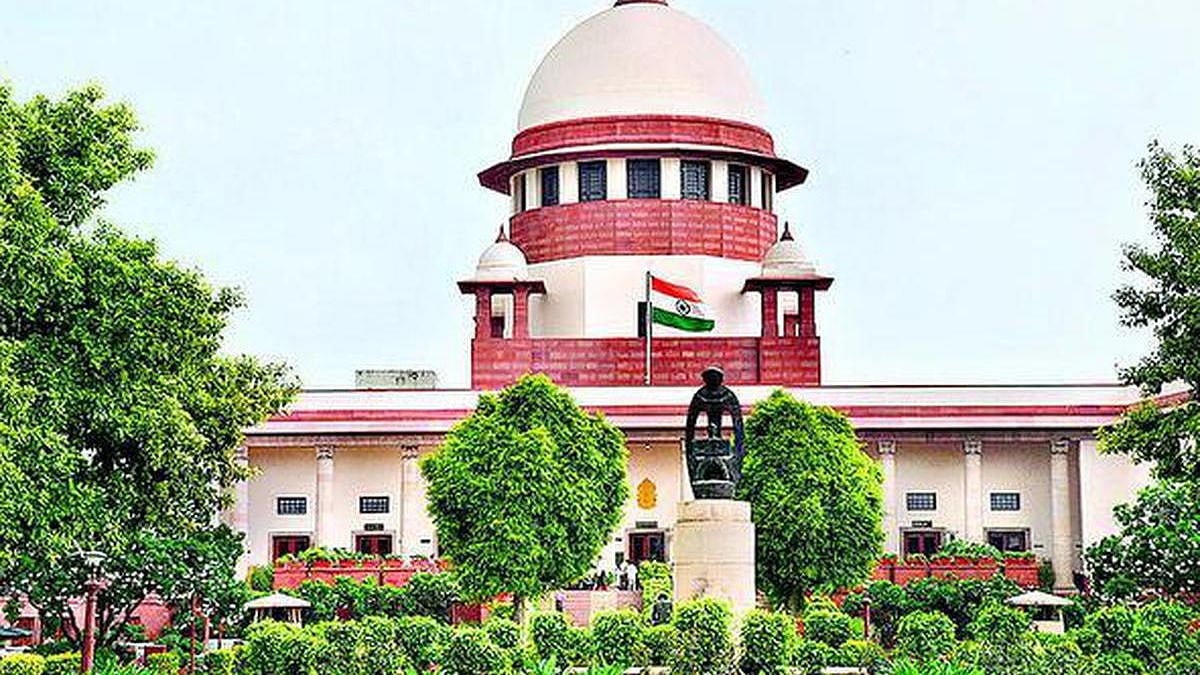
The Supreme Court has indicated that it will direct the Central Board of Secondary Education (CBSE) to modify its model consent form for the Automated Permanent Academic Account Registry (APAAR) to include an opt-out option for parents. This decision was made during the hearing of a writ petition filed by the parents of four students challenging the constitutional validity of the APAAR ID scheme.
The petition argues that the scheme compels students to obtain Aadhaar-linked academic IDs, raising concerns over data privacy and compliance with the Digital Personal Data Protection (DPDP) Act, 2023. A Bench comprising Chief Justice of India Surya Kant, Justice Joymalya Bagchi, and Justice V. Mohana was hearing the matter.
The Court's observation came after Senior Advocate Indira Jaising, appearing for the petitioners, relied on a December 2025 judgment of the Orissa High Court. The Orissa High Court had directed the Union government to amend the APAAR consent form to explicitly provide parents with an option to refuse consent and opt out of the scheme.
The Supreme Court observed that it would direct the CBSE to implement the judgment on a pan-India basis, as the High Court's order had not been challenged. The Chief Justice said that the Court would direct CBSE to examine the issues as well.
The petition challenges the APAAR scheme, introduced by the Ministry of Education in July 2023 under the 'One Student, One Unique ID' initiative. The scheme creates a lifelong academic identity linked with Aadhaar. The petitioners contended that although the government describes APAAR as voluntary, students are allegedly being compelled to enrol because the ID is increasingly required during academic processes, including examinations.
The Court appeared unconvinced by the challenge to the scheme itself, noting that the purpose of APAAR is to create a unique identity for every student. However, the Bench stressed that CBSE's circulars would remain subject to existing laws and could not override the provisions of the Digital Personal Data Protection Act, 2023.
The Court's decision to direct the CBSE to add an opt-out option for APAAR is a significant step towards protecting student data privacy. The move is expected to provide parents with more control over their children's personal data and ensure that the APAAR scheme is implemented in a manner that complies with existing laws.
The APAAR scheme has been introduced to create a lifelong academic identity for every student, making it easier to maintain academic records and monitor teacher-student ratios. However, the scheme has raised concerns over data privacy, with many arguing that it could lead to the misuse of personal data.
The Supreme Court's decision is a welcome move towards addressing these concerns and ensuring that the APAAR scheme is implemented in a manner that prioritizes student data privacy. The Court's emphasis on compliance with existing laws, including the Digital Personal Data Protection Act, 2023, is a significant step towards protecting the rights of students and parents.
In conclusion, the Supreme Court's decision to direct the CBSE to add an opt-out option for APAAR is a significant step towards protecting student data privacy. The move is expected to provide parents with more control over their children's personal data and ensure that the APAAR scheme is implemented in a manner that complies with existing laws. The decision highlights the importance of prioritizing data privacy and ensuring that schemes like APAAR are implemented in a manner that respects the rights of students and parents.
The Supreme Court's decision is also a reminder of the need for greater transparency and accountability in the implementation of schemes like APAAR. The Court's emphasis on compliance with existing laws and the need for an opt-out option highlights the importance of prioritizing the rights of students and parents. As the APAAR scheme continues to be implemented, it is essential that the CBSE and the Ministry of Education prioritize data privacy and ensure that the scheme is implemented in a manner that respects the rights of all stakeholders.
The decision of the Supreme Court will have significant implications for the implementation of the APAAR scheme and the protection of student data privacy. It is essential that the CBSE and the Ministry of Education take immediate action to implement the Court's decision and ensure that the APAAR scheme is implemented in a manner that prioritizes data privacy and respects the rights of students and parents.
In the coming days, it is expected that the CBSE will modify the APAAR consent form to include an opt-out option for parents. This move will provide parents with greater control over their children's personal data and ensure that the APAAR scheme is implemented in a manner that complies with existing laws. The decision of the Supreme Court is a significant step towards protecting student data privacy, and it is essential that the CBSE and the Ministry of Education prioritize the implementation of the Court's decision.
The Supreme Court's decision to direct the CBSE to add an opt-out option for APAAR is a significant step towards protecting student data privacy. The move is expected to provide parents with more control over their children's personal data and ensure that the APAAR scheme is implemented in a manner that complies with existing laws. The decision highlights the importance of prioritizing data privacy and ensuring that schemes like APAAR are implemented in a manner that respects the rights of students and parents.
The decision of the Supreme Court will have far-reaching implications for the protection of student data privacy in India. It is essential that the CBSE and the Ministry of Education take immediate action to implement the Court's decision and ensure that the APAAR scheme is implemented in a manner that prioritizes data privacy and respects the rights of students and parents. The decision is a significant step towards protecting the rights of students and parents and ensuring that schemes like APAAR are implemented in a manner that is transparent, accountable, and respectful of the rights of all stakeholders.
The Supreme Court's decision is a reminder of the importance of prioritizing data privacy and ensuring that schemes like APAAR are implemented in a manner that respects the rights of students and parents. The decision highlights the need for greater transparency and accountability in the implementation of schemes like APAAR and the importance of ensuring that the rights of students and parents are protected. As the APAAR scheme continues to be implemented, it is essential that the CBSE and the Ministry of Education prioritize data privacy and ensure that the scheme is implemented in a manner that respects the rights of all stakeholders.
In conclusion, the Supreme Court's decision to direct the CBSE to add an opt-out option for APAAR is a significant step towards protecting student data privacy. The move is expected to provide parents with more control over their children's personal data and ensure that the APAAR scheme is implemented in a manner that complies with existing laws. The decision highlights the importance of prioritizing data privacy and ensuring that schemes like APAAR are implemented in a manner that respects the rights of students and parents. The decision will have significant implications for the protection of student data privacy in India and will ensure that the APAAR scheme is implemented in a manner that is transparent, accountable, and respectful of the rights of all stakeholders.
The significance of the Supreme Court's decision cannot be overstated. The decision is a major victory for parents and students who have been concerned about the potential misuse of personal data under the APAAR scheme. The decision ensures that parents have greater control over their children's personal data and that the APAAR scheme is implemented in a manner that complies with existing laws. The decision is also a reminder of the importance of prioritizing data privacy and ensuring that schemes like APAAR are implemented in a manner that respects the rights of students and parents.
The Supreme Court's decision will have a major impact on the implementation of the APAAR scheme and the protection of student data privacy in India. The decision will ensure that the APAAR scheme is implemented in a manner that is transparent, accountable, and respectful of the rights of all stakeholders. The decision is a significant step towards protecting the rights of students and parents and ensuring that schemes like APAAR are implemented in a manner that prioritizes data privacy.
In the end, the Supreme Court's decision to direct the CBSE to add an opt-out option for APAAR is a significant step towards protecting student data privacy. The move is expected to provide parents with more control over their children's personal data and ensure that the APAAR scheme is implemented in a manner that complies with existing laws. The decision highlights the importance of prioritizing data privacy and ensuring that schemes like APAAR are implemented in a manner that respects the rights of students and parents. The decision will have significant implications for the protection of student data privacy in India and will ensure that the APAAR scheme is implemented in a manner that is transparent, accountable, and respectful of the rights of all stakeholders.
What it means for India is that the Supreme Court's decision will set a precedent for the protection of student data privacy in the country. The decision will ensure that schemes like APAAR are implemented in a manner that prioritizes data privacy and respects the rights of students and parents. The decision will also have significant implications for the implementation of other schemes that involve the collection and use of personal data. The decision is a reminder of the importance of prioritizing data privacy and ensuring that schemes like APAAR are implemented in a manner that is transparent, accountable, and respectful of the rights of all stakeholders.
In conclusion, the Supreme Court's decision to direct the CBSE to add an opt-out option for APAAR is a significant step towards protecting student data privacy. The move is expected to provide parents with more control over their children's personal data and ensure that the APAAR scheme is implemented in a manner that complies with existing laws. The decision highlights the importance of prioritizing data privacy and ensuring that schemes like APAAR are implemented in a manner that respects the rights of students and parents. The decision will have significant implications for the protection of student data privacy in India and will ensure that the APAAR scheme is implemented in a manner that is transparent, accountable, and respectful of the rights of all stakeholders.