Centre Clarifies No Policy Bars Airport Operators From Owning Airlines
Government responds to cross-ownership debate, AAI receives request for waiver
'%3E%3Crect%20width%3D'96'%20height%3D'96'%20fill%3D'%231A5276'%2F%3E%3Ccircle%20cx%3D'30'%20cy%3D'24'%20r%3D'44'%20fill%3D'%23fff'%20opacity%3D'.12'%2F%3E%3Ccircle%20cx%3D'60'%20cy%3D'74'%20r%3D'40'%20fill%3D'%23000'%20opacity%3D'.10'%2F%3E%3C%2Fg%3E%3Cg%20fill%3D'%23fff'%3E%3Cpath%20d%3D'M31%2041%20L48%2031%20L65%2041%20Z'%2F%3E%3Crect%20x%3D'33'%20y%3D'43'%20width%3D'4'%20height%3D'17'%2F%3E%3Crect%20x%3D'41'%20y%3D'43'%20width%3D'4'%20height%3D'17'%2F%3E%3Crect%20x%3D'51'%20y%3D'43'%20width%3D'4'%20height%3D'17'%2F%3E%3Crect%20x%3D'59'%20y%3D'43'%20width%3D'4'%20height%3D'17'%2F%3E%3Crect%20x%3D'30'%20y%3D'62'%20width%3D'36'%20height%3D'4'%20rx%3D'1'%2F%3E%3C%2Fg%3E%3C%2Fsvg%3E)
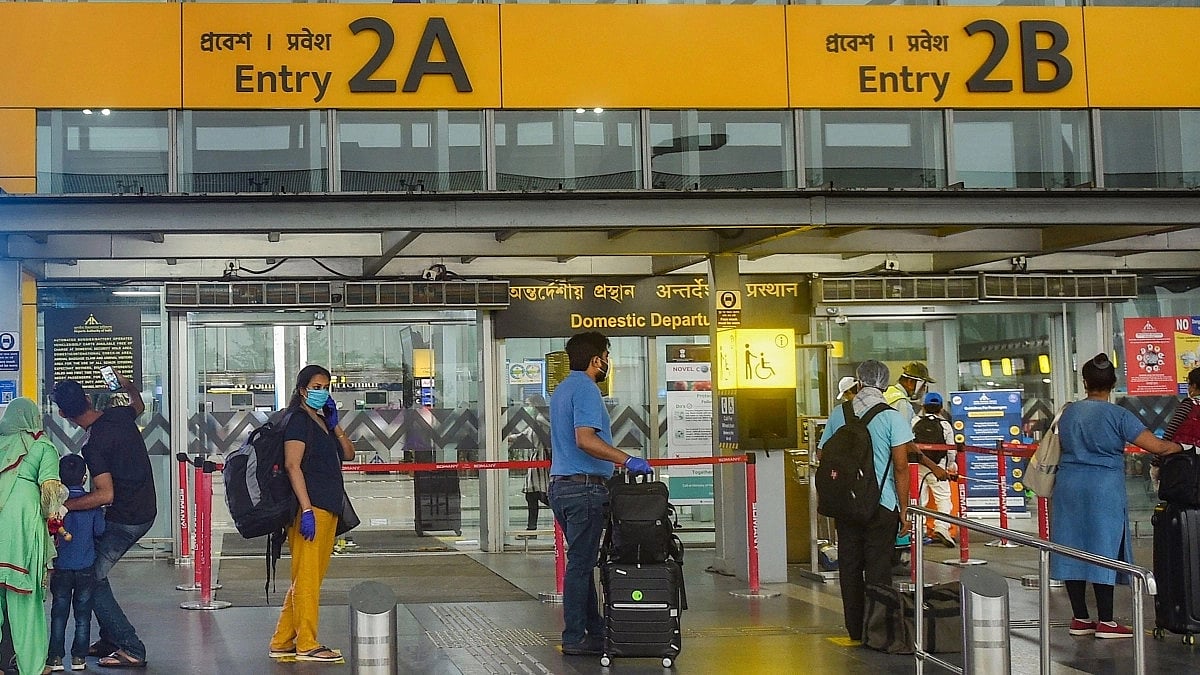
The Indian government has stated that there is no policy preventing major airport operators from owning significant stakes in scheduled airlines or entering the airline business. This clarification was provided by Minister of State for Civil Aviation Murlidhar Mohol in the Rajya Sabha, in response to a question raised by CPI(M) MP John Brittas regarding cross-ownership between airport operators and airlines.
The Airports Authority of India (AAI) had received a request seeking relaxation of contractual provisions that restrict certain airport operators from participating in aviation operations. The Civil Aviation Ministry confirmed that while no government policy prohibits airport operators from owning or operating airlines, some airport concession agreements under the public-private partnership (PPP) model include restrictions.
These contractual provisions prevent scheduled airlines and their group companies or associates from holding equity in airport concessionaires. The ministry added that AAI has received a request seeking a waiver from such restrictions, but the proposal is yet to be examined.
The clarification comes amid reports suggesting that the Adani Group was exploring a possible entry into India's airline sector. A letter from Adani Airports to AAI showed the airport operator seeking approval to allow Adani Defence & Aerospace and its affiliates to invest in, establish, acquire, own, promote or control a scheduled airline.
However, Adani Enterprises later dismissed the reports, stating that claims about evaluating an airline venture were entirely baseless and factually incorrect. The possibility of airport operators entering the airline sector has also drawn concerns from existing carriers, with IndiGo Managing Director Rahul Bhatia saying that allowing airport companies to own airlines could lead to a massive conflict of interest and potentially affect consumers.
On the other hand, Akasa Air has supported the idea of airport operators owning airlines, stating that India needs more competition in the sector. The government's clarification is expected to keep the focus on the regulatory framework governing airport and airline ownership in India.
The debate around cross-ownership between airport operators and airlines has been ongoing, with some arguing that it could lead to unfair advantages and conflicts of interest. Others believe that it could increase competition and improve services in the sector.
The Indian airline industry has seen significant growth in recent years, with the number of passengers increasing rapidly. However, the sector is also facing challenges such as high operating costs, congestion at airports, and competition from foreign carriers.
The government's decision to allow airport operators to own airlines could have significant implications for the sector. It could lead to increased investment in airports and airlines, and potentially improve services for passengers. However, it also raises concerns about conflicts of interest and the potential for unfair advantages.
In conclusion, the government's clarification on the policy regarding airport operators owning airlines has sparked a debate about the potential implications for the sector. While some argue that it could increase competition and improve services, others believe that it could lead to conflicts of interest and unfair advantages. The outcome of this debate will be crucial in shaping the future of the Indian airline industry.
The regulatory framework governing airport and airline ownership in India is complex and involves multiple stakeholders. The government's decision to allow airport operators to own airlines will require careful consideration of the potential implications and the need to ensure a level playing field for all stakeholders.
As the Indian airline industry continues to grow and evolve, it is essential to have a clear and transparent regulatory framework in place. This will help to ensure that the sector operates fairly and efficiently, and that passengers receive the best possible services.
In the coming months, the government is expected to examine the proposal to waive the restrictions on airport operators owning airlines. The outcome of this examination will be crucial in determining the future of the sector and the potential implications for passengers and stakeholders.
The Indian government's decision to allow airport operators to own airlines has significant implications for the sector. It is essential to carefully consider the potential implications and ensure that the regulatory framework is fair, transparent, and efficient.
The future of the Indian airline industry will depend on the government's ability to balance the needs of different stakeholders and ensure a level playing field. The decision to allow airport operators to own airlines is a crucial step in this process, and it will be essential to monitor the developments in the sector closely.
In conclusion, the government's clarification on the policy regarding airport operators owning airlines has sparked a debate about the potential implications for the sector. While some argue that it could increase competition and improve services, others believe that it could lead to conflicts of interest and unfair advantages. The outcome of this debate will be crucial in shaping the future of the Indian airline industry.
Frequently asked questions
Can airport operators own airlines in India?
There is no policy preventing airport operators from owning significant stakes in scheduled airlines or entering the airline business.
What are the concerns around airport operators owning airlines?
Some argue that it could lead to unfair advantages and conflicts of interest, while others believe that it could increase competition and improve services in the sector.