Allahabad HC Rejects Plea To Wear Hijab With School Uniform
Allahabad HC verdict sparks debate on religious freedom and dress codes. Political leaders and clerics react.
'%3E%3Crect%20width%3D'96'%20height%3D'96'%20fill%3D'%231A5276'%2F%3E%3Ccircle%20cx%3D'30'%20cy%3D'24'%20r%3D'44'%20fill%3D'%23fff'%20opacity%3D'.12'%2F%3E%3Ccircle%20cx%3D'60'%20cy%3D'74'%20r%3D'40'%20fill%3D'%23000'%20opacity%3D'.10'%2F%3E%3C%2Fg%3E%3Cg%20fill%3D'%23fff'%3E%3Cpath%20d%3D'M31%2041%20L48%2031%20L65%2041%20Z'%2F%3E%3Crect%20x%3D'33'%20y%3D'43'%20width%3D'4'%20height%3D'17'%2F%3E%3Crect%20x%3D'41'%20y%3D'43'%20width%3D'4'%20height%3D'17'%2F%3E%3Crect%20x%3D'51'%20y%3D'43'%20width%3D'4'%20height%3D'17'%2F%3E%3Crect%20x%3D'59'%20y%3D'43'%20width%3D'4'%20height%3D'17'%2F%3E%3Crect%20x%3D'30'%20y%3D'62'%20width%3D'36'%20height%3D'4'%20rx%3D'1'%2F%3E%3C%2Fg%3E%3C%2Fsvg%3E)
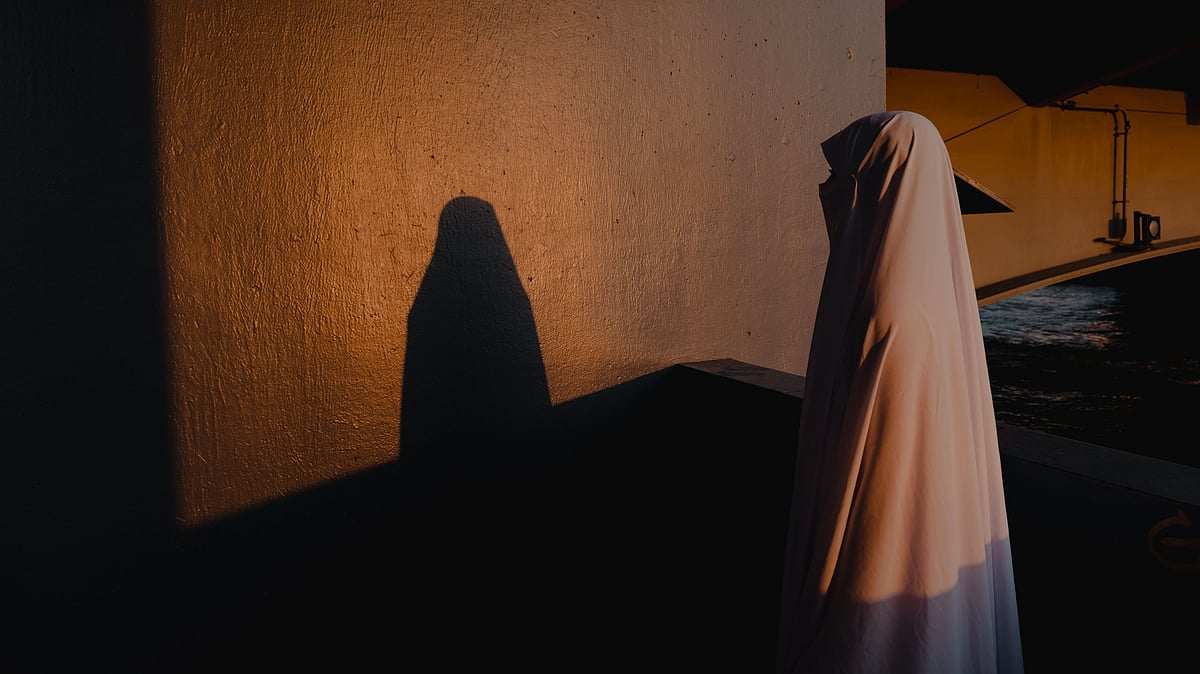
The Allahabad High Court has dismissed a plea filed by a Muslim student to wear a hijab along with her prescribed school uniform. The court's decision has triggered a fresh debate over religious freedom and dress codes in educational institutions.
The student, a minor, had argued that wearing a headscarf was an essential part of her religious practice and that she had been wearing it since Class VI. However, the school maintained that adding a headscarf to the prescribed uniform would violate its dress code.
The division bench of Justice J.J. Munir and Justice Indrajeet Shukla held that the petitioner had not placed sufficient material before the court to establish that wearing the hijab was an essential religious practice of Islam. The court also said that where a school's uniform policy is uniform, bona fide, non-discriminatory and intended to maintain discipline and institutional identity, a student cannot insist on modifying it.
Uttar Pradesh minister and Suheldev Bharatiya Samaj Party leader Om Prakash (OP) Rajbhar has backed the court's decision, arguing for a common dress code in schools. He maintained that allowing students to follow different religious attire inside schools could undermine the principle of uniformity.
Shiv Sena leader Sanjay Nirupam has also welcomed the Allahabad High Court's decision, arguing that religious traditions should not be allowed to override the rules governing educational institutions. He said that every religion has its traditions, but such practices should primarily be observed at home or in places of worship.
The verdict has sparked a debate over the balance between religious freedom and the need for uniformity in educational institutions. While some have argued that the decision infringes upon the rights of Muslim students, others have maintained that it is necessary to maintain discipline and institutional identity.
The Allahabad High Court's decision is the latest in a series of judgments on the issue of hijab in schools. The issue has been a contentious one, with different courts and institutions taking varying positions on the matter.
In recent years, there have been several instances of students being barred from wearing hijab in schools, sparking protests and debates over religious freedom. The issue has also been taken up by various political parties and organizations, with some arguing that it is a matter of personal choice and others maintaining that it is a threat to uniformity and discipline.
The Allahabad High Court's decision is likely to have implications for schools and educational institutions across the country. It remains to be seen how the decision will be implemented and what impact it will have on the debate over religious freedom and dress codes in educational institutions.
The verdict has also sparked a reaction from Muslim clerics and organizations, with some arguing that it infringes upon the rights of Muslim students. However, others have maintained that the decision is necessary to maintain discipline and institutional identity.
In conclusion, the Allahabad High Court's decision to reject the plea to wear hijab with school uniform has sparked a debate over religious freedom and dress codes in educational institutions. While some have argued that the decision infringes upon the rights of Muslim students, others have maintained that it is necessary to maintain discipline and institutional identity. The decision is likely to have implications for schools and educational institutions across the country and will continue to be a contentious issue in the days to come.
The issue of hijab in schools is a complex one, with different perspectives and opinions on the matter. However, it is clear that the Allahabad High Court's decision will have a significant impact on the debate over religious freedom and dress codes in educational institutions. As the issue continues to evolve, it will be important to consider the perspectives of all stakeholders, including students, parents, teachers, and administrators.
Ultimately, the decision to wear hijab or any other religious attire in schools is a complex issue that requires careful consideration of the competing interests and values at stake. While some may argue that the decision infringes upon the rights of Muslim students, others may maintain that it is necessary to maintain discipline and institutional identity. As the debate continues, it will be important to prioritize the values of inclusivity, diversity, and respect for all students, regardless of their religious background or personal beliefs.
Frequently asked questions
What was the Allahabad High Court's decision on wearing hijab with school uniform?
The court rejected the plea to wear hijab with school uniform, citing the need for uniformity and discipline in educational institutions.
Who backed the court's decision?
UP minister OP Rajbhar and Shiv Sena leader Sanjay Nirupam backed the court's decision, arguing that it is necessary to maintain discipline and institutional identity.