India To Trial ₹10, ₹20 Polymer Banknotes
India to test polymer banknotes, ₹10 and ₹20 notes to be introduced.
'%3E%3Crect%20width%3D'96'%20height%3D'96'%20fill%3D'%231A5276'%2F%3E%3Ccircle%20cx%3D'30'%20cy%3D'24'%20r%3D'44'%20fill%3D'%23fff'%20opacity%3D'.12'%2F%3E%3Ccircle%20cx%3D'60'%20cy%3D'74'%20r%3D'40'%20fill%3D'%23000'%20opacity%3D'.10'%2F%3E%3C%2Fg%3E%3Cg%20fill%3D'%23fff'%3E%3Cpath%20d%3D'M31%2041%20L48%2031%20L65%2041%20Z'%2F%3E%3Crect%20x%3D'33'%20y%3D'43'%20width%3D'4'%20height%3D'17'%2F%3E%3Crect%20x%3D'41'%20y%3D'43'%20width%3D'4'%20height%3D'17'%2F%3E%3Crect%20x%3D'51'%20y%3D'43'%20width%3D'4'%20height%3D'17'%2F%3E%3Crect%20x%3D'59'%20y%3D'43'%20width%3D'4'%20height%3D'17'%2F%3E%3Crect%20x%3D'30'%20y%3D'62'%20width%3D'36'%20height%3D'4'%20rx%3D'1'%2F%3E%3C%2Fg%3E%3C%2Fsvg%3E)
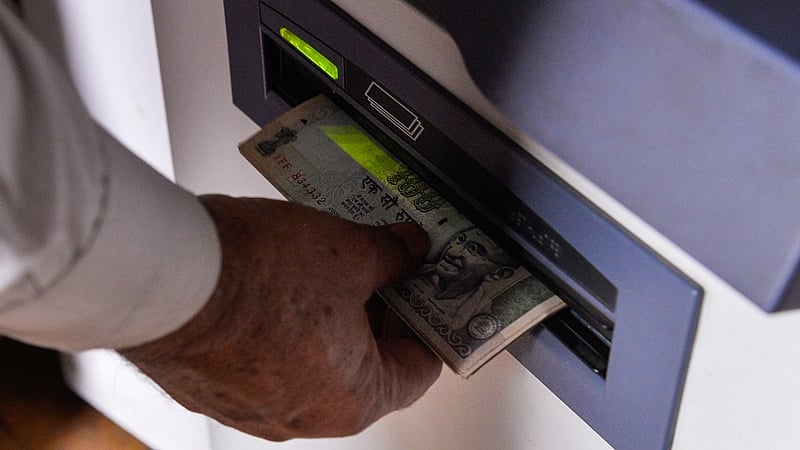
The Indian government has approved the Reserve Bank of India's (RBI) proposal to introduce one billion pieces each of ₹10 and ₹20 polymer currency notes for trial.
The approval was confirmed by Minister of State for Finance Pankaj Chaudhary in a written response to questions raised in the Lok Sabha. The move is a significant step towards evaluating whether polymer-based currency can be adopted on a larger scale in India.
The RBI's primary reason for considering polymer notes is their higher durability compared with traditional paper currency. International studies suggest that polymer banknotes generally have a longer lifespan, making them potentially more cost-effective for countries where currency notes are used extensively.
The initial phase will focus on testing how polymer notes perform in Indian conditions, including factors such as climate, handling patterns, and circulation challenges. The RBI will assess the results before taking any decision on expanding their use.
The introduction of polymer currency is also being viewed in the context of India's rapidly growing digital payment ecosystem. However, the RBI has clarified that it is too early to determine whether polymer notes will have any impact on digital transactions.
The central bank said such an assessment can only be made after the notes enter regular circulation. The RBI has also emphasised that physical currency and digital payment systems serve different purposes and can continue to operate together.
The introduction of polymer notes is not intended to replace digital payments or reduce the use of existing currency. The government has clarified that polymer banknotes will be introduced alongside existing paper-based currency.
There is currently no proposal to completely phase out paper notes in favour of polymer-based alternatives. If successful, the trials could pave the way for wider adoption of polymer currency in India, potentially improving the durability and efficiency of cash management while maintaining the coexistence of cash and digital payment systems.
The RBI plans to introduce polymer currency notes as cash circulation tops ₹42 trillion despite digital payments growth. The central bank has cited the need for a more durable and cost-effective currency solution.
In conclusion, the introduction of polymer banknotes in India is a significant development that could potentially improve the efficiency and durability of cash management in the country. While it is still early days, the trials will provide valuable insights into the feasibility of polymer currency in India.
The outcome of the trials will be closely watched, and if successful, could pave the way for a wider rollout of polymer banknotes in the country. This, in turn, could have a positive impact on the Indian economy, particularly in terms of reducing the costs associated with printing and distributing currency notes.
Overall, the introduction of polymer banknotes is a welcome move, and it will be interesting to see how it plays out in the coming months and years.
The Indian government and the RBI are taking a cautious approach, and it is clear that they are committed to ensuring that the introduction of polymer banknotes does not disrupt the existing financial system.
Instead, the focus is on improving the efficiency and durability of cash management, while also maintaining the coexistence of cash and digital payment systems. This approach is likely to yield positive results, and it will be interesting to see how the trials progress and what the outcome is.
In the end, the introduction of polymer banknotes in India is a significant development that has the potential to improve the efficiency and durability of cash management in the country. It is a welcome move, and it will be interesting to see how it plays out in the coming months and years.
Frequently asked questions
What is the purpose of introducing polymer banknotes in India?
The purpose is to evaluate whether polymer-based currency can be adopted on a larger scale in India, potentially improving the durability and efficiency of cash management.
Will polymer banknotes replace existing paper-based currency?
No, polymer banknotes will be introduced alongside existing paper-based currency, and there is currently no proposal to completely phase out paper notes in favour of polymer-based alternatives.