Maharashtra FDA Debates Hospitality Degrees for Restaurant Managers
Maharashtra FDA's crackdown sparks debate on hospitality degrees for restaurant managers. Is it necessary?
'%3E%3Crect%20width%3D'96'%20height%3D'96'%20fill%3D'%23B3261E'%2F%3E%3Ccircle%20cx%3D'30'%20cy%3D'24'%20r%3D'44'%20fill%3D'%23fff'%20opacity%3D'.12'%2F%3E%3Ccircle%20cx%3D'60'%20cy%3D'74'%20r%3D'40'%20fill%3D'%23000'%20opacity%3D'.10'%2F%3E%3C%2Fg%3E%3Cg%20fill%3D'%23fff'%3E%3Crect%20x%3D'29'%20y%3D'49'%20width%3D'8'%20height%3D'19'%20rx%3D'1'%2F%3E%3Crect%20x%3D'39'%20y%3D'40'%20width%3D'9'%20height%3D'28'%20rx%3D'1'%2F%3E%3Crect%20x%3D'50'%20y%3D'45'%20width%3D'8'%20height%3D'23'%20rx%3D'1'%2F%3E%3Crect%20x%3D'60'%20y%3D'53'%20width%3D'7'%20height%3D'15'%20rx%3D'1'%2F%3E%3Crect%20x%3D'41'%20y%3D'34'%20width%3D'5'%20height%3D'6'%2F%3E%3C%2Fg%3E%3C%2Fsvg%3E)
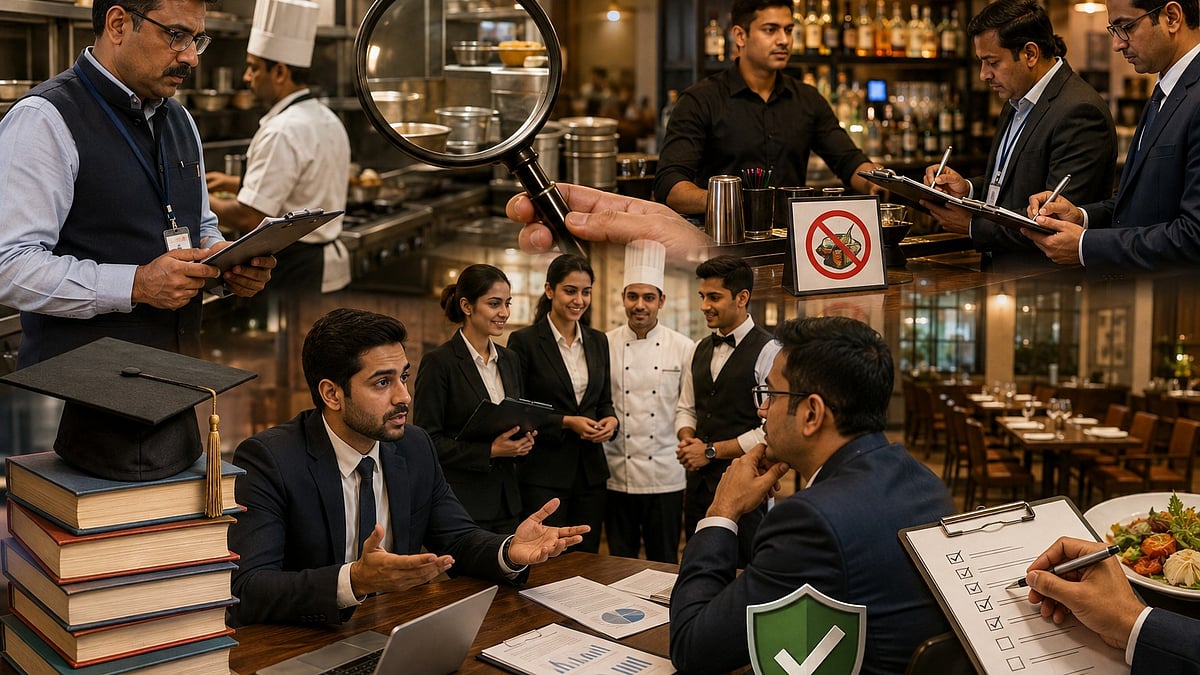
The Maharashtra FDA's recent inspections and stricter compliance measures have raised concerns about the qualifications required for restaurant managers. Commissioner Tukaram Mundhe's efforts to improve food safety standards have led to a debate on whether hospitality degrees should be mandatory for managerial roles.
Vijay K. Shetty, President of AHAR, argues that making hospitality graduates mandatory is an unreasonable requirement. He believes that practical knowledge gained through years of industry experience is often more valuable than textbook learning alone. Many existing managers have successfully run establishments for decades without formal hospitality degrees.
Shetty suggests that instead of replacing experienced managers, they can undergo FoSTaC (Food Safety Training and Certification) programmes. These programmes are designed to help Food Business Operators maintain hygiene standards and comply with food safety regulations. He also points out that restaurant management involves a range of skills beyond hospitality knowledge, including taxation, workforce management, licensing, procurement, inventory control, and financial planning.
Rohit Tokhi, COO for Red Apple Kitchen Consultancy Pvt Limited (Toscano), has a different approach. In his organisation, all managers and supervisors possess formal hotel management degrees and relevant certifications. Additionally, every employee up to the supervisory level is certified under the FoSTaC programme. Tokhi believes that this investment is necessary to maintain high operational standards, especially with the company's planned expansion.
The FSSAI modified the requirement for hospitality degrees in 2018, allowing either a professionally qualified person or a FoSTaC-trained employee to head operations. This alternative framework recognises that both professional qualifications and industry experience can contribute to effective restaurant management.
The debate highlights the importance of finding a balance between professional qualifications and industry experience. While hospitality degrees can provide a strong foundation, they may not be the only requirement for successful restaurant management. The use of FoSTaC programmes and other training initiatives can help ensure that managers have the necessary skills to maintain compliance and improve food safety standards.
In the context of Maharashtra's food industry, this debate is significant. The state's restaurants and food establishments are subject to regular inspections and compliance measures. By finding the right balance between qualifications and experience, the industry can ensure that customers receive safe and high-quality food.
The Maharashtra FDA's efforts to improve food safety standards are commendable. However, it is essential to consider the impact of strict qualification requirements on the industry. By recognising the value of both professional qualifications and industry experience, the FDA can create a more effective and practical approach to ensuring compliance and improving food safety standards.
In conclusion, the debate on hospitality degrees for restaurant managers in Maharashtra highlights the need for a balanced approach. While professional qualifications are essential, they should not be the only requirement. By considering the value of industry experience and training initiatives like FoSTaC, the state's food industry can ensure that customers receive safe and high-quality food.
The significance of this debate extends beyond Maharashtra's food industry. It highlights the importance of finding the right balance between professional qualifications and industry experience in various sectors. By recognising the value of both, organisations can create a more effective and practical approach to ensuring compliance and improving standards.
As the food industry in Maharashtra continues to evolve, it is essential to consider the impact of qualification requirements on the sector. By finding the right balance between professional qualifications and industry experience, the state can ensure that customers receive safe and high-quality food, while also supporting the growth and development of the industry.
In the end, the goal of ensuring food safety and improving standards should be the top priority. By working together and finding the right balance between qualifications and experience, the Maharashtra FDA, restaurant managers, and the food industry as a whole can achieve this goal and provide customers with a safe and enjoyable dining experience.
Frequently asked questions
Do restaurant managers in Maharashtra need hospitality degrees?
Not necessarily, as FoSTaC programmes and industry experience can also be considered.
What is the FoSTaC programme?
FoSTaC is a Food Safety Training and Certification programme designed to help Food Business Operators maintain hygiene standards and comply with food safety regulations.