SC Issues Notice to Bhagwant Mann in Rioting Case
SC to examine case against Punjab CM, AAP leaders. Chandigarh admin challenges HC order
'%3E%3Crect%20width%3D'96'%20height%3D'96'%20fill%3D'%231A5276'%2F%3E%3Ccircle%20cx%3D'30'%20cy%3D'24'%20r%3D'44'%20fill%3D'%23fff'%20opacity%3D'.12'%2F%3E%3Ccircle%20cx%3D'60'%20cy%3D'74'%20r%3D'40'%20fill%3D'%23000'%20opacity%3D'.10'%2F%3E%3C%2Fg%3E%3Cg%20fill%3D'%23fff'%3E%3Cpath%20d%3D'M31%2041%20L48%2031%20L65%2041%20Z'%2F%3E%3Crect%20x%3D'33'%20y%3D'43'%20width%3D'4'%20height%3D'17'%2F%3E%3Crect%20x%3D'41'%20y%3D'43'%20width%3D'4'%20height%3D'17'%2F%3E%3Crect%20x%3D'51'%20y%3D'43'%20width%3D'4'%20height%3D'17'%2F%3E%3Crect%20x%3D'59'%20y%3D'43'%20width%3D'4'%20height%3D'17'%2F%3E%3Crect%20x%3D'30'%20y%3D'62'%20width%3D'36'%20height%3D'4'%20rx%3D'1'%2F%3E%3C%2Fg%3E%3C%2Fsvg%3E)
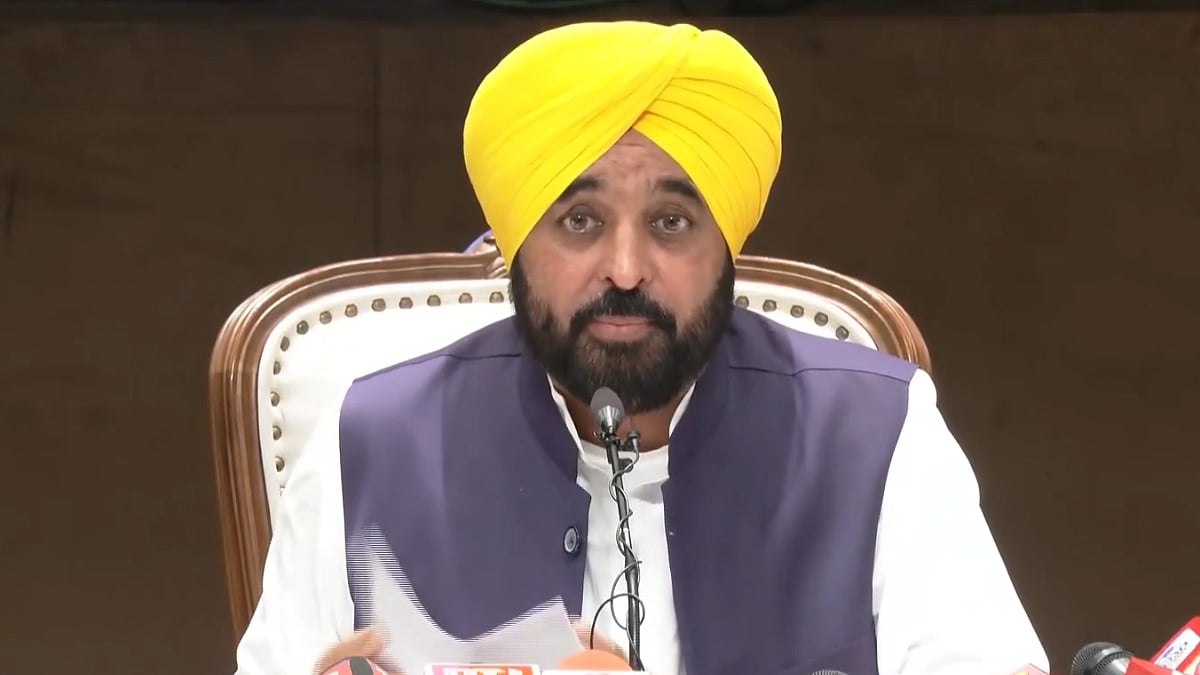
The Supreme Court has issued a notice to Punjab Chief Minister Bhagwant Mann and other Aam Aadmi Party (AAP) leaders, seeking their response to an appeal filed by the Chandigarh administration. The administration is challenging a Punjab and Haryana High Court order that quashed a case of rioting and unlawful assembly against Mann and the other AAP leaders.
The case dates back to 2020, when Mann and other AAP leaders organized a protest march against an increase in electricity tariffs. The protesters had planned to march towards the residence of the then Punjab chief minister, but were stopped by the police using water cannons. Following this, stones were reportedly thrown at police personnel.
The Punjab and Haryana High Court had quashed the criminal proceedings against Mann and the other AAP leaders on November 29, 2025. The court observed that the police had no valid reason to stop the protesters, as no prohibitory orders under Section 144 of the Code of Criminal Procedure (CrPC) were in force at the time.
The High Court also noted that none of the individuals allegedly involved in the stone-pelting incident had been identified, and that there was no evidence to suggest that the petitioners had encouraged or directed anyone to engage in violence. The court further observed that no specific words, actions, or gestures had been attributed to the accused to establish incitement.
Consequently, the High Court held that there was insufficient material to link the petitioners to the alleged offences, and ruled that charges related to rioting and assaulting police personnel could not be sustained. The Chandigarh administration has now challenged this order in the Supreme Court, arguing that the reasoning adopted by the High Court was 'perverse'.
A Bench comprising Chief Justice of India (CJI) Surya Kant, Justice Joymalya Bagchi, and Justice V. Mohan has agreed to examine the case. The Bench has issued notice to Mann and the other AAP leaders, seeking their response to the appeal.
The Supreme Court's decision to examine the case is significant, as it raises questions about the limits of police power and the rights of protesters. The case also has implications for the AAP leaders, who could face charges related to rioting and unlawful assembly if the Supreme Court overturns the High Court's order.
The AAP has been critical of the Chandigarh administration's decision to challenge the High Court's order, arguing that it is an attempt to harass and intimidate the party's leaders. The party has also argued that the protest march was peaceful, and that the police had used excessive force to stop the protesters.
The Supreme Court's decision in this case will be closely watched, as it could have implications for the rights of protesters and the limits of police power. The case also highlights the ongoing tensions between the AAP and the Chandigarh administration, and could have significant political implications in the state of Punjab.
In conclusion, the Supreme Court's decision to examine the case against Bhagwant Mann and other AAP leaders is a significant development, with implications for the rights of protesters and the limits of police power. The case will be closely watched, as it could have significant political implications in the state of Punjab.
Frequently asked questions
What is the case against Bhagwant Mann and other AAP leaders about?
The case is related to a 2020 protest march against an increase in electricity tariffs, where protesters were stopped by police using water cannons and stones were reportedly thrown at police personnel.
Why did the Punjab and Haryana High Court quash the case?
The High Court quashed the case because it found that the police had no valid reason to stop the protesters, and that there was no evidence to link the petitioners to the alleged offences.