India Wins Kargil War with Key Battles
India defeats Pakistan in Kargil War. Key battles turn tide.
'%3E%3Crect%20width%3D'96'%20height%3D'96'%20fill%3D'%234A235A'%2F%3E%3Ccircle%20cx%3D'30'%20cy%3D'24'%20r%3D'44'%20fill%3D'%23fff'%20opacity%3D'.12'%2F%3E%3Ccircle%20cx%3D'60'%20cy%3D'74'%20r%3D'40'%20fill%3D'%23000'%20opacity%3D'.10'%2F%3E%3C%2Fg%3E%3Cg%20fill%3D'none'%20stroke%3D'%23fff'%20stroke-width%3D'3'%3E%3Ccircle%20cx%3D'48'%20cy%3D'48'%20r%3D'16'%2F%3E%3Cellipse%20cx%3D'48'%20cy%3D'48'%20rx%3D'6.5'%20ry%3D'16'%2F%3E%3Cline%20x1%3D'32'%20y1%3D'42'%20x2%3D'64'%20y2%3D'42'%2F%3E%3Cline%20x1%3D'32'%20y1%3D'54'%20x2%3D'64'%20y2%3D'54'%2F%3E%3C%2Fg%3E%3C%2Fsvg%3E)
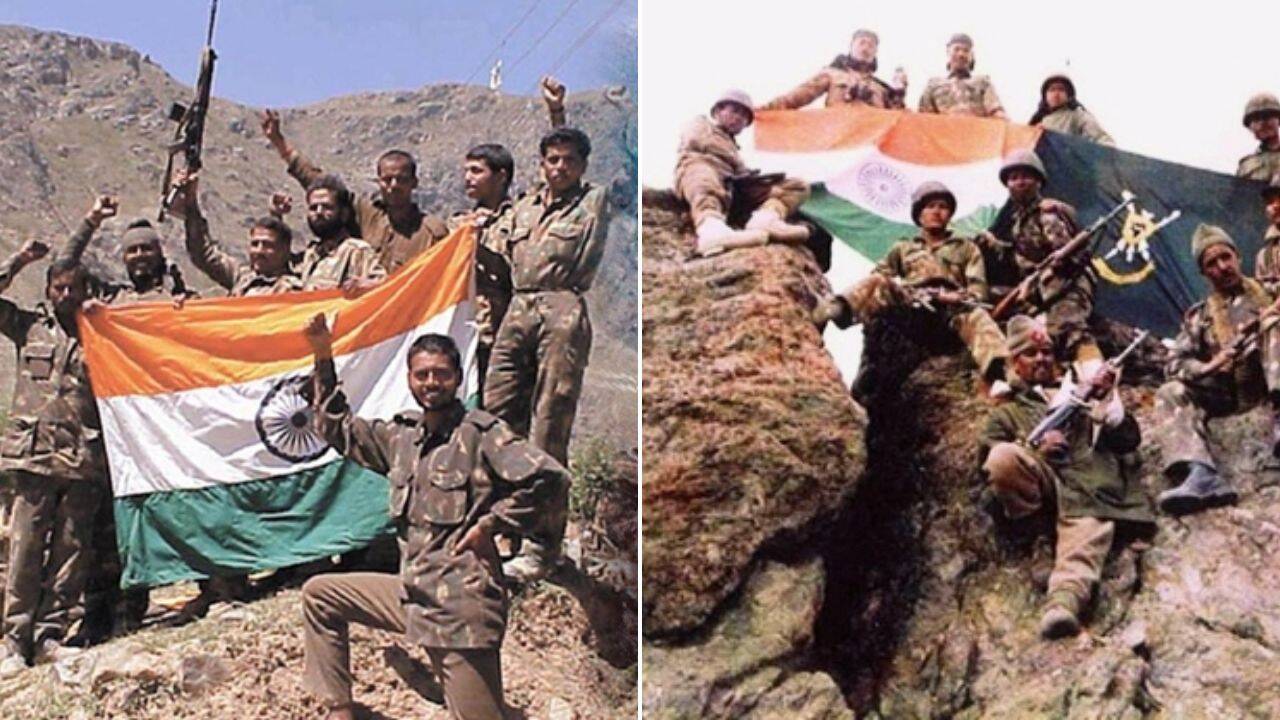
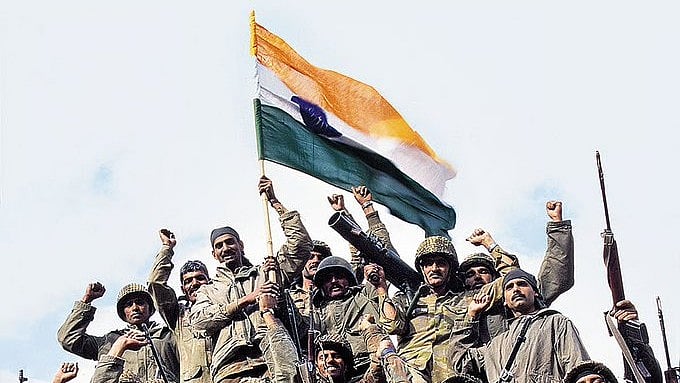
The Kargil War was a pivotal conflict in Indian history, marked by a series of hard-fought battles that ultimately led to the defeat of Pakistan. One of the most crucial turning points in the war was the capture of Tololing, which restored India's control over a vital highway. This victory was soon followed by the recapture of Tiger Hill, a strategic location that decisively broke Pakistan's defensive network and shifted the momentum of the war in India's favor.
The battles of Point 4875 and Point 5140 were also significant, as they secured key positions and cleared paths for further advances by the Indian military. The capture of Khalubar, meanwhile, shattered Pakistan's eastern flank, completing India's strategic gains and paving the way for the eventual defeat of Pakistan.
The Kargil War was fought in 1999, and it was sparked by Pakistan's invasion of the Kargil district in Kashmir. The war was marked by intense fighting on unforgiving terrain, with both sides suffering heavy casualties. However, the Indian military ultimately emerged victorious, thanks in large part to the bravery and determination of its soldiers.
The war was a major test of India's military capabilities, and it highlighted the need for the country to modernize its armed forces. In the years since the war, India has made significant investments in its military, including the acquisition of new equipment and the development of new strategies and tactics.
The Kargil War also had significant diplomatic implications, as it led to a major escalation of tensions between India and Pakistan. The war marked a low point in relations between the two countries, and it took several years for tensions to ease. However, the war also highlighted the need for dialogue and diplomacy between India and Pakistan, and it paved the way for future peace talks.
In the end, the Kargil War was a decisive victory for India, and it marked a major turning point in the country's history. The war demonstrated the bravery and determination of the Indian military, and it highlighted the need for the country to remain vigilant and prepared to defend its sovereignty.
The legacy of the Kargil War continues to be felt today, with the conflict remaining a major point of contention between India and Pakistan. However, the war also serves as a reminder of the importance of diplomacy and dialogue in resolving conflicts, and it highlights the need for the two countries to work towards a peaceful resolution of their differences.
The Kargil War was a major conflict that had significant implications for India and Pakistan. The war was marked by intense fighting and heavy casualties, but it ultimately ended in a decisive victory for India. The war highlighted the need for diplomacy and dialogue between the two countries, and it paved the way for future peace talks.
In conclusion, the Kargil War was a pivotal conflict in Indian history, marked by a series of hard-fought battles that ultimately led to the defeat of Pakistan. The war highlighted the bravery and determination of the Indian military, and it demonstrated the need for the country to remain vigilant and prepared to defend its sovereignty.
Frequently asked questions
What was the significance of the capture of Tololing in the Kargil War?
The capture of Tololing marked a crucial turning point in the war, restoring India's control over a vital highway.
What was the outcome of the Kargil War?
The Kargil War ended in a decisive victory for India, with the defeat of Pakistan.