Bombay HC Slams Manual Scavenging Despite Lunar Achievement
Manual scavenging persists, Bombay HC voices frustration, orders compensation
'%3E%3Crect%20width%3D'96'%20height%3D'96'%20fill%3D'%23B3261E'%2F%3E%3Ccircle%20cx%3D'30'%20cy%3D'24'%20r%3D'44'%20fill%3D'%23fff'%20opacity%3D'.12'%2F%3E%3Ccircle%20cx%3D'60'%20cy%3D'74'%20r%3D'40'%20fill%3D'%23000'%20opacity%3D'.10'%2F%3E%3C%2Fg%3E%3Cg%20fill%3D'%23fff'%3E%3Crect%20x%3D'29'%20y%3D'49'%20width%3D'8'%20height%3D'19'%20rx%3D'1'%2F%3E%3Crect%20x%3D'39'%20y%3D'40'%20width%3D'9'%20height%3D'28'%20rx%3D'1'%2F%3E%3Crect%20x%3D'50'%20y%3D'45'%20width%3D'8'%20height%3D'23'%20rx%3D'1'%2F%3E%3Crect%20x%3D'60'%20y%3D'53'%20width%3D'7'%20height%3D'15'%20rx%3D'1'%2F%3E%3Crect%20x%3D'41'%20y%3D'34'%20width%3D'5'%20height%3D'6'%2F%3E%3C%2Fg%3E%3C%2Fsvg%3E)
The Bombay High Court has expressed its disappointment and frustration over the continued prevalence of manual scavenging in India, despite the country's achievements in space exploration, including reaching the moon.
The court's remarks came while hearing a petition related to the state's failure to implement and enforce laws against manual scavenging, which has led to the deaths of many workers engaged in this hazardous and dehumanizing practice.
The judges pointed out the stark contrast between India's accomplishments in technology and space exploration and the persistence of manual scavenging, a practice that is not only dangerous but also degrading and inhumane. They noted that while the country has made significant strides in various fields, it has failed to eradicate this age-old problem.
The court's decision came after examining the petition, which highlighted the state's inability to effectively enforce anti-manual scavenging legislation. The judges ordered the state to provide compensation to the families of workers who have died while engaged in manual scavenging.
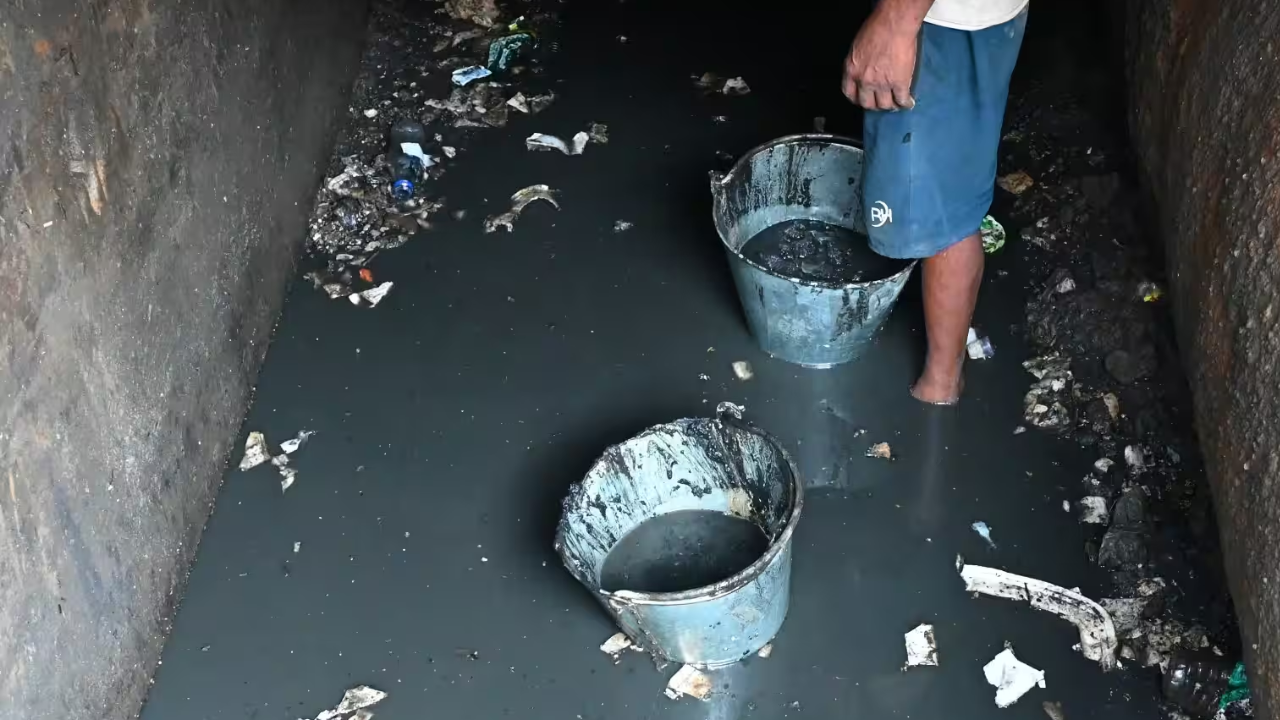
Manual scavenging is a practice where workers are forced to clean human waste from sewers and septic tanks without proper protective gear, putting their lives at risk. Despite laws prohibiting this practice, it continues to exist in many parts of the country, particularly in rural areas.
The Bombay High Court's ruling is a significant step towards addressing this issue and highlighting the need for effective implementation of laws to protect the rights and dignity of workers engaged in manual scavenging. The court's decision is also a reminder that while India has made significant progress in various fields, there is still much work to be done to address the country's social and economic challenges.
The issue of manual scavenging is a complex one, and its eradication will require a multi-faceted approach that involves not only the implementation of laws but also awareness campaigns, education, and economic empowerment of marginalized communities. The Bombay High Court's ruling is a step in the right direction, and it is hoped that it will lead to meaningful changes on the ground.
In conclusion, the Bombay High Court's decision highlights the need for urgent action to address the issue of manual scavenging in India. The court's ruling is a reminder that while the country has made significant progress in various fields, it is essential to address the social and economic challenges that persist, particularly those that affect the most vulnerable sections of society.
The significance of this ruling lies in its potential to bring about a change in the lives of thousands of workers engaged in manual scavenging. It is a call to action for the state and central governments to take concrete steps to implement laws and policies that protect the rights and dignity of these workers. Ultimately, the eradication of manual scavenging will require a sustained effort from all stakeholders, including the government, civil society, and the community at large.
Frequently asked questions
What is manual scavenging and why is it a problem?
Manual scavenging is a practice where workers clean human waste from sewers and septic tanks without proper protective gear, putting their lives at risk.
What was the Bombay High Court's ruling on manual scavenging?
The court ordered the state to provide compensation to the families of workers who have died while engaged in manual scavenging and highlighted the need for effective implementation of laws to protect workers' rights.