ChatGPT May Track Computer Activity Within Six Months
OpenAI CEO Sam Altman reveals plans for ChatGPT to monitor user activity, meetings and conversations.
'%3E%3Crect%20width%3D'96'%20height%3D'96'%20fill%3D'%23B3261E'%2F%3E%3Ccircle%20cx%3D'30'%20cy%3D'24'%20r%3D'44'%20fill%3D'%23fff'%20opacity%3D'.12'%2F%3E%3Ccircle%20cx%3D'60'%20cy%3D'74'%20r%3D'40'%20fill%3D'%23000'%20opacity%3D'.10'%2F%3E%3C%2Fg%3E%3Cg%20fill%3D'%23fff'%3E%3Crect%20x%3D'29'%20y%3D'49'%20width%3D'8'%20height%3D'19'%20rx%3D'1'%2F%3E%3Crect%20x%3D'39'%20y%3D'40'%20width%3D'9'%20height%3D'28'%20rx%3D'1'%2F%3E%3Crect%20x%3D'50'%20y%3D'45'%20width%3D'8'%20height%3D'23'%20rx%3D'1'%2F%3E%3Crect%20x%3D'60'%20y%3D'53'%20width%3D'7'%20height%3D'15'%20rx%3D'1'%2F%3E%3Crect%20x%3D'41'%20y%3D'34'%20width%3D'5'%20height%3D'6'%2F%3E%3C%2Fg%3E%3C%2Fsvg%3E)
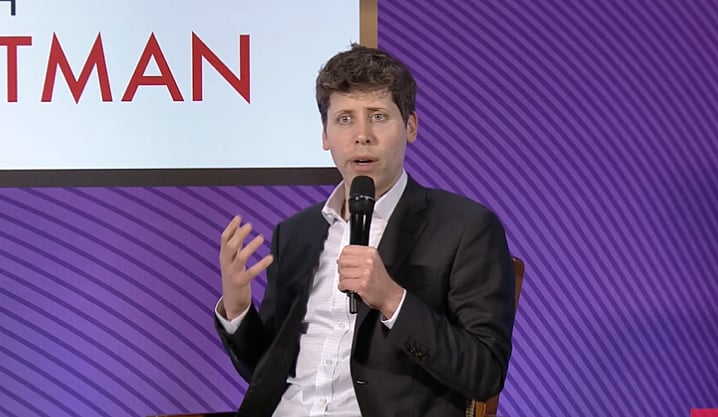
OpenAI chief executive Sam Altman has announced plans for a future version of ChatGPT that could continuously monitor a user's computer activity, meetings, and conversations. This advanced system would offer real-time assistance based on the context it gathers.
According to Altman, the goal is to create an AI assistant that can work alongside users, observing their screen, sitting in on meetings and calls, and retaining that information to provide relevant help. The system would be able to link with services such as email, messaging apps, and Slack, allowing it to build an ongoing understanding of a person's work.
Altman acknowledged that constant monitoring could raise concerns around surveillance, but he assured that the system would be built to give users control over what the AI can access. The AI would function as a collaborator, making suggestions or handling smaller tasks on the user's behalf, rather than making autonomous decisions.
The potential benefits of such a system are numerous. For example, when drafting a sales pitch, the assistant could pull in customer history and prior conversations to suggest edits or flag potential errors. This could be particularly helpful for individuals juggling large amounts of information, such as startup founders.
OpenAI has already taken a step towards this goal with the rollout of a feature called Computer History for the ChatGPT desktop app on Mac. This feature allows ChatGPT to track a user's activity across selected apps and websites, using macOS accessibility data. Users must enable Computer History themselves and can choose which apps and websites contribute to it.
Altman estimates that a practically useful version of this assistant could become available within the next six months. This would be a significant development in the field of AI and could have a major impact on the way people work and interact with technology.
The development of such a system raises important questions about the balance between convenience and privacy. As AI technology continues to evolve, it is likely that we will see more advanced systems that can gather and analyze large amounts of data.
The potential benefits of such systems are clear, but it is also important to consider the potential risks and ensure that users have control over their data and how it is used.
In the next six months, we can expect to see significant advancements in AI technology, and the development of a ChatGPT system that can monitor computer activity, meetings, and conversations is likely to be a major milestone in this journey.
As the use of AI technology becomes more widespread, it is likely that we will see more advanced systems that can gather and analyze large amounts of data. The key will be to ensure that these systems are designed with user privacy and control in mind, and that they are used in a way that benefits society as a whole.
The future of AI is exciting and rapidly evolving, and the development of a ChatGPT system that can monitor computer activity, meetings, and conversations is just one example of the many advancements we can expect to see in the coming months and years.
In conclusion, the plans for a future version of ChatGPT that can monitor computer activity, meetings, and conversations are a significant development in the field of AI. The potential benefits of such a system are numerous, but it is also important to consider the potential risks and ensure that users have control over their data and how it is used.
Frequently asked questions
What is the planned feature for ChatGPT?
The planned feature for ChatGPT is to continuously monitor a user's computer activity, meetings, and conversations to provide real-time assistance.
When can we expect to see a practically useful version of this assistant?
According to Sam Altman, a practically useful version of this assistant could become available within the next six months.