Ladakh Gets India's First High-Altitude Wildlife Safari
Ladakh to launch guided jeep safaris, promote eco-tourism and protect wildlife.
'%3E%3Crect%20width%3D'96'%20height%3D'96'%20fill%3D'%23B3261E'%2F%3E%3Ccircle%20cx%3D'30'%20cy%3D'24'%20r%3D'44'%20fill%3D'%23fff'%20opacity%3D'.12'%2F%3E%3Ccircle%20cx%3D'60'%20cy%3D'74'%20r%3D'40'%20fill%3D'%23000'%20opacity%3D'.10'%2F%3E%3C%2Fg%3E%3Cg%20fill%3D'%23fff'%3E%3Crect%20x%3D'29'%20y%3D'49'%20width%3D'8'%20height%3D'19'%20rx%3D'1'%2F%3E%3Crect%20x%3D'39'%20y%3D'40'%20width%3D'9'%20height%3D'28'%20rx%3D'1'%2F%3E%3Crect%20x%3D'50'%20y%3D'45'%20width%3D'8'%20height%3D'23'%20rx%3D'1'%2F%3E%3Crect%20x%3D'60'%20y%3D'53'%20width%3D'7'%20height%3D'15'%20rx%3D'1'%2F%3E%3Crect%20x%3D'41'%20y%3D'34'%20width%3D'5'%20height%3D'6'%2F%3E%3C%2Fg%3E%3C%2Fsvg%3E)
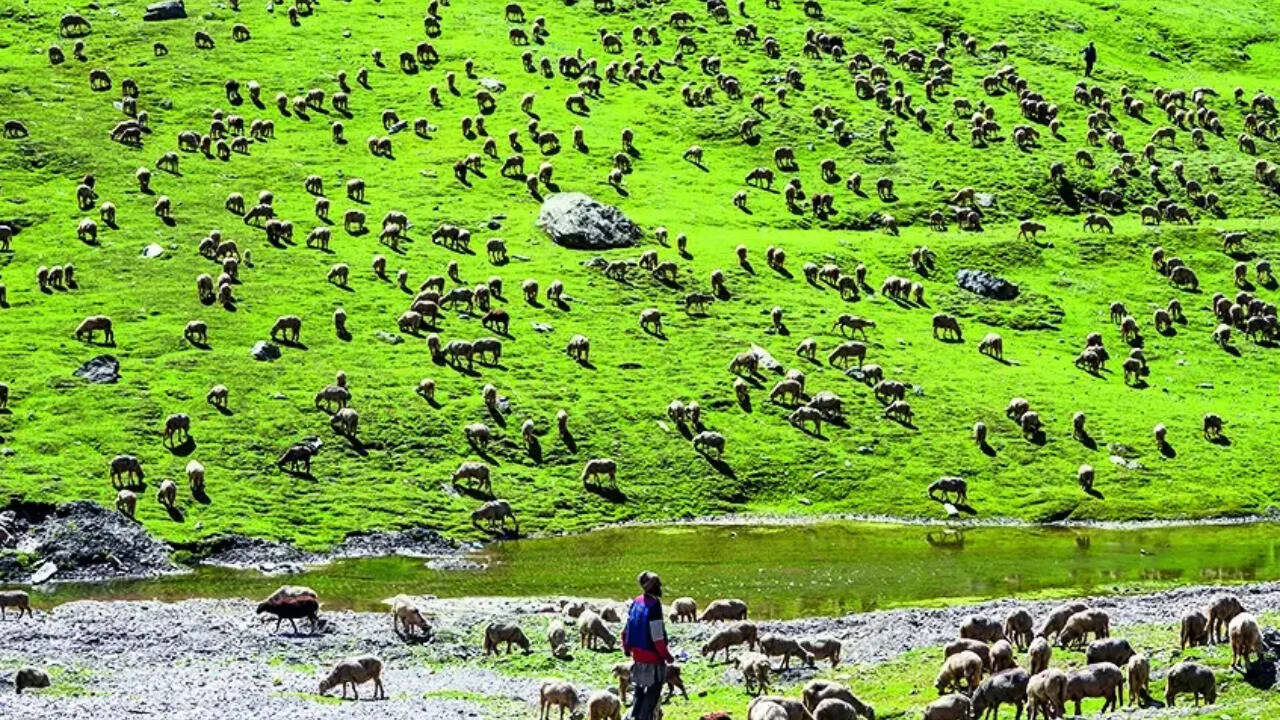
Ladakh is set to become home to India's first high-altitude wildlife safari, as approved by the Ladakh administration. The primary goal of this initiative is to prevent illegal off-roading and protect the region's fragile ecosystem, which is home to snow leopards and various bird species.
The guided jeep safaris will be introduced on popular tourist routes across the Union Territory, providing visitors with a unique opportunity to spot wildlife and birds in their natural habitat.
Local youths will be trained as guides to lead these safaris, equipping them with the necessary skills to identify and track wildlife and birds. This approach not only promotes community-led conservation but also generates employment opportunities for the local population.
The program is designed to promote responsible eco-tourism, encouraging visitors to respect and preserve the region's natural beauty. By doing so, it aims to strike a balance between tourism development and environmental conservation.
Ladakh's unique landscape and biodiversity make it an ideal location for such an initiative. The region is home to several endangered species, including the snow leopard, which is the apex predator in the area.
The introduction of guided jeep safaris is expected to help regulate tourism in the region, preventing the destruction of habitats and minimizing the impact of human activity on the environment.
This initiative is a significant step towards promoting sustainable tourism and conservation in Ladakh, and it is likely to set a precedent for other regions in India.
The success of this program will depend on the active participation of local communities, tourists, and the administration. By working together, they can ensure that the region's natural beauty is preserved for future generations.
In the broader context, this initiative highlights the importance of responsible tourism and conservation in India's protected areas. As the country continues to develop its tourism sector, it is essential to prioritize environmental sustainability and community-led conservation efforts.
The launch of India's first high-altitude wildlife safari in Ladakh is a significant development, marking a new era in eco-tourism and conservation in the region. It is expected to attract tourists from across the country and abroad, providing a unique experience while promoting environmental sustainability.
In conclusion, the introduction of guided jeep safaris in Ladakh is a positive step towards promoting eco-tourism and conservation in the region. It is a testament to the administration's commitment to environmental sustainability and community-led conservation efforts.
The initiative is expected to have a positive impact on the local economy, generating revenue and creating employment opportunities. It will also help raise awareness about the importance of conservation and the need to protect the region's unique biodiversity.
Overall, the launch of India's first high-altitude wildlife safari in Ladakh is a significant development, marking a new era in eco-tourism and conservation in the region. It is a step in the right direction, promoting environmental sustainability and community-led conservation efforts.
The program's success will be crucial in determining the future of eco-tourism and conservation in Ladakh. It is essential to monitor the initiative's progress, making adjustments as necessary to ensure that it achieves its intended goals.
In the long run, the initiative is expected to contribute significantly to the region's economic development, while promoting environmental sustainability and conservation. It is a positive step towards creating a balance between tourism development and environmental conservation, ensuring that the region's natural beauty is preserved for future generations.
The initiative's impact will be felt not only in Ladakh but also across the country, as it sets a precedent for responsible eco-tourism and conservation efforts. It is a significant development, marking a new era in India's tourism sector, and it is expected to have a lasting impact on the country's environmental conservation efforts.
Frequently asked questions
What is the primary goal of the high-altitude wildlife safari in Ladakh?
The primary goal is to prevent illegal off-roading and protect the region's fragile ecosystem, which is home to snow leopards and various bird species.
How will the guided jeep safaris be conducted?
The safaris will be led by local youths who will be trained as guides to spot wildlife and birds, promoting community-led conservation and responsible eco-tourism.