Pollen Helps Crack Murder Case
Tiny pollen grains aid investigators, linking suspects to crime scenes. A New Zealand murder case was solved using mutated pollen evidence.
'%3E%3Crect%20width%3D'96'%20height%3D'96'%20fill%3D'%23B3261E'%2F%3E%3Ccircle%20cx%3D'30'%20cy%3D'24'%20r%3D'44'%20fill%3D'%23fff'%20opacity%3D'.12'%2F%3E%3Ccircle%20cx%3D'60'%20cy%3D'74'%20r%3D'40'%20fill%3D'%23000'%20opacity%3D'.10'%2F%3E%3C%2Fg%3E%3Cg%20fill%3D'%23fff'%3E%3Crect%20x%3D'29'%20y%3D'49'%20width%3D'8'%20height%3D'19'%20rx%3D'1'%2F%3E%3Crect%20x%3D'39'%20y%3D'40'%20width%3D'9'%20height%3D'28'%20rx%3D'1'%2F%3E%3Crect%20x%3D'50'%20y%3D'45'%20width%3D'8'%20height%3D'23'%20rx%3D'1'%2F%3E%3Crect%20x%3D'60'%20y%3D'53'%20width%3D'7'%20height%3D'15'%20rx%3D'1'%2F%3E%3Crect%20x%3D'41'%20y%3D'34'%20width%3D'5'%20height%3D'6'%2F%3E%3C%2Fg%3E%3C%2Fsvg%3E)
A recent development in forensic science has highlighted the importance of pollen analysis in solving complex criminal cases.
In a notable case in New Zealand, investigators utilized unusual mutated pollen evidence to crack a murder case. This breakthrough demonstrates the potential of forensic palynology, the study of pollen and spores, in aiding criminal investigations.
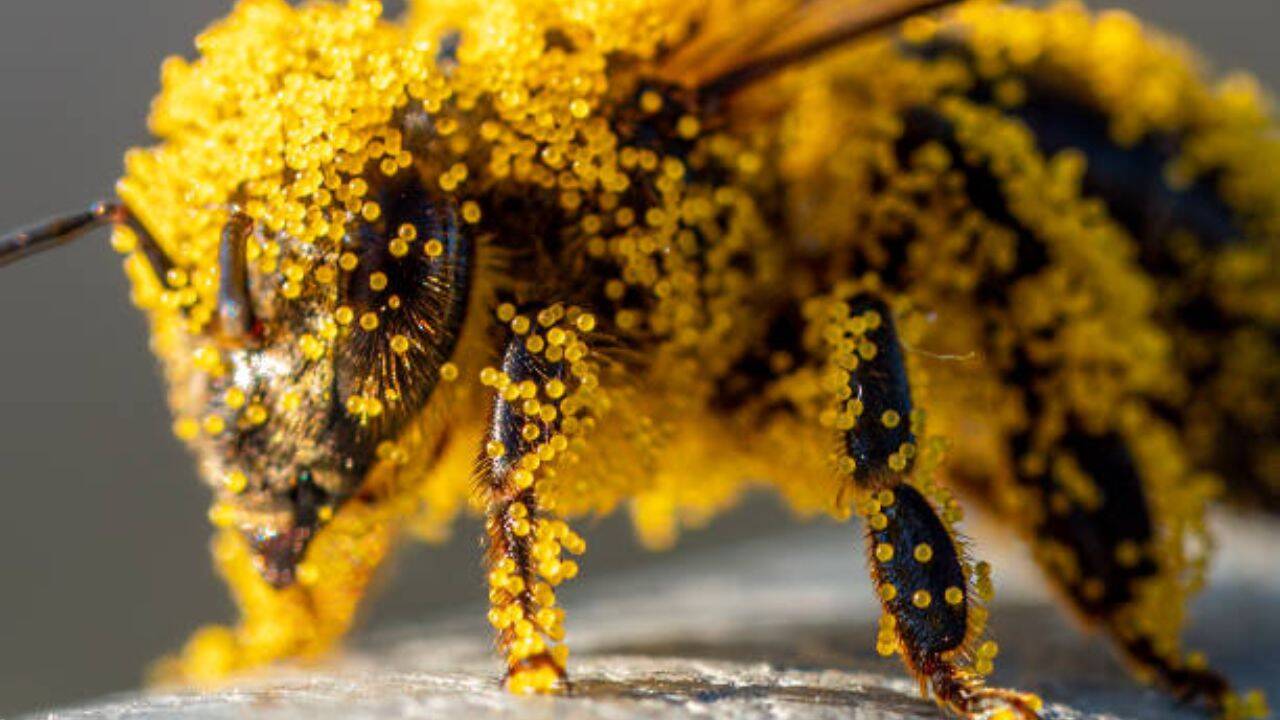
Forensic palynologists examine microscopic pollen particles to link suspects to crime scenes. The persistence of pollen, due to its resistance to decomposition, makes it a valuable forensic tool. This silent evidence can help identify and locate regions, providing crucial information for investigators.
The use of pollen analysis in forensic science is not new, but its application in solving complex cases has gained significant attention in recent years. By analyzing pollen grains, investigators can reconstruct the events surrounding a crime and identify potential suspects.
In the context of criminal investigations, pollen analysis can be used to link a suspect to a crime scene, or to identify the origin of a particular substance. The unique characteristics of pollen grains, such as their shape, size, and composition, can be used to create a profile of the crime scene.
The New Zealand case, where mutated pollen evidence was used to solve a murder, highlights the potential of forensic palynology in solving complex cases. The use of pollen analysis in this case demonstrates the importance of considering all possible evidence, no matter how small or seemingly insignificant.
The application of pollen analysis in forensic science is not limited to murder cases. It can be used in a variety of investigations, including theft, burglary, and environmental crimes. The use of pollen evidence can provide a new perspective on a case, and can be used in conjunction with other forensic techniques to build a stronger case.
In conclusion, the use of pollen analysis in forensic science has proven to be a valuable tool in solving complex criminal cases. The persistence and unique characteristics of pollen grains make them a powerful evidence in aiding investigators. As forensic science continues to evolve, the application of pollen analysis is likely to become more widespread, providing investigators with a new and powerful tool in the pursuit of justice.
The significance of pollen analysis in forensic science extends beyond the individual cases, highlighting the importance of interdisciplinary approaches in solving complex problems. By combining the principles of botany, ecology, and forensic science, investigators can gain a deeper understanding of the events surrounding a crime, and can develop more effective strategies for solving cases.
Overall, the use of pollen analysis in forensic science has the potential to revolutionize the way investigators approach complex cases, providing a new and powerful tool in the pursuit of justice.