Oil Minister Defends Ethanol Blended Fuel Amid Criticism
Hardeep Singh Puri questions sudden backlash against E20 fuel, citing benefits for India

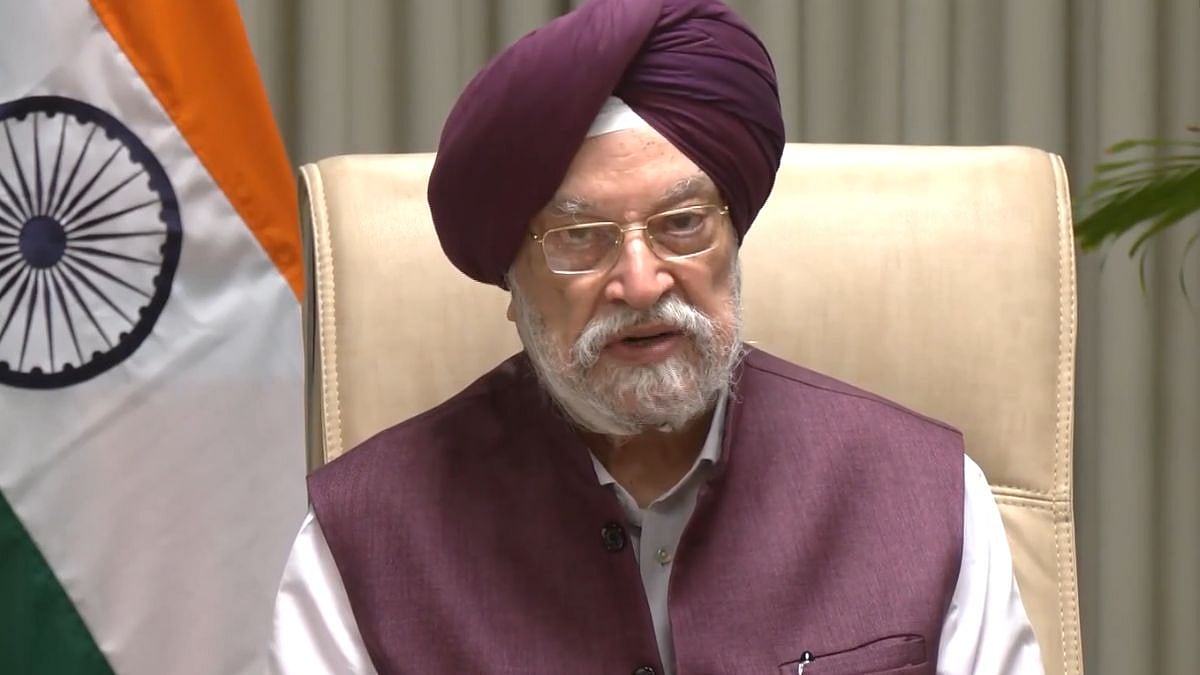
Petroleum and Natural Gas Minister Hardeep Singh Puri has come out in defense of India's ethanol blending programme, amid growing criticism over higher ethanol content in petrol. He has questioned the sudden rise of concerns around E20 fuel, calling it a 'coordinated controversy'.
Puri pointed out that E20 petrol has been in use in India for nearly two years, and the debate around ethanol-blended fuels has only intensified recently. He highlighted India's dependence on imported crude oil, with the country importing over 85% of its crude requirements and contributing significantly to global oil demand growth.
The minister argued that increasing ethanol blending is part of India's broader effort to reduce dependence on fossil fuel imports and strengthen energy security. He cited the recent introduction of E85 fuel for flex-fuel vehicles, priced around Rs 20 per litre lower than regular E20 petrol, as a major step towards reducing dependence on imported crude oil.
Puri also stated that ethanol-blended fuels have been used in the country for several years, with E15-plus fuel available for over three years, E19-plus for more than two years, and E20 petrol since April 2025. He noted that over 200 million two-wheelers and around 2 million four-wheelers are currently operating on E20 fuel without any major reported problems.
The minister questioned the timing of the criticism, suggesting that opposition to ethanol blending increased as India moved towards greater energy self-reliance. He asked who benefits if the country continues to remain dependent on imported crude oil or batteries, and emphasized that ethanol blending provides multiple benefits, including reducing crude oil imports, improving energy security, lowering air pollution, supporting farmers, and saving foreign exchange.
Puri described E20 as a tested, scientifically validated, and internationally accepted fuel, stating that it is safe for vehicles and aligned with India's long-term climate goals. He argued that greater adoption of domestically produced fuels would reduce India's vulnerability to international supply disruptions and fluctuations in global energy prices.