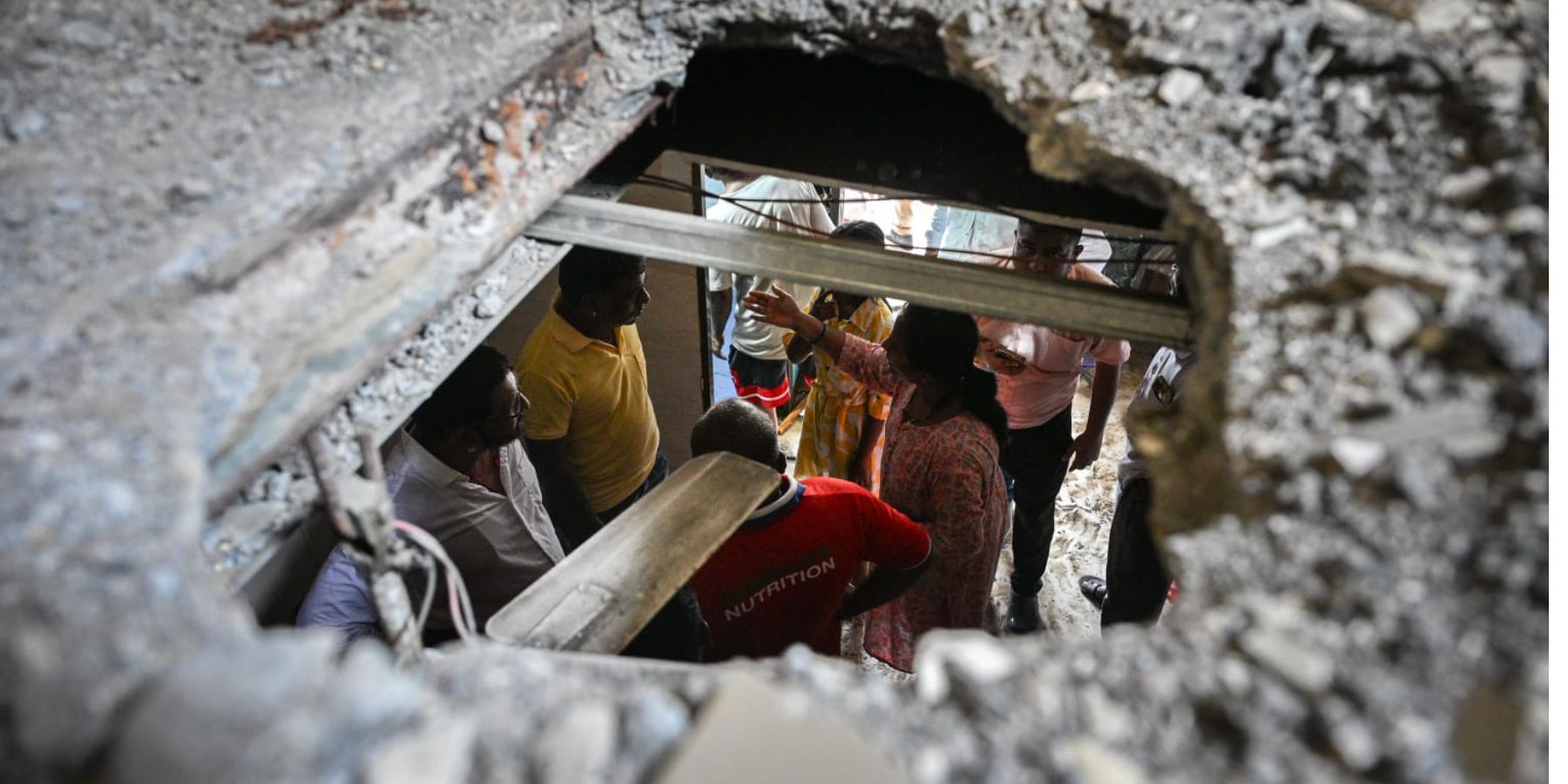
HC Rejects Bulldozer Justice, Orders Doctor to Raze Building Part
HC opposes bulldozer justice, gives doctor time to raze building for road.
'%3E%3Crect%20width%3D'96'%20height%3D'96'%20fill%3D'%23B3261E'%2F%3E%3Ccircle%20cx%3D'30'%20cy%3D'24'%20r%3D'44'%20fill%3D'%23fff'%20opacity%3D'.12'%2F%3E%3Ccircle%20cx%3D'60'%20cy%3D'74'%20r%3D'40'%20fill%3D'%23000'%20opacity%3D'.10'%2F%3E%3C%2Fg%3E%3Cg%20fill%3D'%23fff'%3E%3Crect%20x%3D'29'%20y%3D'49'%20width%3D'8'%20height%3D'19'%20rx%3D'1'%2F%3E%3Crect%20x%3D'39'%20y%3D'40'%20width%3D'9'%20height%3D'28'%20rx%3D'1'%2F%3E%3Crect%20x%3D'50'%20y%3D'45'%20width%3D'8'%20height%3D'23'%20rx%3D'1'%2F%3E%3Crect%20x%3D'60'%20y%3D'53'%20width%3D'7'%20height%3D'15'%20rx%3D'1'%2F%3E%3Crect%20x%3D'41'%20y%3D'34'%20width%3D'5'%20height%3D'6'%2F%3E%3C%2Fg%3E%3C%2Fsvg%3E)

The Bombay High Court has expressed its disapproval of 'bulldozer justice', where buildings are demolished without following due process.
In a recent case, the court gave a doctor time to partially demolish his building to make way for a road.
The doctor had been ordered to raze a part of his building, which was allegedly constructed illegally.
However, instead of allowing the authorities to bulldoze the structure, the court allowed the doctor to do it himself.
This decision reflects the court's stance against arbitrary demolition of buildings without giving the owners a chance to comply with the law.
The court's order is seen as a significant development in the context of the ongoing debate about 'bulldozer justice' in India.
In recent times, there have been several instances where buildings have been demolished by authorities without following proper procedures, sparking controversy and debate.
The Bombay High Court's decision is expected to set a precedent for similar cases in the future.
The court's emphasis on following due process and giving building owners a chance to comply with the law is likely to have far-reaching implications.
The decision also highlights the importance of balancing the need for development and infrastructure with the rights of property owners.
As the country continues to urbanize and develop, the issue of 'bulldozer justice' is likely to remain a contentious one.
The Bombay High Court's stance on the matter is likely to influence the approach of other courts and authorities in similar cases.
The case is a significant example of the judiciary's role in upholding the rule of law and protecting the rights of citizens.
The court's decision is a reminder that the law must be followed, even in cases where development and infrastructure are at stake.
The Bombay High Court's order is a welcome development in the context of the ongoing debate about 'bulldozer justice' in India.
The court's decision to give the doctor time to partially demolish his building is also significant.
It reflects the court's willingness to find a balance between the need for development and the rights of property owners.
The decision is likely to have implications for similar cases in the future, where building owners may be ordered to demolish parts of their structures to make way for development projects.
The court's emphasis on following due process and giving building owners a chance to comply with the law is likely to be seen as a positive development by property owners and developers alike.
The decision is also likely to influence the approach of authorities in similar cases, where they may be tempted to resort to 'bulldozer justice' without following proper procedures.
In conclusion, the Bombay High Court's decision to reject 'bulldozer justice' and give the doctor time to partially demolish his building is a significant development.
It reflects the court's commitment to upholding the rule of law and protecting the rights of citizens.
The decision is likely to have far-reaching implications for similar cases in the future and is a welcome development in the context of the ongoing debate about 'bulldozer justice' in India.
What it means for Mumbai is that the city's development projects will have to be carried out in a more transparent and lawful manner.
The court's decision is a reminder that the law must be followed, even in cases where development and infrastructure are at stake.
The decision is likely to have implications for the city's urban development plans and may lead to a more balanced approach to development, where the rights of property owners are protected.
Frequently asked questions
What is bulldozer justice?
Bulldozer justice refers to the arbitrary demolition of buildings without following due process.
Why did the HC reject bulldozer justice?
The HC rejected bulldozer justice to uphold the rule of law and protect the rights of citizens.