Alaska Seabirds Fly Harder, 67% Return Next Year
Scientists test seabird endurance, few return next year. Breeding success affected.
'%3E%3Crect%20width%3D'96'%20height%3D'96'%20fill%3D'%23B3261E'%2F%3E%3Ccircle%20cx%3D'30'%20cy%3D'24'%20r%3D'44'%20fill%3D'%23fff'%20opacity%3D'.12'%2F%3E%3Ccircle%20cx%3D'60'%20cy%3D'74'%20r%3D'40'%20fill%3D'%23000'%20opacity%3D'.10'%2F%3E%3C%2Fg%3E%3Cg%20fill%3D'%23fff'%3E%3Crect%20x%3D'29'%20y%3D'49'%20width%3D'8'%20height%3D'19'%20rx%3D'1'%2F%3E%3Crect%20x%3D'39'%20y%3D'40'%20width%3D'9'%20height%3D'28'%20rx%3D'1'%2F%3E%3Crect%20x%3D'50'%20y%3D'45'%20width%3D'8'%20height%3D'23'%20rx%3D'1'%2F%3E%3Crect%20x%3D'60'%20y%3D'53'%20width%3D'7'%20height%3D'15'%20rx%3D'1'%2F%3E%3Crect%20x%3D'41'%20y%3D'34'%20width%3D'5'%20height%3D'6'%2F%3E%3C%2Fg%3E%3C%2Fsvg%3E)
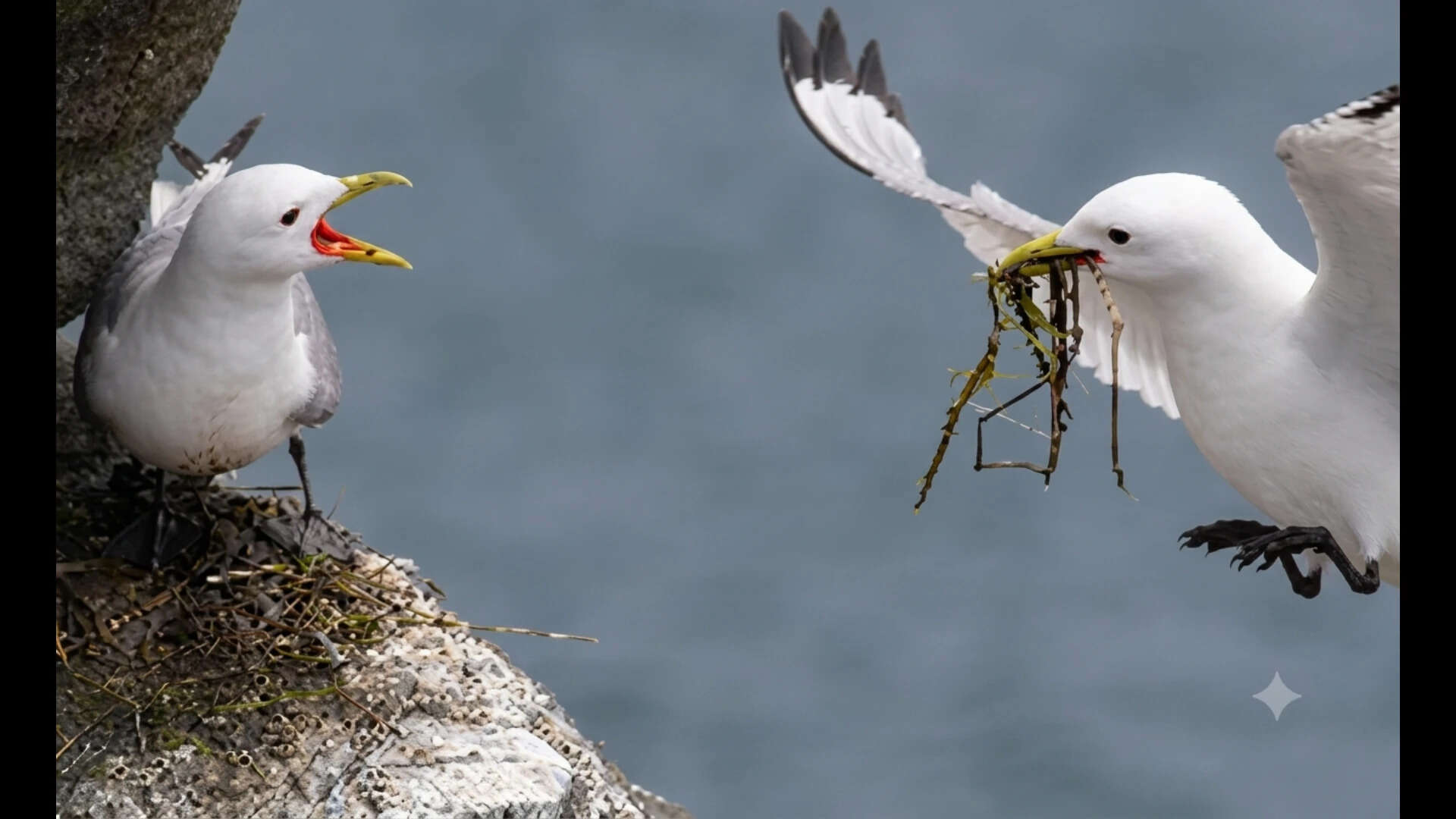
Researchers in Alaska conducted an experiment on wild black-legged kittiwakes, clipping some of their wing and tail feathers to increase the energy required for flight. The study, which tracked the birds over several years, found that the modified birds struggled to raise their chicks during the breeding season. As a result, fewer of these birds survived to return the following year, with only 67% making it back.
The experiment aimed to understand how energy expenditure in one season can impact the next. The findings showed that the birds that did return after the challenging year migrated farther than before. Additionally, these returning birds were more likely to breed successfully, indicating a potential correlation between the energy spent in one season and the success in the next.
The black-legged kittiwake is a seabird species known for its distinctive black legs and loud, nasal calls. These birds are found in large colonies in the North Atlantic and Pacific oceans, including the coastal areas of Alaska. The species is known for its adaptability and resilience, which made it an interesting subject for studying the effects of increased energy expenditure on survival and breeding success.
The study's results highlight the complex relationships between energy availability, breeding success, and migration patterns in seabirds. By altering the birds' physical condition and tracking the outcomes, the researchers gained insights into how these birds allocate their energy resources and prioritize their activities.
The experiment also underscores the importance of considering the long-term effects of environmental challenges on seabird populations. As seabirds face increasing threats from climate change, habitat destruction, and other human activities, understanding how they respond to energy constraints can inform conservation efforts.
In the context of seabird conservation, the study's findings suggest that managing energy resources is crucial for maintaining healthy and resilient populations. This can involve protecting habitats, reducing pollution, and mitigating the impacts of climate change on food availability and breeding grounds.
The research contributes to a broader understanding of the intricate relationships between seabirds and their environments, highlighting the need for continued study and conservation efforts to protect these fascinating creatures.
The study's results have significant implications for our understanding of seabird ecology and conservation. By exploring the complex interactions between energy expenditure, breeding success, and migration patterns, the research provides valuable insights into the lives of these remarkable birds.
In conclusion, the experiment on black-legged kittiwakes in Alaska demonstrates the profound impact of increased energy expenditure on seabird survival and breeding success. The findings emphasize the importance of considering the long-term effects of environmental challenges on seabird populations and highlight the need for continued conservation efforts to protect these incredible creatures.
Frequently asked questions
What happened to the seabirds in the experiment?
The birds had some of their wing and tail feathers clipped, making flying more energy-intensive.
How did the experiment affect the seabirds' breeding success?
The birds that returned after the challenging year were more likely to breed successfully, indicating a potential correlation between energy spent and breeding success.