E. Coli Bacteria Found In Mumbai Railway Station Water
E. coli detected in water at CSMT, Kalyan and other stations. Know the health risks.
'%3E%3Crect%20width%3D'96'%20height%3D'96'%20fill%3D'%23B3261E'%2F%3E%3Ccircle%20cx%3D'30'%20cy%3D'24'%20r%3D'44'%20fill%3D'%23fff'%20opacity%3D'.12'%2F%3E%3Ccircle%20cx%3D'60'%20cy%3D'74'%20r%3D'40'%20fill%3D'%23000'%20opacity%3D'.10'%2F%3E%3C%2Fg%3E%3Cg%20fill%3D'%23fff'%3E%3Crect%20x%3D'29'%20y%3D'49'%20width%3D'8'%20height%3D'19'%20rx%3D'1'%2F%3E%3Crect%20x%3D'39'%20y%3D'40'%20width%3D'9'%20height%3D'28'%20rx%3D'1'%2F%3E%3Crect%20x%3D'50'%20y%3D'45'%20width%3D'8'%20height%3D'23'%20rx%3D'1'%2F%3E%3Crect%20x%3D'60'%20y%3D'53'%20width%3D'7'%20height%3D'15'%20rx%3D'1'%2F%3E%3Crect%20x%3D'41'%20y%3D'34'%20width%3D'5'%20height%3D'6'%2F%3E%3C%2Fg%3E%3C%2Fsvg%3E)
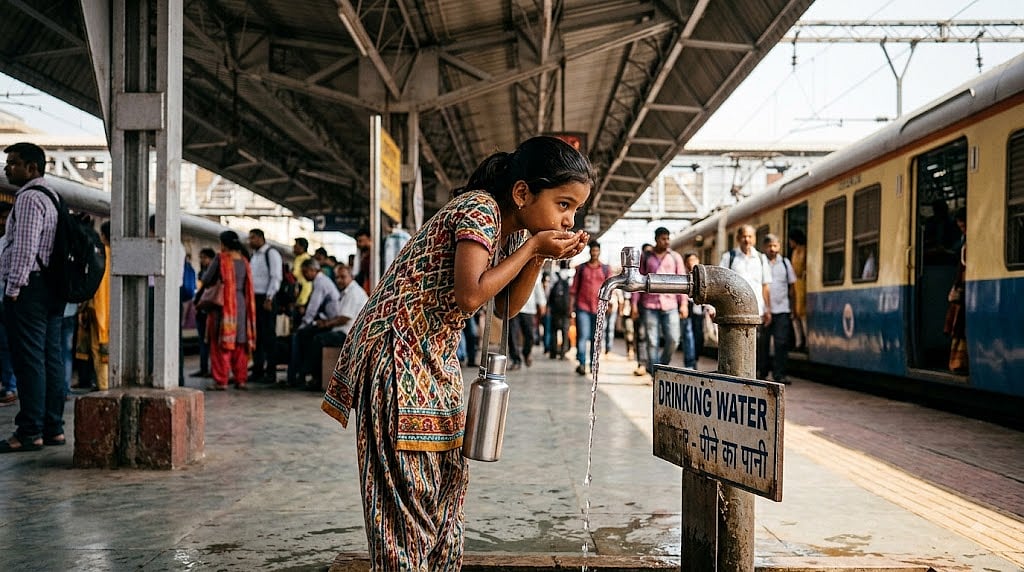
Mumbai's Central Railway has initiated corrective measures after water samples from four railway stations tested positive for E. coli bacteria. The affected stations include Chhatrapati Shivaji Maharaj Terminus (CSMT), Kalyan, Bhiwandi Road, and Lonavala.
The Electrical and Medical departments of the railway are working together to address the issue with the affected water supply.
The presence of E. coli in drinking water indicates possible contamination, as it suggests that the water supply may have come into contact with faecal matter. E. coli is a group of bacteria commonly found in the intestines of humans and animals. While not all strains of E. coli cause illness, some pathogenic strains can lead to serious gastrointestinal infections.
People exposed to harmful strains of E. coli may experience symptoms such as stomach cramps, diarrhoea, nausea, and vomiting. In severe cases, diarrhoea may be bloody. The symptoms can vary depending on the specific strain and other factors. Young children, older adults, and people with weakened immune systems are at a higher risk of developing severe complications.
The detection of E. coli in water also raises concerns about the possible presence of other disease-causing microorganisms in the contaminated water. As a precaution, commuters are advised to avoid consuming water from sources they believe may be unsafe or contaminated.
To stay safe, boiling water until it reaches a rolling boil for at least one minute can kill many disease-causing microorganisms. Certified water purification systems may also help, depending on the technology used and the nature of the contamination. Anyone experiencing severe symptoms, dehydration, or bloody diarrhoea should seek medical attention promptly.
Staying hydrated is crucial, and medications for diarrhoea should only be taken based on appropriate medical advice. The railway's initiative to address the issue is a step towards ensuring the health and safety of commuters.
The incident highlights the importance of regular water testing and maintenance of water supply systems to prevent contamination. It also emphasizes the need for commuters to be aware of the risks associated with consuming contaminated water and to take necessary precautions to stay safe.
In conclusion, the detection of E. coli bacteria in the water at Mumbai's railway stations is a concern that needs to be addressed promptly. The railway's corrective measures and the awareness of commuters can help prevent the spread of water-borne diseases and ensure a safe and healthy environment for all.
Frequently asked questions
What are the symptoms of E. coli infection?
Symptoms include stomach cramps, diarrhoea, nausea, and vomiting. In severe cases, diarrhoea may be bloody.
How can I stay safe from E. coli contamination?
Avoid consuming water from sources you believe may be unsafe, boil water before drinking, and use certified water purification systems.