Netherlands Floating Solar Farm Supports Local Wildlife
Bird sounds and fish spotted under solar panels. New habitats created.
'%3E%3Crect%20width%3D'96'%20height%3D'96'%20fill%3D'%23C2185B'%2F%3E%3Ccircle%20cx%3D'30'%20cy%3D'24'%20r%3D'44'%20fill%3D'%23fff'%20opacity%3D'.12'%2F%3E%3Ccircle%20cx%3D'60'%20cy%3D'74'%20r%3D'40'%20fill%3D'%23000'%20opacity%3D'.10'%2F%3E%3C%2Fg%3E%3Cpath%20fill%3D'%23fff'%20d%3D'M48%2031%20l4.6%2010.2%2011.2%201%20-8.4%207.5%202.5%2011%20-9.9%20-5.8%20-9.9%205.8%202.5%20-11%20-8.4%20-7.5%2011.2%20-1%20z'%2F%3E%3C%2Fsvg%3E)
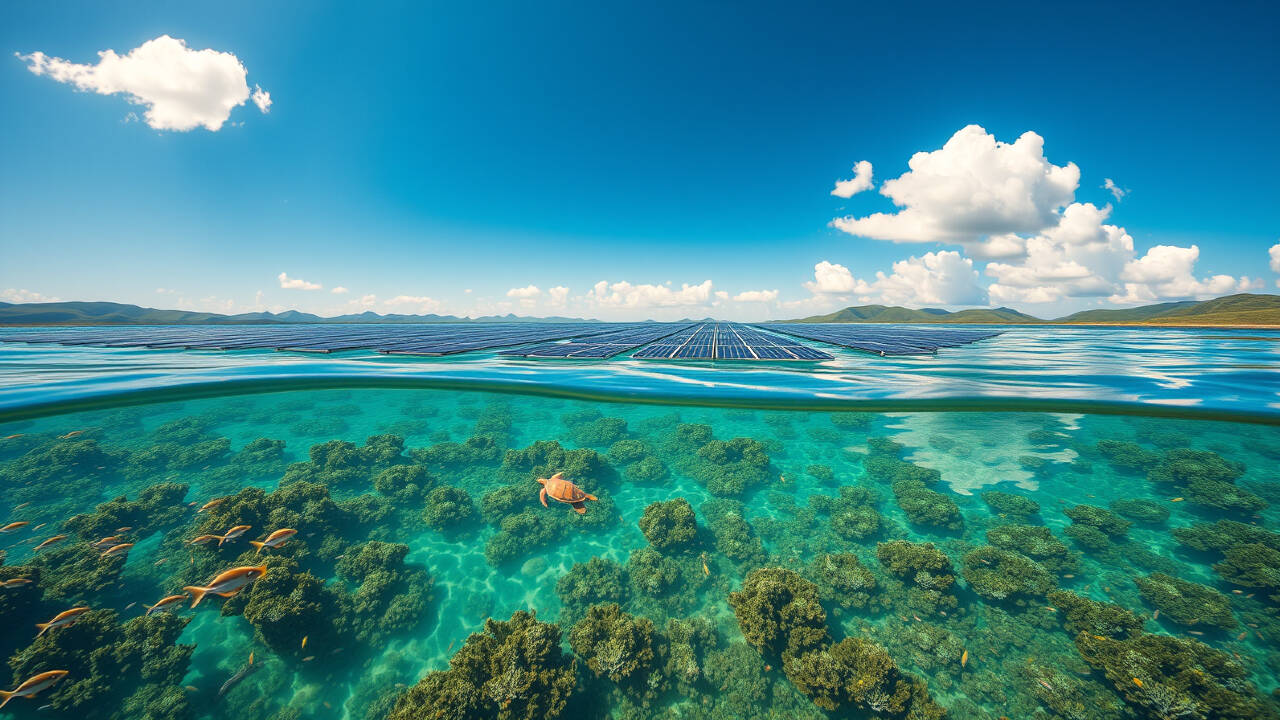
Researchers in the Netherlands have made a surprising discovery about floating solar farms. On investigation, they found that these farms may be supporting local wildlife, contrary to initial concerns that they could harm the environment.
The scientists observed bird sounds coming from beneath the floating solar panels, suggesting that birds may be nesting under them. This is a significant finding, as it indicates that the solar farms could be providing a habitat for birds and other species.
In addition to the bird sounds, the researchers also installed underwater shelters beneath the solar panels. These shelters attracted hundreds of fish and thousands of other aquatic creatures, such as insects and crustaceans. Over time, these structures developed into small ecosystems, supporting life higher up the food chain.
The findings of the study suggest that carefully designed floating solar farms could create new habitats for wildlife. This is a positive development, as it shows that renewable energy projects can coexist with nature. The researchers believe that with proper planning, solar farms can be designed to support local ecosystems, rather than harming them.
The study's results have important implications for the development of floating solar farms in the future. As the world transitions to renewable energy, it is essential to consider the potential impact on the environment. The Netherlands study shows that with careful design and planning, solar farms can be a positive force for the environment.
The use of underwater shelters and other design features can help to create habitats for wildlife, supporting biodiversity and ecosystem health. This approach can be applied to other renewable energy projects, such as wind farms and hydroelectric power plants.
In conclusion, the discovery of bird sounds and fish under the floating solar farm in the Netherlands is a significant finding. It highlights the potential for renewable energy projects to support local wildlife and create new habitats. As the world continues to transition to renewable energy, it is essential to consider the potential impact on the environment and design projects that support biodiversity and ecosystem health.
The study's findings are a positive step forward in the development of sustainable energy solutions. They show that with careful planning and design, renewable energy projects can be a positive force for the environment, supporting local ecosystems and promoting biodiversity.
The Netherlands study is an example of how renewable energy and nature can coexist. It demonstrates that with proper design and planning, solar farms can support local wildlife, creating new habitats and promoting ecosystem health. This approach can be applied to other renewable energy projects, helping to create a more sustainable future for all.
The researchers' discovery is a significant contribution to the field of renewable energy and environmental sustainability. It highlights the importance of considering the potential impact of energy projects on the environment and designing them to support local ecosystems. The study's findings will be useful for policymakers, developers, and researchers working on renewable energy projects, helping to create a more sustainable future for all.
In the future, it is likely that we will see more renewable energy projects that incorporate design features to support local wildlife. This approach will help to promote biodiversity and ecosystem health, creating a more sustainable future for all. The Netherlands study is an important step forward in this direction, demonstrating the potential for renewable energy projects to support nature and promote environmental sustainability.
Frequently asked questions
Can floating solar farms support local wildlife?
Yes, researchers found that floating solar farms in the Netherlands may be supporting local wildlife, including birds and fish.
How can solar farms be designed to support wildlife?
Solar farms can be designed to support wildlife by incorporating features such as underwater shelters, which can attract fish and other aquatic creatures and create small ecosystems.