Dasamula Modaka Offered To Lord Jagannath
Lord Jagannath falls ill after Snana Purnima, Dasamula Modaka aids recovery

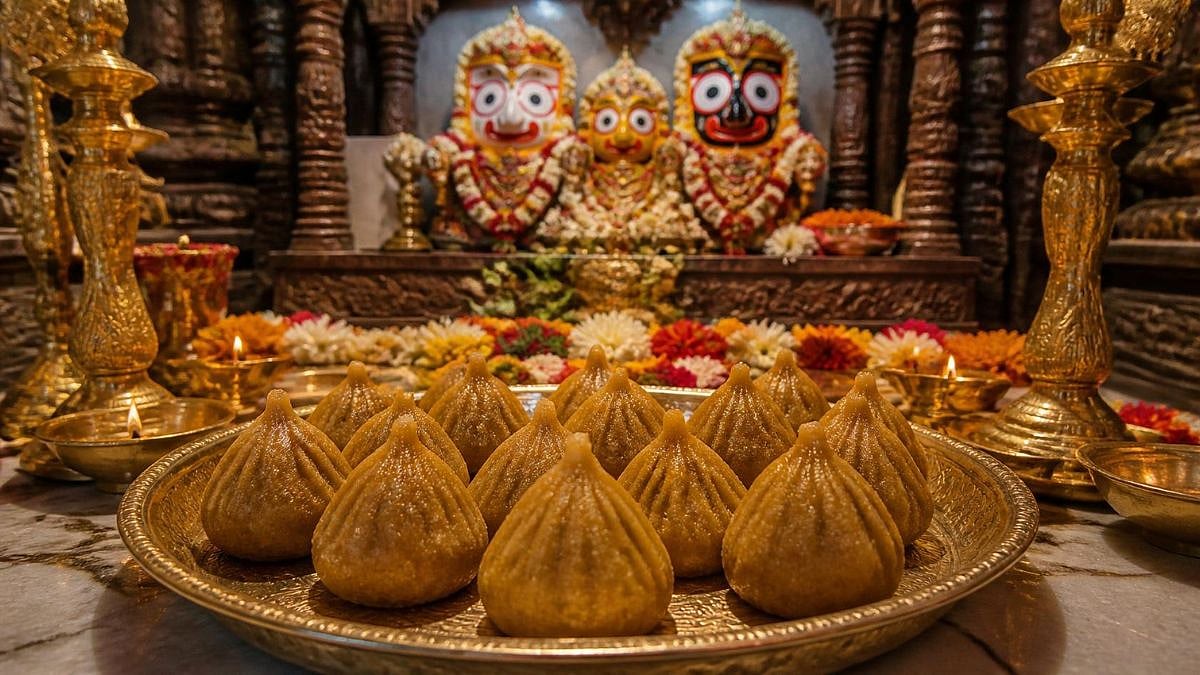
The Jagannath temple in Puri, dedicated to Lord Jagannath, a form of Lord Vishnu, is a significant part of the Bada Char Dham yatra. Every year, the temple celebrates the Rath Yatra festival, one of the most sacred and largest Hindu observances. The festival begins with Snan Purnima, where Lord Jagannath, along with Lord Balabhadra and Devi Subhadra, is bathed with 108 pots of sanctified water.
Following this grand bathing ritual, the deities are believed to fall ill and are kept away from public view for about 15 days during the Anasara period. During this time, special Ayurvedic treatments and dietary offerings are made instead of the regular temple food. One of the most important offerings during this period is the Dasamula Modaka, a sacred herbal preparation.
Dasamula Modaka is an Ayurvedic herbal preparation made using Dasamula, a blend of ten medicinal roots widely used in Ayurveda. The mixture is prepared with ingredients such as herbs, jaggery, and ghee to form small modakas, or sweet balls. It is believed to aid digestion, improve immunity, and restore vitality. The preparation of Dasamula Modaka is a precise process, formulated by traditional royal physicians using a specific blend of ten medicinal roots.
The Anasara period is a significant part of the Rath Yatra festival, and the offering of Dasamula Modaka is a unique tradition that has been followed for centuries. The period concludes with Nabajouban Darshan, where devotees get the first glimpse of the rejuvenated deities before the world-famous Rath Yatra begins.
The Rath Yatra festival is a celebration of Lord Jagannath's journey to his birthplace, and the Anasara period is a significant part of this journey. The offering of Dasamula Modaka is a testament to the temple's commitment to traditional Ayurvedic practices and the importance of this sacred herbal preparation in aiding the deities' recovery.
The Jagannath temple's rituals and traditions are an integral part of Odia culture and are followed with great devotion and fervor. The temple's commitment to preserving these traditions is evident in the preparation of Dasamula Modaka, which is a significant part of the Anasara period.
In conclusion, the offering of Dasamula Modaka to Lord Jagannath during the Anasara period is a unique and significant tradition that highlights the importance of Ayurvedic practices in Hindu rituals. The preparation of this sacred herbal preparation is a testament to the temple's commitment to traditional practices and its devotion to the deities.
The significance of Dasamula Modaka extends beyond the temple's rituals, as it is also a reflection of the importance of traditional Ayurvedic practices in Indian culture. The use of medicinal roots and herbs in the preparation of Dasamula Modaka highlights the significance of natural remedies in aiding recovery and promoting overall well-being.
Overall, the offering of Dasamula Modaka to Lord Jagannath is a significant part of the Rath Yatra festival and a testament to the temple's commitment to traditional Ayurvedic practices. The preparation of this sacred herbal preparation is a unique tradition that has been followed for centuries and continues to be an integral part of Odia culture.
The story of Dasamula Modaka is a fascinating one, and its significance extends beyond the temple's rituals. It is a reflection of the importance of traditional practices and the significance of natural remedies in promoting overall well-being. As the Rath Yatra festival continues to be celebrated with great fervor and devotion, the offering of Dasamula Modaka remains an integral part of this significant event.
In the context of Indian culture, the use of Ayurvedic practices and natural remedies is a significant aspect of traditional medicine. The preparation of Dasamula Modaka is a testament to the importance of these practices and the significance of natural remedies in aiding recovery and promoting overall well-being. As the world continues to evolve and modern medicine becomes increasingly prevalent, the significance of traditional practices and natural remedies remains an important aspect of Indian culture.
The offering of Dasamula Modaka to Lord Jagannath is a significant event that highlights the importance of traditional Ayurvedic practices and the significance of natural remedies in Indian culture. The preparation of this sacred herbal preparation is a unique tradition that has been followed for centuries and continues to be an integral part of Odia culture. As the Rath Yatra festival continues to be celebrated with great fervor and devotion, the offering of Dasamula Modaka remains an important aspect of this significant event.
What it means for Mumbai or India is that the traditional practices and natural remedies continue to play a significant role in the country's cultural heritage. The use of Ayurvedic practices and natural remedies is a significant aspect of traditional medicine, and the preparation of Dasamula Modaka is a testament to the importance of these practices. As the world continues to evolve and modern medicine becomes increasingly prevalent, the significance of traditional practices and natural remedies remains an important aspect of Indian culture.
In conclusion, the offering of Dasamula Modaka to Lord Jagannath is a significant event that highlights the importance of traditional Ayurvedic practices and the significance of natural remedies in Indian culture. The preparation of this sacred herbal preparation is a unique tradition that has been followed for centuries and continues to be an integral part of Odia culture. The significance of Dasamula Modaka extends beyond the temple's rituals, as it is also a reflection of the importance of traditional practices and natural remedies in promoting overall well-being.