Filing Income-Tax Return: A Matter of Pride
Filing an ITR is a responsibility, contributing to the formal economy and nation-building.
'%3E%3Crect%20width%3D'96'%20height%3D'96'%20fill%3D'%23B3261E'%2F%3E%3Ccircle%20cx%3D'30'%20cy%3D'24'%20r%3D'44'%20fill%3D'%23fff'%20opacity%3D'.12'%2F%3E%3Ccircle%20cx%3D'60'%20cy%3D'74'%20r%3D'40'%20fill%3D'%23000'%20opacity%3D'.10'%2F%3E%3C%2Fg%3E%3Cg%20fill%3D'%23fff'%3E%3Crect%20x%3D'29'%20y%3D'49'%20width%3D'8'%20height%3D'19'%20rx%3D'1'%2F%3E%3Crect%20x%3D'39'%20y%3D'40'%20width%3D'9'%20height%3D'28'%20rx%3D'1'%2F%3E%3Crect%20x%3D'50'%20y%3D'45'%20width%3D'8'%20height%3D'23'%20rx%3D'1'%2F%3E%3Crect%20x%3D'60'%20y%3D'53'%20width%3D'7'%20height%3D'15'%20rx%3D'1'%2F%3E%3Crect%20x%3D'41'%20y%3D'34'%20width%3D'5'%20height%3D'6'%2F%3E%3C%2Fg%3E%3C%2Fsvg%3E)
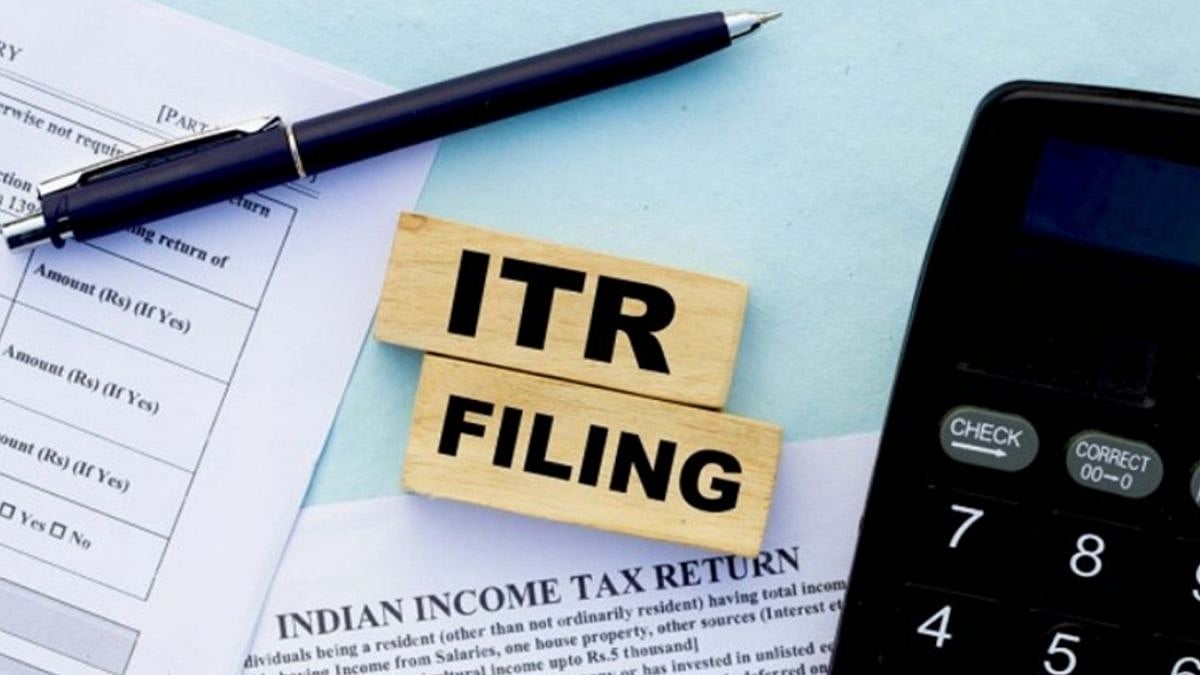
Filing an Income-Tax Return (ITR) is often seen as necessary only when there is tax to be paid, particularly among lower- and middle-income groups. However, this perception is largely due to confusion between the income threshold for filing a return and the income threshold at which tax becomes payable.
Under the new tax regime, the basic exemption limit for individuals is ₹4 lakh, but due to the rebate available, an eligible individual can have nil tax liability on total income up to ₹12 lakh. This means that a person may have income above ₹4 lakh and yet have no tax to pay, while still being required to file an ITR.
There are also important exceptions, such as specified capital gains, which may be taxable even when the taxpayer's overall income is otherwise within the rebate threshold. The conditions applicable to filing an ITR should be examined separately from the question of whether tax is ultimately payable.
The old tax regime has a basic exemption limit of ₹2.5 lakh for individuals below 60 years of age. Therefore, having no tax payable does not necessarily mean that no return is required. Filing an ITR is a responsibility and a matter of pride, as it contributes to the formal economy and nation-building.
Every honest taxpayer who reports their income correctly and files a return on time is participating in the country's tax system. Recent trends indicate that an increasing number of individuals are recognizing the importance of filing returns, even when their tax liability is low or nil. The growing use of digital systems, faster processing of returns, and quicker issue of refunds has made the process easier.
One of the major reasons why some taxpayers hesitate to file returns is the fear of scrutiny from the Income-Tax Department. However, the available data provides reassurance. During FY 2024-25, around 7 crore returns were filed, while approximately 2.5 lakh cases were selected for detailed scrutiny, representing less than 0.3 per cent of the returns filed.
The Income-Tax Department uses risk-based selection and data analytics to identify cases requiring examination. A significant proportion of scrutiny cases relates to entities and taxpayers falling under ITR-5, ITR-6, and ITR-7, rather than ordinary salaried individuals. This should give genuine individual taxpayers considerable confidence.
In conclusion, filing an ITR is an important contribution to the country's tax system and should be viewed as a matter of pride. It is a responsibility that helps in nation-building and contributes to the formal economy. With the growing use of digital systems and faster processing of returns, the process has become easier, and honest taxpayers have little to fear from scrutiny.
The significance of filing an ITR extends beyond individual taxpayers, as it helps the government to allocate resources effectively and provide better public services. It also promotes transparency and accountability in the tax system, which is essential for a healthy economy.
Overall, filing an ITR is a crucial step towards building a stronger and more prosperous nation. It is a responsibility that every eligible taxpayer should take seriously and view as a matter of pride.
The trend of increasing ITR filings is a positive sign, and it is expected to continue in the coming years. As more people recognize the importance of filing returns, the tax system will become more robust, and the country will benefit from increased revenue and better resource allocation.
In the end, filing an ITR is not just a compliance burden, but a vital contribution to the country's economic growth and development. It is a matter of pride for every honest taxpayer, and it should be encouraged and promoted at all levels.
Frequently asked questions
What is the basic exemption limit for individuals under the new tax regime?
The basic exemption limit is ₹4 lakh, but due to the rebate available, an eligible individual can have nil tax liability on total income up to ₹12 lakh.
What percentage of returns were selected for detailed scrutiny during FY 2024-25?
Less than 0.3 per cent of the returns filed, which is approximately 2.5 lakh cases out of 7 crore returns.