Virginia Restores Ragged Island Shoreline in $8M Project
Virginia's $8M project rebuilds shoreline, adds marsh and oyster reef. Reduces erosion, creates habitat.
'%3E%3Crect%20width%3D'96'%20height%3D'96'%20fill%3D'%231B5E20'%2F%3E%3Ccircle%20cx%3D'30'%20cy%3D'24'%20r%3D'44'%20fill%3D'%23fff'%20opacity%3D'.12'%2F%3E%3Ccircle%20cx%3D'60'%20cy%3D'74'%20r%3D'40'%20fill%3D'%23000'%20opacity%3D'.10'%2F%3E%3C%2Fg%3E%3Cg%3E%3Ccircle%20cx%3D'48'%20cy%3D'48'%20r%3D'15'%20fill%3D'%23fff'%2F%3E%3Cpath%20d%3D'M43%2034%20Q50%2048%2043%2062'%20fill%3D'none'%20stroke%3D'%238a94a6'%20stroke-width%3D'2.4'%2F%3E%3Cpath%20d%3D'M47%2033%20Q54%2048%2047%2063'%20fill%3D'none'%20stroke%3D'%238a94a6'%20stroke-width%3D'1.8'%20stroke-dasharray%3D'1.5%203'%2F%3E%3C%2Fg%3E%3C%2Fsvg%3E)
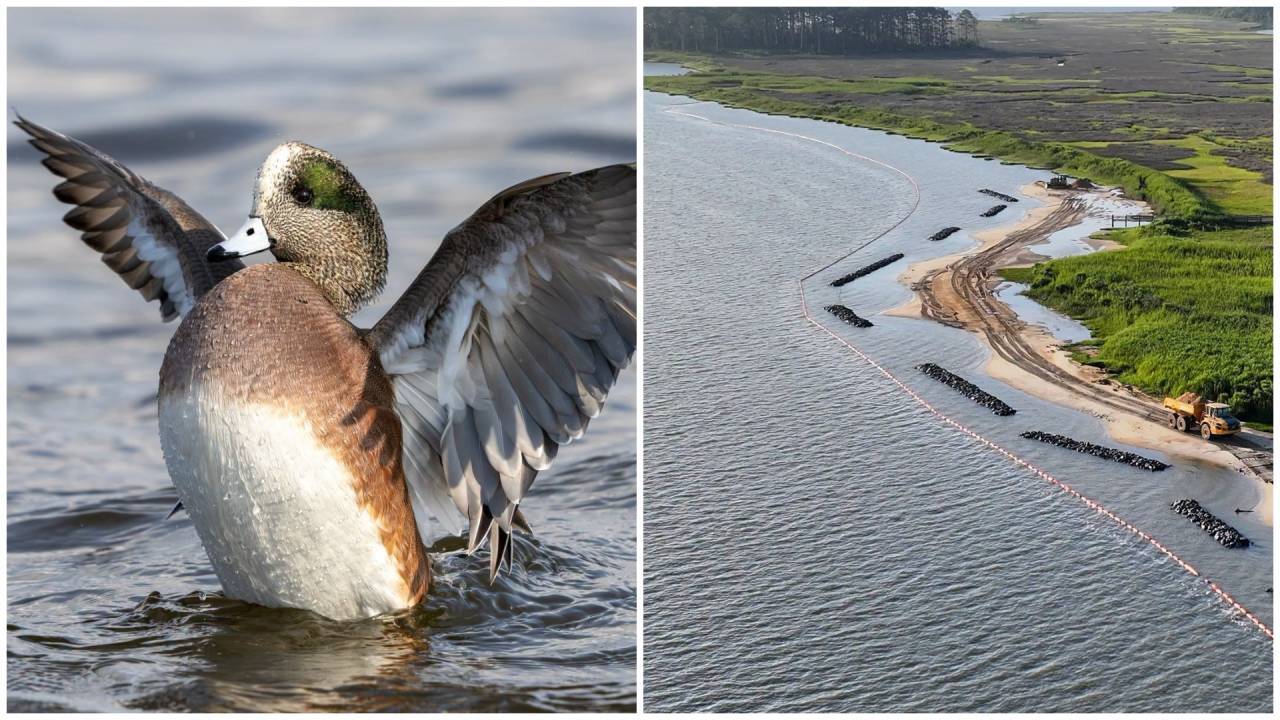
The state of Virginia has completed an $8 million restoration project on Ragged Island, rebuilding 1.09 miles of shoreline and creating 2.6 acres of marsh and 2.2 acres of oyster reef.
This project, funded by NOAA Fisheries, aims to reduce erosion and prevent hundreds of tons of sediment and nutrients from entering Chesapeake Bay.
The restoration of the shoreline and the creation of the marsh and oyster reef will provide valuable habitat for various species of fish, crabs, and birds.
The project is a significant step towards preserving the natural environment and ecosystem of the area.
Ragged Island, located in Virginia, has been facing erosion and environmental issues for some time now.
The $8 million project is part of a larger effort to restore and protect the shoreline and marine ecosystem of the region.
NOAA Fisheries has been instrumental in funding and supporting the project, which is expected to have a positive impact on the environment and wildlife.
The creation of the marsh and oyster reef will not only provide habitat for various species but also help to reduce erosion and prevent sediment and nutrients from entering the bay.
The project is a testament to the importance of conservation and restoration efforts in preserving the natural environment and ecosystem.
In the long run, the restoration of Ragged Island's shoreline is expected to have a significant positive impact on the environment and wildlife of the region.
The project's success can be attributed to the collaboration and funding provided by NOAA Fisheries, which has enabled the state of Virginia to undertake this significant restoration project.
Frequently asked questions
What is the purpose of the Ragged Island restoration project?
The purpose of the project is to reduce erosion and create habitat for fish, crabs, and birds.
Who funded the Ragged Island restoration project?
The project was funded by NOAA Fisheries.