Ships Near Strait of Hormuz Spread Invasive Species
Ships lingering in the Persian Gulf spread harmful marine invaders, threatening global commerce.
'%3E%3Crect%20width%3D'96'%20height%3D'96'%20fill%3D'%234A235A'%2F%3E%3Ccircle%20cx%3D'30'%20cy%3D'24'%20r%3D'44'%20fill%3D'%23fff'%20opacity%3D'.12'%2F%3E%3Ccircle%20cx%3D'60'%20cy%3D'74'%20r%3D'40'%20fill%3D'%23000'%20opacity%3D'.10'%2F%3E%3C%2Fg%3E%3Cg%20fill%3D'none'%20stroke%3D'%23fff'%20stroke-width%3D'3'%3E%3Ccircle%20cx%3D'48'%20cy%3D'48'%20r%3D'16'%2F%3E%3Cellipse%20cx%3D'48'%20cy%3D'48'%20rx%3D'6.5'%20ry%3D'16'%2F%3E%3Cline%20x1%3D'32'%20y1%3D'42'%20x2%3D'64'%20y2%3D'42'%2F%3E%3Cline%20x1%3D'32'%20y1%3D'54'%20x2%3D'64'%20y2%3D'54'%2F%3E%3C%2Fg%3E%3C%2Fsvg%3E)
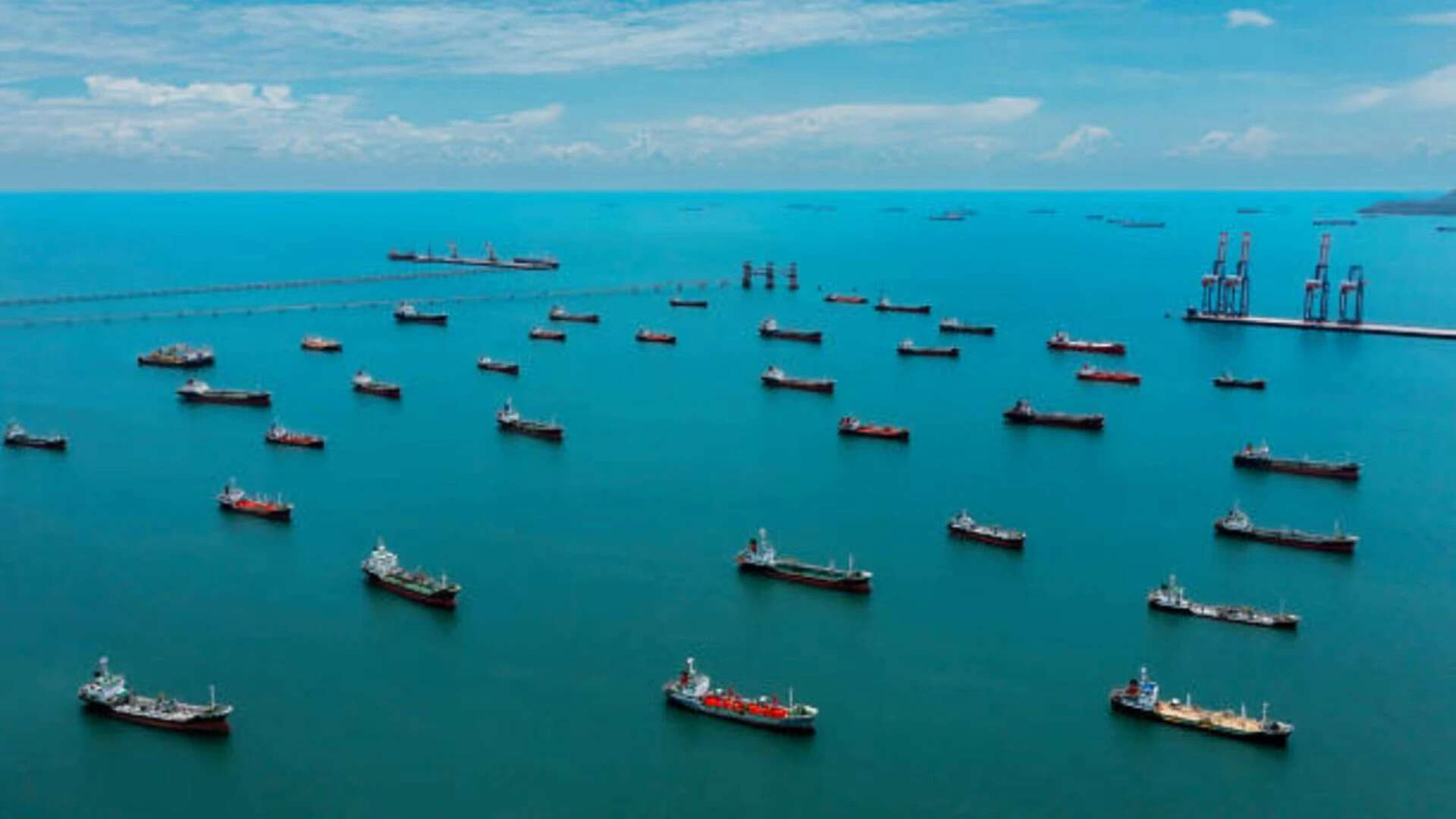
A growing concern has emerged regarding ships trapped near the Strait of Hormuz, as they potentially become nurseries for invasive species. The prolonged anchorage of these vessels in the Persian Gulf allows marine organisms to thrive on their hulls, leading to significant biofouling concerns.
This issue poses a substantial threat to global maritime commerce, as invasive species can inflict extensive ecological and economic harm on coastal areas. The spread of these harmful organisms can have devastating effects on local ecosystems, causing irreparable damage to the environment and resulting in significant financial losses.
The problem of biofouling is not limited to the Persian Gulf, as ships can transport invasive species to other parts of the world, contributing to the spread of these harmful organisms. It is essential for nations to collaborate and address biofouling issues to prevent future outbreaks of invasion.
The Strait of Hormuz is a critical waterway, with a significant portion of the world's oil passing through it. The presence of invasive species in this region can have far-reaching consequences, affecting not only the local ecosystem but also the global economy.
In recent years, there has been an increase in the number of ships lingering in the Persian Gulf, primarily due to economic and geopolitical factors. This has led to an escalation of biofouling concerns, as the prolonged anchorage of these vessels creates an ideal environment for marine organisms to thrive.
To mitigate the risks associated with biofouling, it is crucial for nations to implement effective measures to prevent the spread of invasive species. This can be achieved through the development of international regulations and standards for the management of biofouling, as well as the implementation of measures to monitor and control the movement of ships in high-risk areas.
The international community must come together to address the issue of biofouling and prevent the spread of invasive species. By working collaboratively, nations can reduce the risks associated with biofouling and protect the world's oceans from the devastating effects of these harmful organisms.
In conclusion, the presence of ships near the Strait of Hormuz poses a significant threat to the global maritime ecosystem, as they can unintentionally facilitate the spread of invasive species. It is imperative for nations to join forces to address biofouling concerns and prevent future outbreaks of invasion, thereby protecting the world's oceans and preserving the health of our planet.
The consequences of inaction could be severe, with the potential for widespread ecological and economic damage. Therefore, it is essential for the international community to take immediate action to address the issue of biofouling and prevent the spread of invasive species.
Ultimately, the protection of the world's oceans and the prevention of the spread of invasive species require a collective effort from nations around the world. By working together, we can mitigate the risks associated with biofouling and ensure the long-term health and sustainability of our planet's ecosystems.
Frequently asked questions
What is biofouling and how does it affect the environment?
Biofouling refers to the accumulation of marine organisms on ship hulls, which can lead to the spread of invasive species and cause significant ecological and economic harm to coastal areas.
Why is the Strait of Hormuz a high-risk area for biofouling?
The Strait of Hormuz is a critical waterway with a high volume of ship traffic, and the prolonged anchorage of vessels in the Persian Gulf creates an ideal environment for marine organisms to thrive, increasing the risk of biofouling.