PM Modi Coins "Dimagi Naxal" Term For Educated Critics
PM Modi introduces new term, sparks controversy. Critics slam move as attempt to silence dissent.
'%3E%3Crect%20width%3D'96'%20height%3D'96'%20fill%3D'%231A5276'%2F%3E%3Ccircle%20cx%3D'30'%20cy%3D'24'%20r%3D'44'%20fill%3D'%23fff'%20opacity%3D'.12'%2F%3E%3Ccircle%20cx%3D'60'%20cy%3D'74'%20r%3D'40'%20fill%3D'%23000'%20opacity%3D'.10'%2F%3E%3C%2Fg%3E%3Cg%20fill%3D'%23fff'%3E%3Cpath%20d%3D'M31%2041%20L48%2031%20L65%2041%20Z'%2F%3E%3Crect%20x%3D'33'%20y%3D'43'%20width%3D'4'%20height%3D'17'%2F%3E%3Crect%20x%3D'41'%20y%3D'43'%20width%3D'4'%20height%3D'17'%2F%3E%3Crect%20x%3D'51'%20y%3D'43'%20width%3D'4'%20height%3D'17'%2F%3E%3Crect%20x%3D'59'%20y%3D'43'%20width%3D'4'%20height%3D'17'%2F%3E%3Crect%20x%3D'30'%20y%3D'62'%20width%3D'36'%20height%3D'4'%20rx%3D'1'%2F%3E%3C%2Fg%3E%3C%2Fsvg%3E)
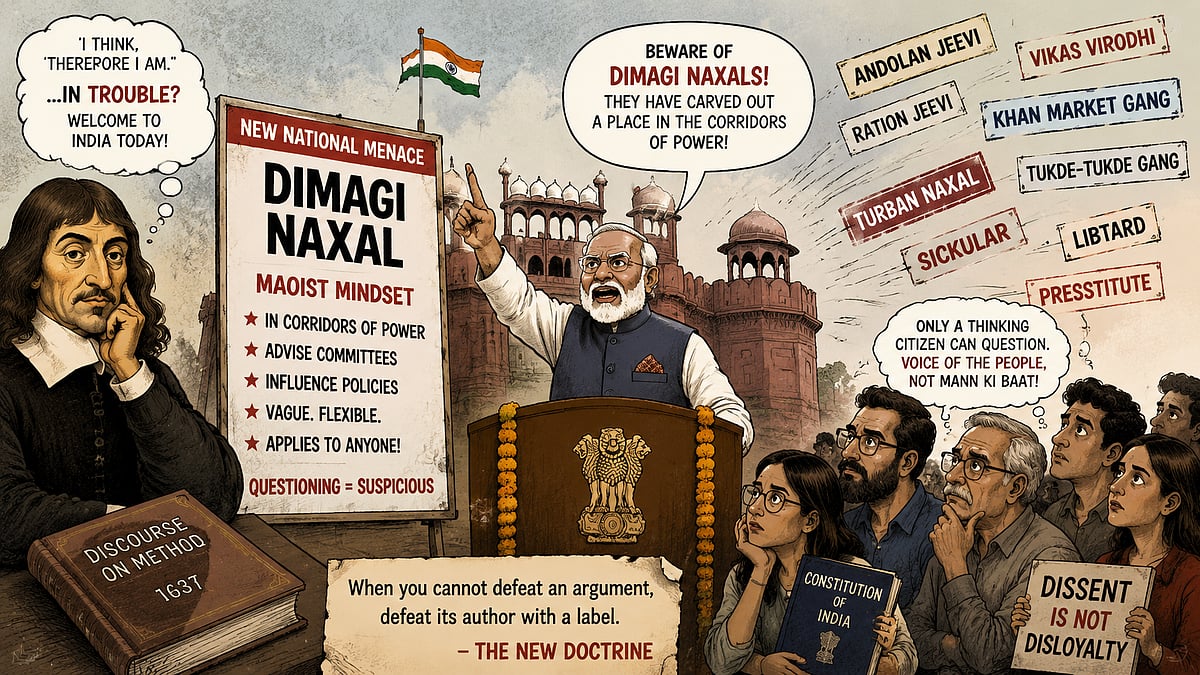
Prime Minister Narendra Modi has introduced a new term, "Dimagi Naxal", to describe individuals with a "Maoist mindset" who advise government committees and influence policies. The term, which translates to "intellectual Naxal", was coined during the Prime Minister's Independence Day address from the Red Fort.
The Prime Minister did not provide any evidence or clarification on who exactly these individuals are, leaving many to wonder about the implications of this new term. The government was forced to ask a cabinet minister to clarify the Prime Minister's remark, but the explanation only added to the confusion.
This is not the first time the Prime Minister has manufactured a political label to describe his critics. Previous terms include "Andolan Jeevi", "Vikas Virodhi", "ration jeevi", the "Khan Market Gang", "Urban Naxal", and the "tukde-tukde gang". The latest addition to this list has been met with criticism, with many arguing that it is an attempt to silence dissent and stifle democratic debate.
The use of such terms has become a hallmark of the government's approach to criticism, with many arguing that it is a way to avoid engaging with opposing viewpoints. By labelling critics with terms like "sickular", "libtard", "presstitute", "Urban Naxal", or "tukde-tukde", the government can dismiss their arguments without addressing the substance of their concerns.
The timing of the Prime Minister's remark has also been questioned, with many arguing that the Red Fort on Independence Day is a symbol of national unity and should not be used to promote partisan vocabulary. The Prime Minister's address should aim to enlarge democratic imagination, not shrink it by boxing inconvenient citizens into ideological caricatures.
The Home Minister has also demonstrated a flair for colourful nomenclature, using terms like "ghuspaithiyon" and "termites" to describe critics. The government's approach to criticism has been widely criticized, with many arguing that it is an attempt to undermine democratic debate and silence dissenting voices.
In a democracy, the ability to think and question the government is essential. The Prime Minister's remark has sparked concerns that thinking itself may become evidence of Naxalism, and that those who dare to question the government may be labelled as enemies of the state.
The controversy surrounding the "Dimagi Naxal" term highlights the importance of democratic debate and the need for the government to engage with opposing viewpoints. Rather than relying on labels and rhetoric, the government should focus on addressing the substance of criticisms and promoting a culture of democratic discourse.
As the country moves forward, it is essential that the government recognizes the value of dissent and debate in a democracy. The ability to think and question the government is not a threat to national security, but rather a fundamental right that is essential to the health of a democratic society.
In conclusion, the "Dimagi Naxal" term has sparked a controversy that highlights the importance of democratic debate and the need for the government to engage with opposing viewpoints. The government should focus on promoting a culture of democratic discourse, rather than relying on labels and rhetoric to silence dissenting voices.
The implications of this term are far-reaching, and it is essential that the government clarifies its position and ensures that democratic debate is not stifled. The country needs a government that is willing to listen to opposing viewpoints and engage in constructive debate, rather than relying on labels and rhetoric to silence critics.
The future of democracy in India depends on the ability of citizens to think, question, and debate. The government should recognize the value of dissent and debate, and work towards promoting a culture of democratic discourse that is essential to the health of a democratic society.
Frequently asked questions
What is the meaning of "Dimagi Naxal"?
"Dimagi Naxal" is a term coined by PM Modi to describe individuals with a "Maoist mindset" who advise government committees and influence policies.
Why has the term sparked controversy?
The term has sparked controversy because it is seen as an attempt to silence dissent and stifle democratic debate, and because it is vague and can be applied to almost anyone who questions the government.