Nepal Floods Claim 250 Lives
Nepal faces another disaster, flash floods kill 250, entire districts wiped out
'%3E%3Crect%20width%3D'96'%20height%3D'96'%20fill%3D'%234A235A'%2F%3E%3Ccircle%20cx%3D'30'%20cy%3D'24'%20r%3D'44'%20fill%3D'%23fff'%20opacity%3D'.12'%2F%3E%3Ccircle%20cx%3D'60'%20cy%3D'74'%20r%3D'40'%20fill%3D'%23000'%20opacity%3D'.10'%2F%3E%3C%2Fg%3E%3Cg%20fill%3D'none'%20stroke%3D'%23fff'%20stroke-width%3D'3'%3E%3Ccircle%20cx%3D'48'%20cy%3D'48'%20r%3D'16'%2F%3E%3Cellipse%20cx%3D'48'%20cy%3D'48'%20rx%3D'6.5'%20ry%3D'16'%2F%3E%3Cline%20x1%3D'32'%20y1%3D'42'%20x2%3D'64'%20y2%3D'42'%2F%3E%3Cline%20x1%3D'32'%20y1%3D'54'%20x2%3D'64'%20y2%3D'54'%2F%3E%3C%2Fg%3E%3C%2Fsvg%3E)
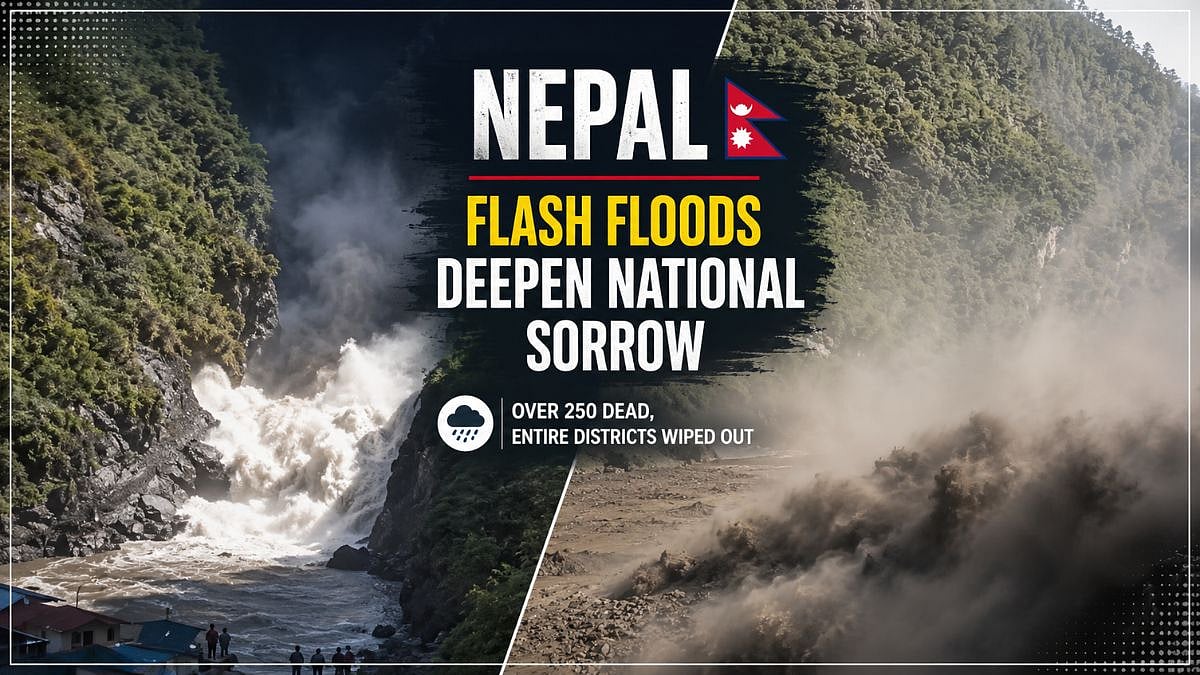
Nepal is reeling from the aftermath of devastating flash floods that have claimed the lives of over 250 people in the northern part of the country, near the Tibet-China border. The disaster has left entire districts in ruins, with many tourists and pilgrims still reported missing. This latest tragedy comes on the heels of a 7.1-magnitude earthquake that struck the country last year, causing widespread devastation and human suffering.
The frequency and severity of natural disasters in Nepal have raised concerns about the country's ability to cope with these crises. The Himalayan nation is prone to earthquakes, floods, and avalanches due to its geographically unstable tectonic zone. The recent flood has dealt a significant blow to Nepal's economy, which is already struggling to recover from the impact of previous disasters.
Nepal's economy has grown by only 4% over the last three decades, with recurring natural disasters being a major contributing factor to this stagnation. The country's monetary stability is largely dependent on its fixed rate arrangement with India, which provides a vital economic buffer. Nepal also relies heavily on remittances from its citizens working abroad, but it lacks significant investments to drive economic growth.
The country's Least Developed State (LDC) status, which provides reduced tariffs, market access, and funds at low rates, is set to expire on November 24. However, Nepal has sought a 3-year deferral from the UN, citing delays in transition. The loss of LDC status would be a significant economic blow, making it difficult for Nepal's exports, such as garments and carpets, to compete in the global market.
Nepal's close relationship with India is crucial to its survival, with the open border and fixed rate arrangement providing a vital lifeline. India has a vested interest in seeing Nepal remain strong and resilient in the face of natural disasters. The country's emerging Gen Z population is ambitious and proud, and it is essential for Nepal's long-term prosperity that it receives the necessary support and assistance to overcome its economic vulnerabilities.
The recent floods have once again highlighted the need for international cooperation and support to help Nepal cope with the impact of natural disasters. The country's economic vulnerability is a significant concern, and it is essential that the international community provides assistance to help Nepal recover and rebuild.
In the aftermath of the floods, Nepal's government is facing significant challenges in providing relief and support to affected communities. The country's infrastructure is severely damaged, and many people are still waiting for aid to arrive. The international community must come together to provide assistance and support to Nepal during this difficult time.
The floods in Nepal are a stark reminder of the country's vulnerability to natural disasters. It is essential that the international community takes a proactive approach to providing support and assistance to help Nepal build its resilience and overcome its economic vulnerabilities. By working together, we can help Nepal recover from this latest disaster and build a stronger, more resilient future for its people.
In conclusion, the flash floods in Nepal have dealt a significant blow to the country's economy and people. It is essential that the international community provides assistance and support to help Nepal recover and rebuild. With the right support and cooperation, Nepal can overcome its economic vulnerabilities and build a stronger, more resilient future for its people.
Frequently asked questions
What is the current situation in Nepal after the floods?
The floods have claimed over 250 lives, and entire districts have been wiped out, with many people still missing.
What is Nepal's economic status, and how does it affect the country?
Nepal is a Least Developed State, and its economy is vulnerable due to recurring natural disasters, with a growth rate of only 4% over the last three decades.