Govt Considers E10 Petrol For Older Vehicles
Older vehicles may get E10 petrol option. Govt explores fuel choice amid E20 concerns.
'%3E%3Crect%20width%3D'96'%20height%3D'96'%20fill%3D'%230B6E4F'%2F%3E%3Ccircle%20cx%3D'30'%20cy%3D'24'%20r%3D'44'%20fill%3D'%23fff'%20opacity%3D'.12'%2F%3E%3Ccircle%20cx%3D'60'%20cy%3D'74'%20r%3D'40'%20fill%3D'%23000'%20opacity%3D'.10'%2F%3E%3C%2Fg%3E%3Cg%20fill%3D'none'%20stroke%3D'%23fff'%20stroke-width%3D'3.2'%20stroke-linecap%3D'round'%20stroke-linejoin%3D'round'%3E%3Cpolyline%20points%3D'31%2C59%2041%2C49%2049%2C54%2063%2C37'%2F%3E%3Cpolyline%20points%3D'55%2C37%2063%2C37%2063%2C45'%2F%3E%3C%2Fg%3E%3C%2Fsvg%3E)
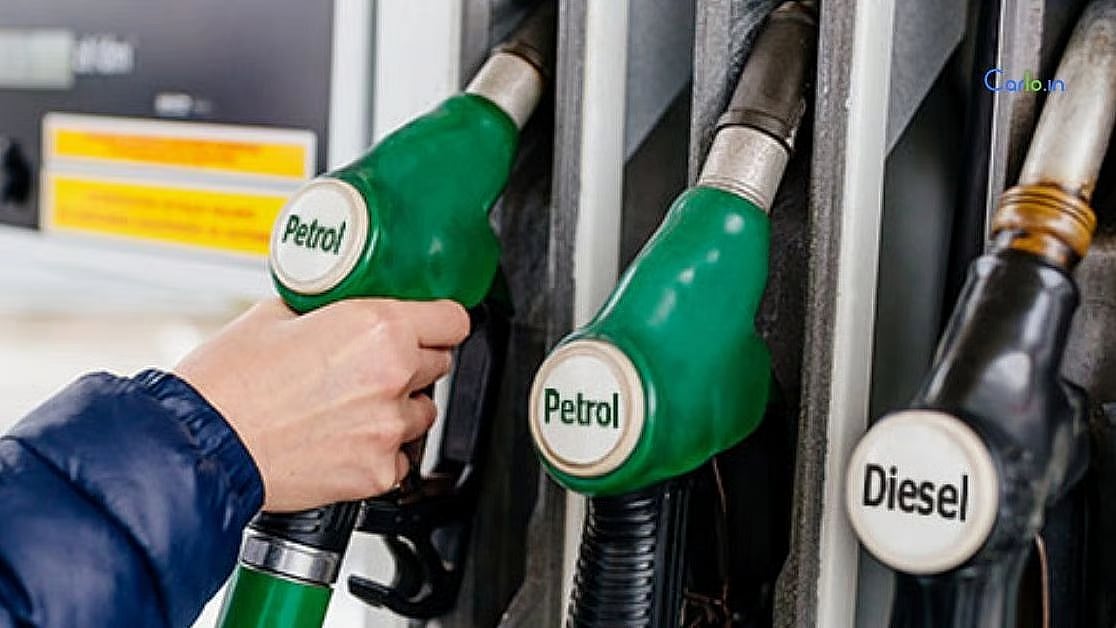
The Central government has started preliminary discussions on making E10 petrol, containing 10% ethanol, available as an option for older vehicles alongside the existing E20 fuel.
The discussions are still at an early stage and are focused on older vehicles. Officials are looking at both technical and non-technical issues, including the impact on India's fuel supply chain.
No final decision has been made yet. The talks come amid growing concerns among vehicle owners about the limited availability of fuel choices, particularly for people using older cars and two-wheelers that may not be designed for E20 petrol.
While government officials have said that E20 fuel is safe and does not damage engine components, some consumers are still worried about mileage and compatibility.
The possibility of bringing back E10 would provide an alternative for owners of older vehicles. Chief Economic Adviser V Anantha Nageswaran had suggested on August 17 that consumers could be offered additional fuel choices, including petrol with a lower ethanol blend.
However, introducing E10 alongside E20 across the country could create significant operational difficulties. The government had argued that maintaining multiple grades of base fuel nationwide would present a major logistical challenge.
India's fuel retail network would need to manage separate supplies, storage, and distribution systems for different ethanol-blended petrol grades. This could increase costs and reduce efficiency.
The issue comes after India achieved its target of blending 20% ethanol into petrol last year, five years ahead of the original schedule. The achievement marked a major milestone in the country's ethanol-blending programme.
The latest discussions indicate that the government is now examining whether greater fuel choice can be provided to consumers without undermining the efficiency of the existing fuel distribution system.
However, any possible return of E10 petrol remains subject to further discussions and evaluation. The government will need to balance the needs of consumers with the challenges of managing a complex fuel supply chain.
In the end, the decision on E10 petrol will depend on a careful consideration of the technical, logistical, and economic factors involved. The government's goal is to provide a reliable and efficient fuel supply system that meets the needs of all consumers, including those with older vehicles.
The consideration of E10 petrol is a significant development in India's fuel policy, and its outcome will be closely watched by consumers and industry stakeholders alike.
As the government moves forward with its discussions, it will be important to consider the potential impact on the environment, the economy, and the overall fuel supply chain.
The final decision on E10 petrol will have significant implications for India's energy policy and its efforts to reduce its dependence on fossil fuels.
For now, the government's exploration of E10 petrol as an option for older vehicles is a positive step towards providing consumers with greater fuel choice and flexibility.
It remains to be seen how the discussions will unfold and what the ultimate decision will be. However, one thing is clear: the government is committed to finding a solution that works for all stakeholders involved.
The potential return of E10 petrol is a complex issue that requires careful consideration of multiple factors. The government will need to weigh the benefits of providing greater fuel choice against the potential challenges and costs involved.
Ultimately, the decision on E10 petrol will depend on a thorough evaluation of the available options and a careful consideration of the potential consequences.
The government's goal is to create a fuel supply system that is efficient, reliable, and meets the needs of all consumers. The consideration of E10 petrol is an important step towards achieving this goal.
In conclusion, the government's exploration of E10 petrol as an option for older vehicles is a significant development in India's fuel policy. The outcome of the discussions will have important implications for consumers, industry stakeholders, and the environment.
The government's commitment to finding a solution that works for all stakeholders involved is a positive step towards creating a more efficient and reliable fuel supply system.
As the discussions continue, it will be important to consider the potential impact on the environment, the economy, and the overall fuel supply chain. The final decision on E10 petrol will be closely watched by consumers and industry stakeholders alike.
Frequently asked questions
What is E10 petrol?
E10 petrol is a type of fuel that contains 10% ethanol.
Why is the government considering E10 petrol?
The government is considering E10 petrol as an option for older vehicles amid concerns over the limited availability of fuel choices and compatibility issues with E20 petrol.