Farm Waste Converted To Fuel
Indian researchers develop tech to turn farm waste into fuel, reducing pollution and boosting energy security.

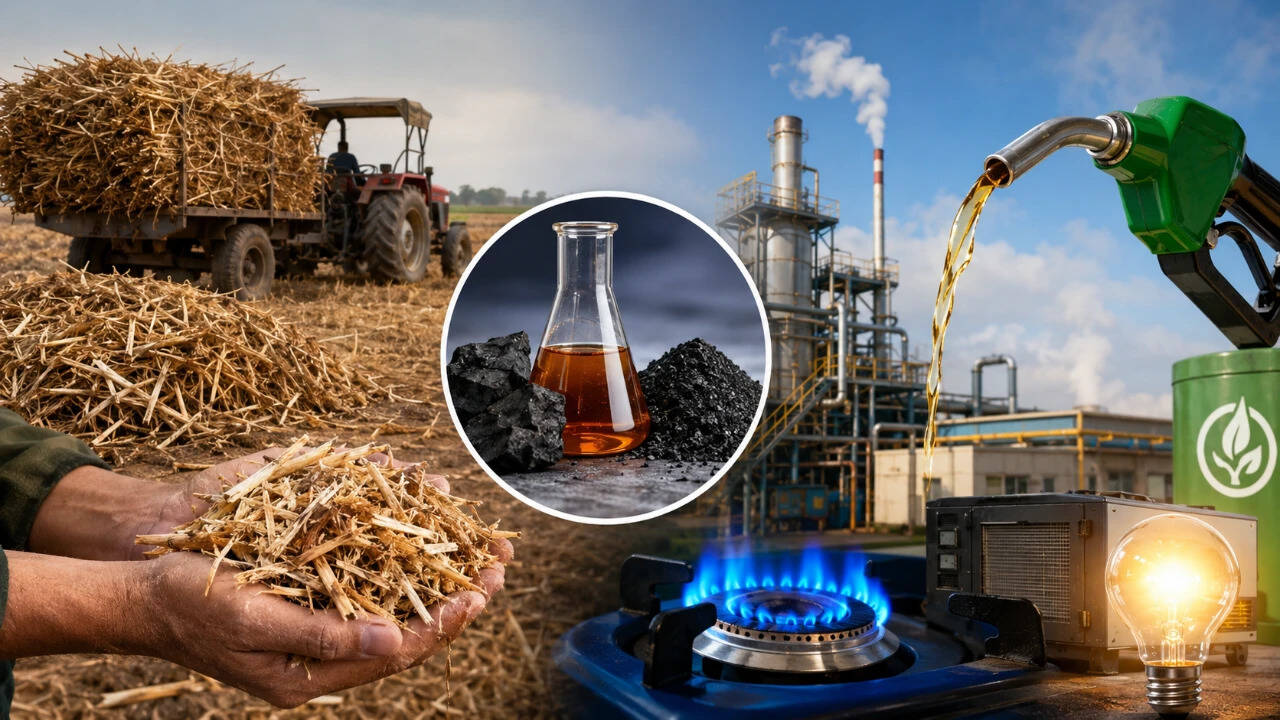
Indian researchers have made a significant breakthrough in converting farm waste into valuable fuel, addressing the country's energy security concerns and reducing air pollution from stubble burning.
This innovative technology has the potential to revolutionize the way India meets its energy needs, while also promoting sustainable agriculture practices. The process involves converting farm waste into biochar and bio-oil, which can be used to improve soil fertility and boost crop yields.
According to the researchers, the biochar produced through this process can improve soil fertility, leading to increased crop yields and higher farmer incomes. Additionally, the bio-oil can be blended with conventional crude oil for refining purposes, offering a path towards greater self-reliance in energy and agriculture.
The research, conducted by the Indian Council of Technology (ICT), highlights the importance of developing home-grown solutions to address the country's energy security concerns. The ongoing conflict in West Asia has once again brought attention to the need for reducing dependence on imported fuel and promoting domestic energy production.
India has been grappling with the issue of stubble burning, which contributes to air pollution in several parts of the country. The new technology offers a viable solution to this problem, as it provides a way to convert farm waste into valuable fuel, rather than burning it.
The development of this technology is a significant step towards achieving energy self-reliance and promoting sustainable agriculture practices in India. It is expected to have a positive impact on the environment, farmers, and the economy as a whole.
The use of biochar and bio-oil can also help reduce greenhouse gas emissions, which contribute to climate change. This innovative approach to energy production has the potential to make a significant contribution to India's efforts to reduce its carbon footprint.
In the context of the ongoing global efforts to transition to cleaner and more sustainable energy sources, India's focus on developing home-grown solutions is a step in the right direction. The country's commitment to reducing its dependence on imported fuel and promoting domestic energy production is expected to have a positive impact on its energy security and economy.
Overall, the development of technology to convert farm waste into fuel is a significant breakthrough, offering a path towards greater energy self-reliance, reduced air pollution, and improved agricultural productivity.
It is a significant development for India, as it moves towards achieving its goal of reducing dependence on imported fuel and promoting sustainable energy production. The innovation has the potential to make a positive impact on the country's energy security, environment, and economy, and is a step towards a more sustainable future.