Centre Rules Out Ethanol Blending Beyond 20% In Petrol
No decision to increase ethanol blending, Centre tells Parliament. Ethanol blending to remain at 20%.
'%3E%3Crect%20width%3D'96'%20height%3D'96'%20fill%3D'%231A5276'%2F%3E%3Ccircle%20cx%3D'30'%20cy%3D'24'%20r%3D'44'%20fill%3D'%23fff'%20opacity%3D'.12'%2F%3E%3Ccircle%20cx%3D'60'%20cy%3D'74'%20r%3D'40'%20fill%3D'%23000'%20opacity%3D'.10'%2F%3E%3C%2Fg%3E%3Cg%20fill%3D'%23fff'%3E%3Cpath%20d%3D'M31%2041%20L48%2031%20L65%2041%20Z'%2F%3E%3Crect%20x%3D'33'%20y%3D'43'%20width%3D'4'%20height%3D'17'%2F%3E%3Crect%20x%3D'41'%20y%3D'43'%20width%3D'4'%20height%3D'17'%2F%3E%3Crect%20x%3D'51'%20y%3D'43'%20width%3D'4'%20height%3D'17'%2F%3E%3Crect%20x%3D'59'%20y%3D'43'%20width%3D'4'%20height%3D'17'%2F%3E%3Crect%20x%3D'30'%20y%3D'62'%20width%3D'36'%20height%3D'4'%20rx%3D'1'%2F%3E%3C%2Fg%3E%3C%2Fsvg%3E)
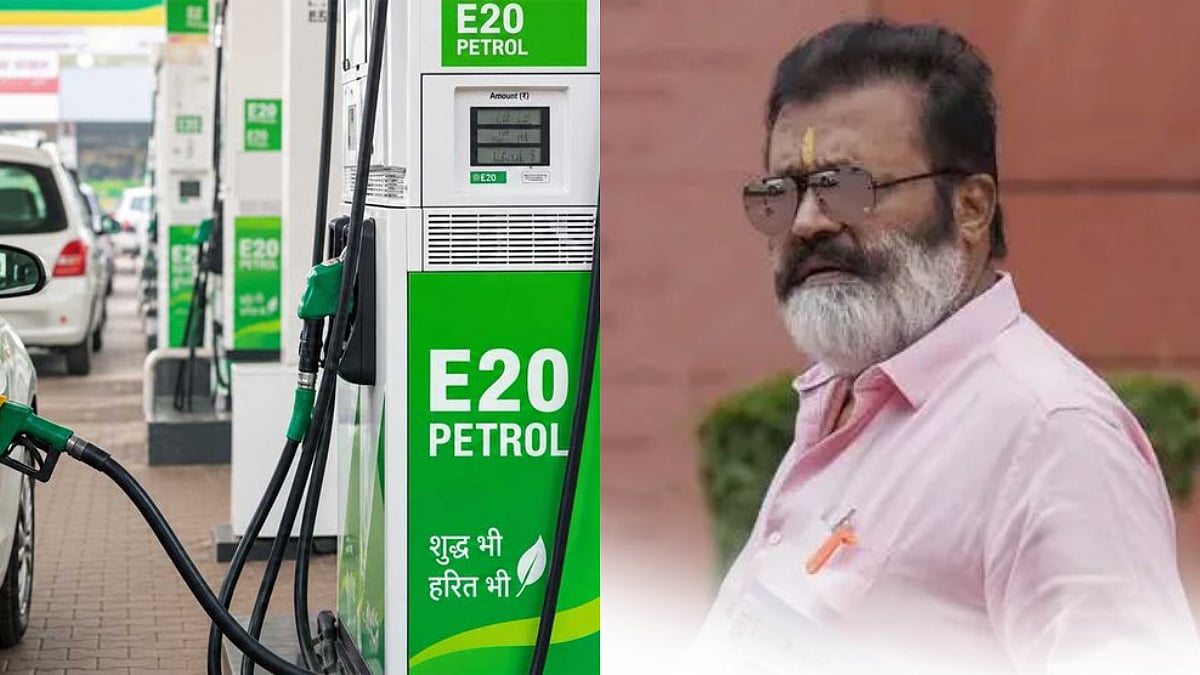
The Union government has announced that it has not taken any decision to increase ethanol blending with petrol beyond 20 per cent. This decision was conveyed to Parliament by Minister of State for Petroleum and Natural Gas Suresh Gopi.
The government has stated that any future decision regarding higher ethanol blends will be taken only after detailed scientific and technical studies and consultations with all relevant stakeholders. These stakeholders include automobile manufacturers, oil marketing companies, and research institutions.
However, the government has introduced E85 fuel, which contains 85 per cent ethanol and 15 per cent petrol, exclusively for use in Flex Fuel Vehicles (FFVs) designed and certified for such fuel. This introduction does not constitute an increase in the nationwide base ethanol blending level of petrol.
The government has clarified that ethanol has been used globally for more than a century, with countries such as Brazil operating higher ethanol blends for decades. In India, the Ethanol Blended Petrol (EBP) Programme has been implemented through a phased, scientifically validated, and consultative process.
The programme involves various institutions, including NITI Aayog, automobile manufacturers, oil marketing companies, Automotive Research Association of India (ARAI), Society of Indian Automobile Manufacturers (SIAM), Indian Institute of Petroleum (IIP), and other technical institutions.
The scientific studies, field validation, and extensive real-world operating experience have shown that E20 is a safe, cleaner, and technologically superior fuel when used in accordance with the prescribed specifications and manufacturer recommendations.
The Union government's assessment is based not only on laboratory research but also on large-scale experience after nationwide implementation. The government has stated that E15+ blended petrol has been in widespread use for more than three-and-a-half years and E19-E20 fuel for more than two-and-a-half years.
More than 20 crore two-wheelers and over 3 crore petrol cars have been operating on these blends without any verified evidence of widespread engine failure or vehicle breakdown attributable to ethanol blending. This is further validated through large-scale real-world experience.
Manufacturer service data confirm that there is no abnormal corrosion, wear, or reduction in vehicle life due to E20 fuel. Manufacturers continue to honour warranty obligations for vehicles using E20 fuel, providing further confidence in its safety and reliability.
The government's decision to maintain the current level of ethanol blending is a significant development in the country's efforts to promote the use of ethanol as a cleaner and more environmentally friendly fuel.
The decision is expected to have a positive impact on the environment and the economy, as it will help reduce the country's dependence on fossil fuels and promote the use of renewable energy sources.
In conclusion, the Union government's decision to maintain the current level of ethanol blending at 20 per cent is a well-informed and scientifically validated decision that takes into account the interests of all stakeholders involved.
Frequently asked questions
What is the current level of ethanol blending in petrol?
The current level of ethanol blending in petrol is 20%.
Will the government increase ethanol blending beyond 20%?
The government has not taken any decision to increase ethanol blending beyond 20% and will only do so after detailed scientific and technical studies and consultations with stakeholders.