Nepal Floods Claim 1,114 Lives, PM Seeks Global Climate Action
Nepal PM calls for global action on climate risks, death toll crosses 1,100, over 3,900 missing
'%3E%3Crect%20width%3D'96'%20height%3D'96'%20fill%3D'%234A235A'%2F%3E%3Ccircle%20cx%3D'30'%20cy%3D'24'%20r%3D'44'%20fill%3D'%23fff'%20opacity%3D'.12'%2F%3E%3Ccircle%20cx%3D'60'%20cy%3D'74'%20r%3D'40'%20fill%3D'%23000'%20opacity%3D'.10'%2F%3E%3C%2Fg%3E%3Cg%20fill%3D'none'%20stroke%3D'%23fff'%20stroke-width%3D'3'%3E%3Ccircle%20cx%3D'48'%20cy%3D'48'%20r%3D'16'%2F%3E%3Cellipse%20cx%3D'48'%20cy%3D'48'%20rx%3D'6.5'%20ry%3D'16'%2F%3E%3Cline%20x1%3D'32'%20y1%3D'42'%20x2%3D'64'%20y2%3D'42'%2F%3E%3Cline%20x1%3D'32'%20y1%3D'54'%20x2%3D'64'%20y2%3D'54'%2F%3E%3C%2Fg%3E%3C%2Fsvg%3E)

Nepal Prime Minister Balendra Shah has urged the international community to take stronger action against climate-related risks in the Himalayan region. This comes as the death toll from the devastating floods in the Bhotekoshi River has crossed 1,100.
The floods, which occurred last week, have resulted in the recovery of at least 1,114 bodies, according to the National Disaster Risk Reduction and Management Authority. Additionally, around 3,916 people remain out of contact, with many feared dead.
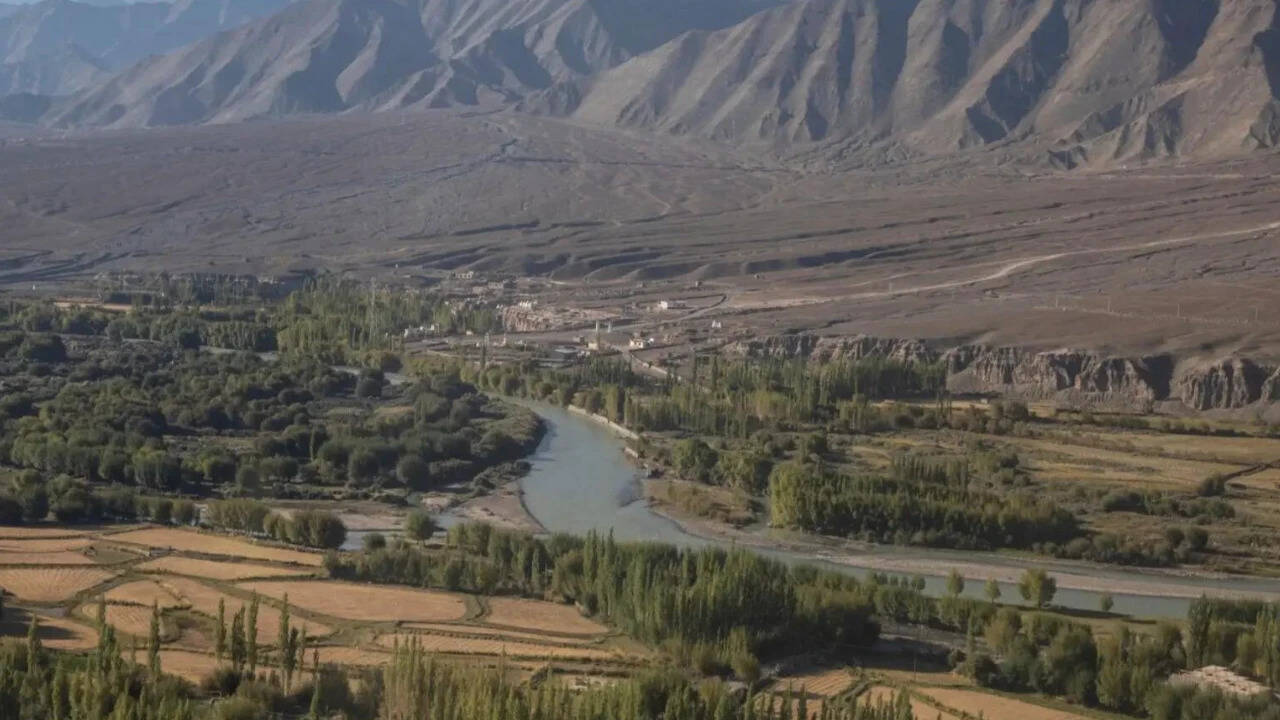
Experts believe that an avalanche blocked the Lengde Khola, a tributary of the Bhotekoshi River near the Nepal-China border, causing the massive flood. The accumulated water later breached the natural barrier, triggering a devastating flood that swept downstream towards the Trishuli River and destroyed settlements and infrastructure.
Prime Minister Shah addressed the House of Representatives, stating that the disaster has raised questions about the country's future and its ability to manage such events. He emphasized the need for the international community to be aware of the disasters Nepal is experiencing as a result of climate change.
Shah also defended the government's response to the disaster, stating that timely warnings were issued to the public and that security personnel were deployed to alert residents. He added that the government had been coordinating with international countries to seek assistance as needed in the affected areas.
The government of Maharashtra has ordered priority DNA sampling of families of Indians missing in the Nepal floods to aid in the identification of mortal remains. Nepal's friendly neighbors, India and China, have already sent technical experts to conduct reconnaissance and provide assistance.
The floods have highlighted the growing climate-related risks in the Himalayan region, and Prime Minister Shah's call for global action is a stark reminder of the need for international cooperation to mitigate and manage these risks.
The disaster has also raised questions about the preparedness of the Nepali government to respond to such events. While the government has defended its response, some media reports have suggested that timely warnings were not issued to the public.
In the aftermath of the disaster, the international community has come together to provide assistance to Nepal. The country will need significant support to recover from the devastating floods and to rebuild its infrastructure.
The floods in Nepal are a reminder of the devastating impact of climate change on vulnerable communities. As the world grapples with the challenges of climate change, it is essential that countries come together to share knowledge, expertise, and resources to mitigate and manage these risks.
In conclusion, the floods in Nepal have resulted in a significant loss of life and damage to infrastructure. Prime Minister Shah's call for global action on climate-related risks is a timely reminder of the need for international cooperation to address this pressing issue. As the country rebuilds and recovers, it is essential that the international community provides support and assistance to help Nepal mitigate and manage the risks associated with climate change.
Frequently asked questions
What is the current death toll from the Nepal floods?
The current death toll from the Nepal floods is at least 1,114.
What is the Nepali government's response to the floods?
The Nepali government has defended its response to the floods, stating that timely warnings were issued to the public and that security personnel were deployed to alert residents.