Western Railway Introduces Body Cameras For Ticket Checkers
Western Railway to record interactions between ticket checkers and passengers. Body cameras to be used on AC local trains.
'%3E%3Crect%20width%3D'96'%20height%3D'96'%20fill%3D'%23B3261E'%2F%3E%3Ccircle%20cx%3D'30'%20cy%3D'24'%20r%3D'44'%20fill%3D'%23fff'%20opacity%3D'.12'%2F%3E%3Ccircle%20cx%3D'60'%20cy%3D'74'%20r%3D'40'%20fill%3D'%23000'%20opacity%3D'.10'%2F%3E%3C%2Fg%3E%3Cg%20fill%3D'%23fff'%3E%3Crect%20x%3D'29'%20y%3D'49'%20width%3D'8'%20height%3D'19'%20rx%3D'1'%2F%3E%3Crect%20x%3D'39'%20y%3D'40'%20width%3D'9'%20height%3D'28'%20rx%3D'1'%2F%3E%3Crect%20x%3D'50'%20y%3D'45'%20width%3D'8'%20height%3D'23'%20rx%3D'1'%2F%3E%3Crect%20x%3D'60'%20y%3D'53'%20width%3D'7'%20height%3D'15'%20rx%3D'1'%2F%3E%3Crect%20x%3D'41'%20y%3D'34'%20width%3D'5'%20height%3D'6'%2F%3E%3C%2Fg%3E%3C%2Fsvg%3E)
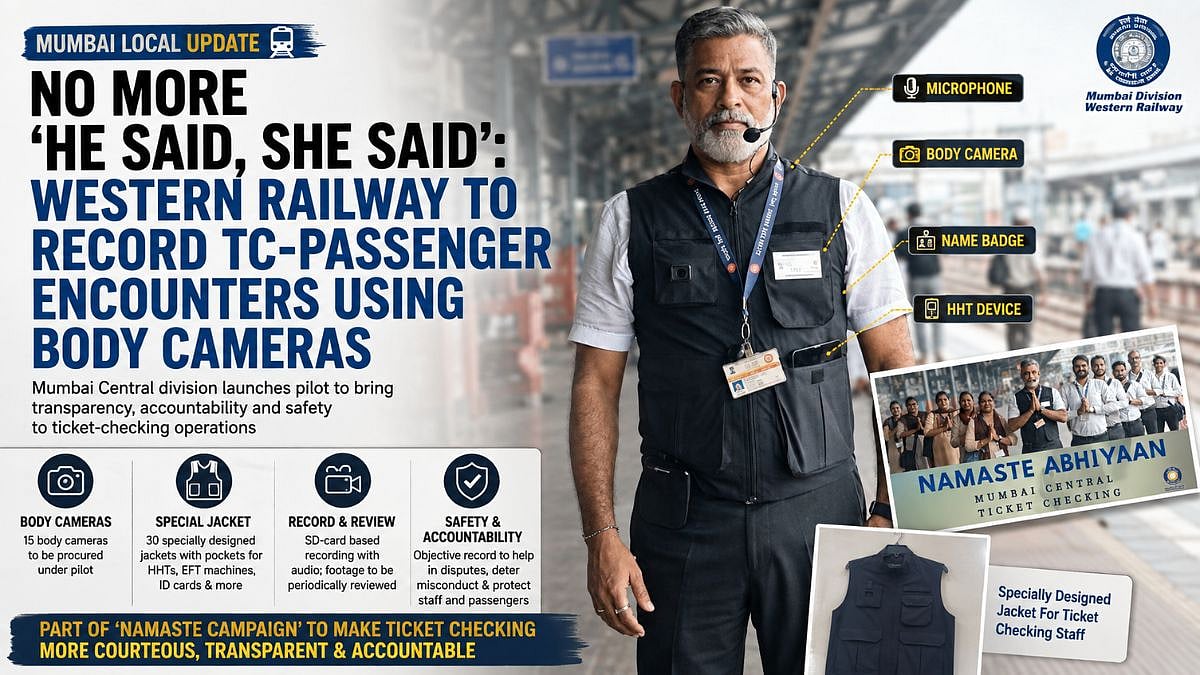
Western Railway's Mumbai Central division has introduced a pilot project to use body-worn cameras for ticket checkers. The move aims to settle disputes between ticket-checking staff and passengers through recorded evidence.
The initiative comes amid incidents of arguments, clashes, and assaults during ticket checks. Fifteen body cameras and 30 specially designed jackets will be procured under the pilot, with AC local trains among the key areas of focus.
The cameras are intended to provide an objective record of what happens during ticket checking, particularly when an interaction turns into an argument or physical confrontation. With recording available, railway officials will be able to examine the sequence of events instead of relying only on statements from the passenger or ticket-checking staff.
The footage will also help in preparing reports and identifying those responsible in cases of misconduct or assault. At the same time, recording staff interactions could make ticket-checking personnel more accountable for their conduct towards passengers.
The initiative is part of Western Railway's 'Namaste Campaign', which seeks to make ticket checking more courteous, professional, and accountable while ensuring compliance with ticketing rules. The body cameras will use SD-card-based recording and microphones to capture visuals and conversations during duty.
The recorded material will be periodically reviewed and analysed, particularly in cases involving disputes, arguments, and assaults. The technology will be accompanied by a new work jacket designed specifically for ticket-checking staff. The jackets will have separate pockets and compartments for Hand Held Terminals (HHTs), Electronic Fare Ticket (EFT) machines, identity cards, name badges, and other equipment.
Made from quick-drying microfibre fabric, they are intended to make it easier for staff to carry their equipment while working for long hours. A body camera will be mounted on the front, while the distinctive jacket will make authorised ticket-checking personnel easier for passengers to identify.
The move follows several incidents in which disputes between ticketless passengers and TCs have escalated into verbal or physical confrontations, with some incidents being recorded and circulated on social media. Railway officials believe the cameras can work as a deterrent while also protecting staff and passengers when allegations are disputed.
According to Vineet Abhishek, CPRO, Western Railway, the use of body cameras and special jackets will make ticket-checking drives safer, transparent, and professional. It will help strengthen passenger confidence while improving the safety and accountability of ticket-checking staff. Based on the outcome of the pilot project, a decision can be taken on expanding the system.
The introduction of body cameras for ticket checkers is a significant step towards improving the safety and accountability of railway staff. It is expected to reduce the number of disputes and incidents of misconduct, and provide a more secure and comfortable travel experience for passengers.
In the long run, the use of body cameras and special jackets is likely to have a positive impact on the overall functioning of the railway system. It will help to build trust between passengers and railway staff, and contribute to a more efficient and effective ticket-checking process.
The success of the pilot project will be closely monitored, and the results will be used to inform future decisions on the use of body cameras and special jackets in other areas of the railway system. With the introduction of this new technology, Western Railway is taking a significant step towards modernising its operations and improving the travel experience for its passengers.
The initiative is a part of the railway's efforts to provide better services to its passengers and to ensure a safe and secure travel experience. The use of body cameras and special jackets is a positive step towards achieving this goal, and it is expected to have a significant impact on the overall functioning of the railway system.
In conclusion, the introduction of body cameras for ticket checkers is a significant development in the railway sector. It is expected to improve the safety and accountability of railway staff, reduce the number of disputes and incidents of misconduct, and provide a more secure and comfortable travel experience for passengers. The success of the pilot project will be closely monitored, and the results will be used to inform future decisions on the use of body cameras and special jackets in other areas of the railway system.
Frequently asked questions
What is the purpose of introducing body cameras for ticket checkers?
The purpose is to provide an objective record of interactions between ticket checkers and passengers, and to reduce the number of disputes and incidents of misconduct.
Where will the body cameras be used?
The body cameras will be used on AC local trains, as part of a pilot project.