IIT Indore Develops Non-Invasive Oral Cancer Detection Method
IIT Indore researchers create a non-invasive method to detect oral cancer. The method uses saliva and mouth swab samples.
'%3E%3Crect%20width%3D'96'%20height%3D'96'%20fill%3D'%23B3261E'%2F%3E%3Ccircle%20cx%3D'30'%20cy%3D'24'%20r%3D'44'%20fill%3D'%23fff'%20opacity%3D'.12'%2F%3E%3Ccircle%20cx%3D'60'%20cy%3D'74'%20r%3D'40'%20fill%3D'%23000'%20opacity%3D'.10'%2F%3E%3C%2Fg%3E%3Cg%20fill%3D'%23fff'%3E%3Crect%20x%3D'29'%20y%3D'49'%20width%3D'8'%20height%3D'19'%20rx%3D'1'%2F%3E%3Crect%20x%3D'39'%20y%3D'40'%20width%3D'9'%20height%3D'28'%20rx%3D'1'%2F%3E%3Crect%20x%3D'50'%20y%3D'45'%20width%3D'8'%20height%3D'23'%20rx%3D'1'%2F%3E%3Crect%20x%3D'60'%20y%3D'53'%20width%3D'7'%20height%3D'15'%20rx%3D'1'%2F%3E%3Crect%20x%3D'41'%20y%3D'34'%20width%3D'5'%20height%3D'6'%2F%3E%3C%2Fg%3E%3C%2Fsvg%3E)
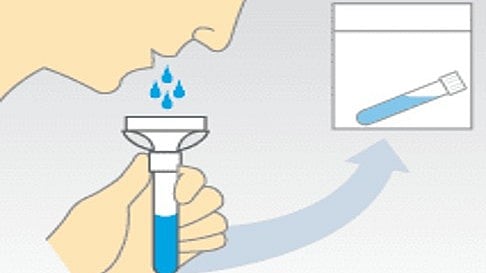
Researchers at IIT Indore have made a significant breakthrough in oral cancer screening by developing a non-invasive method to detect molecular warning signs of oral cancer.
The method, led by Hem Chandra Jha and Tarun Prakash Verma, uses a saliva sample and a gentle swab from inside the mouth to identify distinct molecular changes linked to fat metabolism, energy production, and immune responses.
The team collaborated with Deepak Agrawal of Government College of Dentistry, Indore, to study oral squamous cell carcinoma and oral submucous fibrosis. They analyzed samples from healthy individuals, patients with oral submucous fibrosis, and oral cancer patients using liquid chromatography-mass spectrometry.
The analysis identified several molecular changes that appeared before abnormalities became clinically visible. By combining saliva and swab findings, researchers developed a broader molecular picture of the progression from healthy tissue to precancerous lesions and eventually oral cancer.
If validated in larger clinical studies, the approach could help doctors detect molecular changes before visible symptoms, identify high-risk individuals, and monitor precancerous lesions. This could reduce the need for repeated invasive procedures and support affordable, scalable screening in regions with a high burden of oral cancer.
IIT Indore Director Suhas Joshi said the study demonstrates how advanced molecular science can be translated into a simple approach for early cancer detection. The team's aim is to convert these signals into practical tools for earlier detection and monitoring of high-risk lesions.
The technology is non-invasive, potentially economical, quick, and suited to point-of-care use, making it potentially valuable in areas where specialist cancer diagnostics are limited. The findings have been published in the British Journal of Cancer, and a patent application has been filed and is under process.
The researchers will now validate the method in larger and more diverse patient groups before developing targeted, easy-to-use tests for routine clinical practice.
This innovation could be particularly important in India, where oral cancer remains a major health challenge and many patients are diagnosed only after the disease has advanced. A biopsy, the current gold-standard diagnostic method, is invasive and difficult to repeat for monitoring high-risk patients.
The development of this non-invasive method could help address the issue of late diagnosis and improve treatment outcomes for oral cancer patients.
In conclusion, the non-invasive oral cancer detection method developed by IIT Indore researchers has the potential to revolutionize oral cancer screening and improve treatment outcomes for patients.
With further validation and development, this technology could become a valuable tool for doctors and healthcare professionals in the fight against oral cancer.
Frequently asked questions
What is the current gold-standard diagnostic method for oral cancer?
A biopsy, which is invasive and difficult to repeat for monitoring high-risk patients.
What is the potential benefit of the non-invasive method developed by IIT Indore researchers?
It could help detect molecular changes before visible symptoms, identify high-risk individuals, and monitor precancerous lesions, reducing the need for repeated invasive procedures.