Seagrass Adapts to Low Light
Scientists discover how seagrass survives in dim light, helping future crops. Research reveals adapted photosynthetic system.
'%3E%3Crect%20width%3D'96'%20height%3D'96'%20fill%3D'%23B3261E'%2F%3E%3Ccircle%20cx%3D'30'%20cy%3D'24'%20r%3D'44'%20fill%3D'%23fff'%20opacity%3D'.12'%2F%3E%3Ccircle%20cx%3D'60'%20cy%3D'74'%20r%3D'40'%20fill%3D'%23000'%20opacity%3D'.10'%2F%3E%3C%2Fg%3E%3Cg%20fill%3D'%23fff'%3E%3Crect%20x%3D'29'%20y%3D'49'%20width%3D'8'%20height%3D'19'%20rx%3D'1'%2F%3E%3Crect%20x%3D'39'%20y%3D'40'%20width%3D'9'%20height%3D'28'%20rx%3D'1'%2F%3E%3Crect%20x%3D'50'%20y%3D'45'%20width%3D'8'%20height%3D'23'%20rx%3D'1'%2F%3E%3Crect%20x%3D'60'%20y%3D'53'%20width%3D'7'%20height%3D'15'%20rx%3D'1'%2F%3E%3Crect%20x%3D'41'%20y%3D'34'%20width%3D'5'%20height%3D'6'%2F%3E%3C%2Fg%3E%3C%2Fsvg%3E)
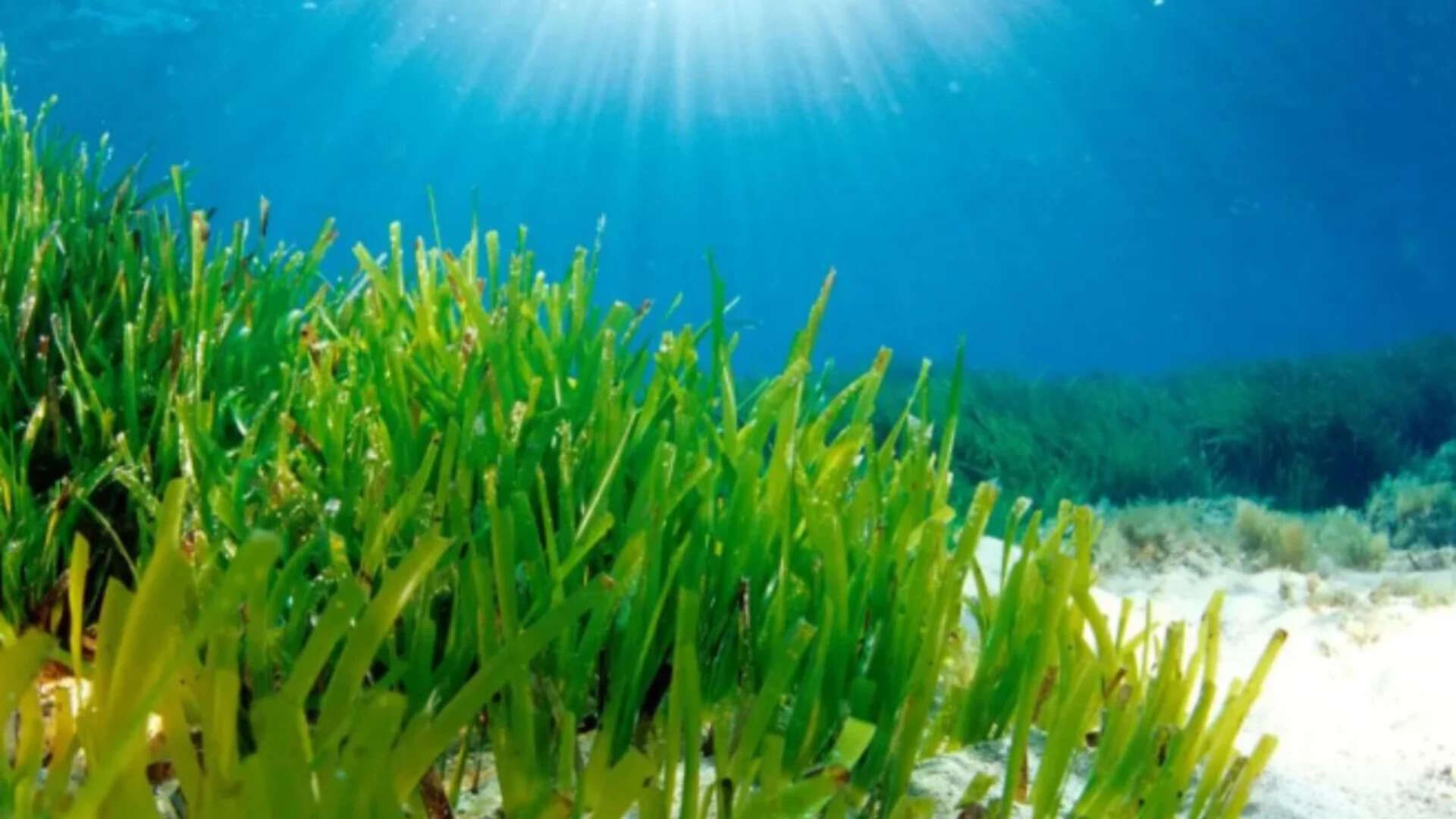
Scientists have made a significant discovery about the Mediterranean seagrass Posidonia oceanica, uncovering how it adapts its photosynthetic system to survive in low light conditions on the seabed.
The seagrass has developed a unique way to capture more light and move energy more efficiently by altering its photosynthetic machinery. This adaptation enables the plant to thrive in the dim, blue-green light of the seabed.
Researchers believe that understanding how the seagrass achieves this feat could have important implications for the development of crop plants. By applying the knowledge gained from this study, scientists may be able to create crops that make better use of limited sunlight, particularly in dense canopies where light is scarce.
The photosynthetic system of plants is crucial for their survival, as it allows them to convert light energy into chemical energy. However, in low light conditions, this process can be hindered, limiting the plant's ability to grow and thrive.
The Mediterranean seagrass has evolved to overcome this challenge by modifying its photosynthetic system. This adaptation involves altering the structure and function of the plant's photosynthetic machinery, allowing it to capture more light and use it more efficiently.
The discovery of this adaptation has significant potential for the development of more efficient crop plants. In agricultural settings, crops often grow in dense canopies, where light is limited. By developing crops that can make better use of this limited light, farmers may be able to improve yields and reduce the need for artificial lighting or other interventions.
Furthermore, this research could also have implications for the development of more sustainable agricultural practices. By creating crops that are more efficient in their use of light, farmers may be able to reduce their reliance on resources such as water and fertilizers, leading to more environmentally friendly farming practices.
In addition to its potential applications in agriculture, the discovery of the seagrass's adapted photosynthetic system also highlights the importance of preserving and protecting marine ecosystems. Seagrasses like Posidonia oceanica play a crucial role in maintaining the health of our oceans, providing habitat for a diverse range of species and helping to regulate the climate.
Overall, the discovery of how the Mediterranean seagrass survives in low light conditions is an important breakthrough with significant potential for the development of more efficient and sustainable crop plants. As researchers continue to study this adaptation, they may uncover even more ways to apply this knowledge to improve agricultural practices and promote environmental sustainability.
The findings of this study have far-reaching implications for the future of agriculture and the environment. As the global population continues to grow, it is essential that we develop more efficient and sustainable ways to produce food. By learning from the adaptations of plants like the Mediterranean seagrass, scientists may be able to create crops that are better equipped to thrive in a wide range of environments, helping to ensure a more food-secure future for generations to come.
In conclusion, the discovery of the Mediterranean seagrass's adapted photosynthetic system is a significant step forward in our understanding of how plants adapt to their environments. As researchers continue to explore the potential applications of this knowledge, we may see important breakthroughs in the development of more efficient and sustainable crop plants, leading to a more food-secure and environmentally sustainable future.