BMC Removes Temporary Road At Shahpura Lake Before NGT Hearing
Bhopal Municipal Corporation removes temporary road at Shahpura Lake ahead of NGT hearing, triggering fresh allegations of environmental violations.
'%3E%3Crect%20width%3D'96'%20height%3D'96'%20fill%3D'%23B3261E'%2F%3E%3Ccircle%20cx%3D'30'%20cy%3D'24'%20r%3D'44'%20fill%3D'%23fff'%20opacity%3D'.12'%2F%3E%3Ccircle%20cx%3D'60'%20cy%3D'74'%20r%3D'40'%20fill%3D'%23000'%20opacity%3D'.10'%2F%3E%3C%2Fg%3E%3Cg%20fill%3D'%23fff'%3E%3Crect%20x%3D'29'%20y%3D'49'%20width%3D'8'%20height%3D'19'%20rx%3D'1'%2F%3E%3Crect%20x%3D'39'%20y%3D'40'%20width%3D'9'%20height%3D'28'%20rx%3D'1'%2F%3E%3Crect%20x%3D'50'%20y%3D'45'%20width%3D'8'%20height%3D'23'%20rx%3D'1'%2F%3E%3Crect%20x%3D'60'%20y%3D'53'%20width%3D'7'%20height%3D'15'%20rx%3D'1'%2F%3E%3Crect%20x%3D'41'%20y%3D'34'%20width%3D'5'%20height%3D'6'%2F%3E%3C%2Fg%3E%3C%2Fsvg%3E)
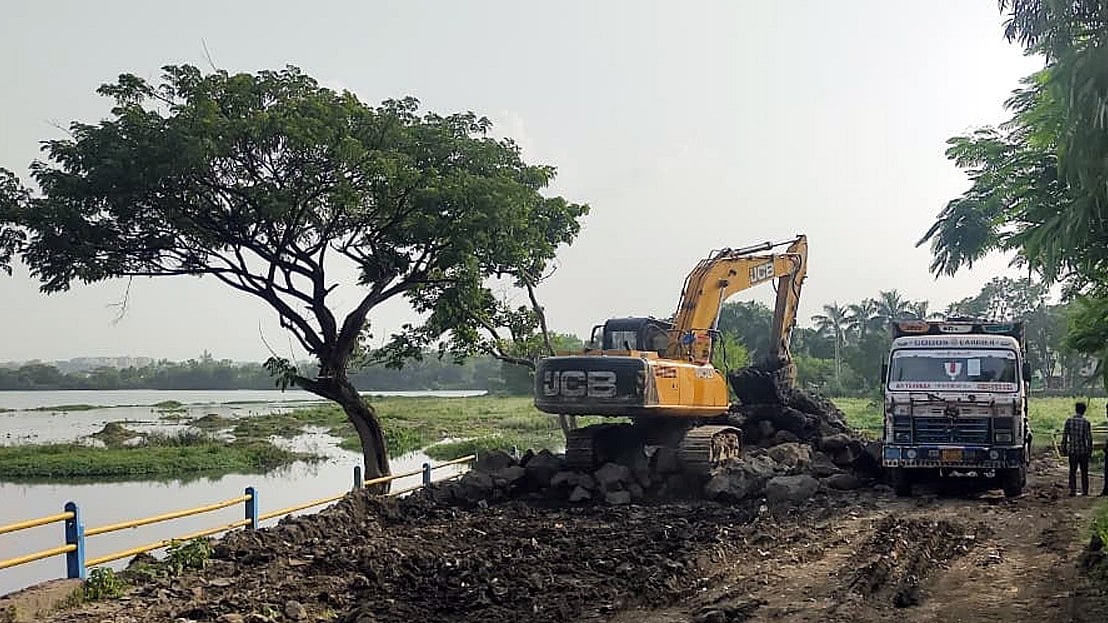
The Bhopal Municipal Corporation (BMC) has removed a temporary road-like structure from Shahpura Lake, just days before the National Green Tribunal (NGT) is set to hear the matter on July 20. The structure, built using dumped soil, rocks, and construction material, was constructed during desilting works and had raised concerns over alleged violations of wetland conservation norms.
The BMC had claimed that the structure was necessary to facilitate pre-monsoon desilting operations. However, environmental activist Nitin Saxena alleged that the dumped material had altered the lake's natural ecosystem and could harm its hydrology, biodiversity, and groundwater recharge. Saxena had submitted complaints to various regulatory authorities, seeking an independent inquiry into the matter.
The NGT's Central Zone Bench had earlier taken notice of alleged encroachments, pollution, and ecological degradation at Shahpura Lake and formed a joint committee to inspect the site and submit a report. The committee comprises representatives from the Urban Development and Housing Department, Water Resources Department, Central Pollution Control Board, and Madhya Pradesh Pollution Control Board.
According to Saxena, the BMC began removing the temporary road and clearing the dumped debris ahead of the NGT hearing. He also claimed that the civic body has committed another violation by carrying out unauthorized excavation and mining within the wetland while removing the structure.
The removal of the temporary road has triggered fresh allegations of environmental violations. The BMC's actions have been questioned, and the civic body has not responded to the allegations. The NGT hearing on July 20 is expected to shed more light on the matter.
Shahpura Lake is a significant wetland in Bhopal, and its conservation is crucial for the city's ecosystem. The lake is home to various species of birds and fish, and its water is used for irrigation and drinking purposes. The alleged violations of wetland conservation norms have raised concerns among environmentalists and locals, who fear that the lake's ecosystem may be irreparably harmed.
The NGT's decision to hear the matter has been welcomed by environmental activists, who hope that the tribunal will take strong action against those responsible for the alleged violations. The case highlights the need for stricter enforcement of environmental laws and regulations to protect India's wetlands and ecosystems.
The BMC's removal of the temporary road is seen as a attempt to rectify the situation ahead of the NGT hearing. However, the civic body's actions have been questioned, and it remains to be seen how the NGT will respond to the allegations.
In the meantime, environmental activists and locals are waiting with bated breath for the NGT's decision. The outcome of the hearing will have significant implications for the conservation of Shahpura Lake and other wetlands in India.
The case serves as a reminder of the importance of protecting India's environment and ecosystems. The government and regulatory authorities must take strong action against those who violate environmental laws and regulations, and ensure that those responsible are held accountable.
The NGT's hearing on July 20 is a crucial step towards ensuring that the alleged violations at Shahpura Lake are addressed, and that the lake's ecosystem is protected. The outcome of the hearing will be closely watched by environmental activists and locals, who hope that justice will be served and the lake's conservation will be ensured.
In conclusion, the removal of the temporary road at Shahpura Lake ahead of the NGT hearing has triggered fresh allegations of environmental violations. The case highlights the need for stricter enforcement of environmental laws and regulations to protect India's wetlands and ecosystems. The NGT's decision will have significant implications for the conservation of Shahpura Lake and other wetlands in India.