
Junnardeo Station Gets Modern Makeover
Junnardeo Railway Station to be dedicated to the nation, boasts improved amenities
'%3E%3Crect%20width%3D'96'%20height%3D'96'%20fill%3D'%23B3261E'%2F%3E%3Ccircle%20cx%3D'30'%20cy%3D'24'%20r%3D'44'%20fill%3D'%23fff'%20opacity%3D'.12'%2F%3E%3Ccircle%20cx%3D'60'%20cy%3D'74'%20r%3D'40'%20fill%3D'%23000'%20opacity%3D'.10'%2F%3E%3C%2Fg%3E%3Cg%20fill%3D'%23fff'%3E%3Crect%20x%3D'29'%20y%3D'49'%20width%3D'8'%20height%3D'19'%20rx%3D'1'%2F%3E%3Crect%20x%3D'39'%20y%3D'40'%20width%3D'9'%20height%3D'28'%20rx%3D'1'%2F%3E%3Crect%20x%3D'50'%20y%3D'45'%20width%3D'8'%20height%3D'23'%20rx%3D'1'%2F%3E%3Crect%20x%3D'60'%20y%3D'53'%20width%3D'7'%20height%3D'15'%20rx%3D'1'%2F%3E%3Crect%20x%3D'41'%20y%3D'34'%20width%3D'5'%20height%3D'6'%2F%3E%3C%2Fg%3E%3C%2Fsvg%3E)
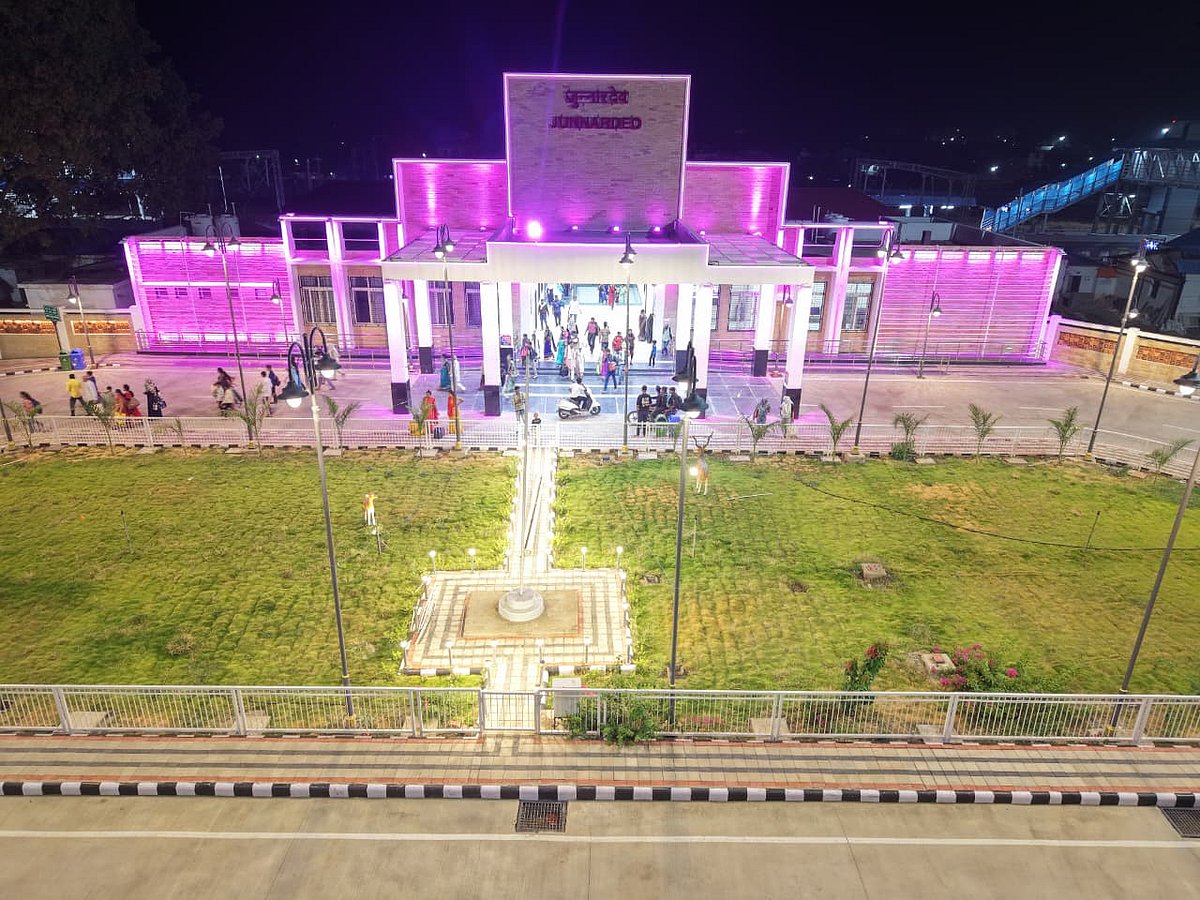
Junnardeo Railway Station in the Nagpur Division of Central Railway is set to be dedicated to the nation after undergoing a modern transformation. The station has been redeveloped at a cost of ₹25.40 crore as part of the Amrit Bharat Station Scheme.
The project aims to enhance passenger comfort, improve accessibility, and provide world-class amenities while preserving the local character of the region. Junnardeo Railway Station is an NSG-5 category station with three platforms, handling 10 trains daily.
The station has a rich legacy dating back to the pre-independence era, with the present station building constructed in 1936 on the Nagpur–Balaghat railway line. Junnardeo serves the Jamai Tehsil of Chhindwara district and is an important gateway to the tourist and industrial belt of south-eastern Madhya Pradesh.
The town is also the headquarters of the Kanhan Area of Western Coalfields Limited, home to Asia's largest coal wash plant and nearly 15 coal mines. Over the past decade, Junnardeo has witnessed remarkable growth in passenger traffic, with the average daily footfall increasing from 970 passengers in 2015-16 to 2,867 passengers in 2025-26.
The significant rise in passenger movement has necessitated the redevelopment of the station with modern passenger amenities and improved infrastructure. Major works executed include the construction of a 12-metre-wide foot over bridge, a new booking office-cum-waiting hall, and a reserved air-conditioned waiting room.
Additional features include two additional lifts on the existing foot over bridge, development of a 500-metre circulating area road, and landscaping with sculptures. The station also boasts covered parking for 90 two-wheelers and 15 four-wheelers, as well as renovated toilet blocks and a 300-metre compound wall.
The modern station design integrates architectural elements reflecting the local culture and heritage. The main entrance is connected to Chhindwara through the Junna road, providing easy access to passengers. The redevelopment of Junnardeo Railway Station is expected to improve the overall travel experience for passengers and boost the local economy.
The Amrit Bharat Station Scheme aims to transform railway stations across the country into modern and passenger-friendly hubs. The scheme focuses on enhancing passenger comfort, improving accessibility, and providing world-class amenities while preserving the local character of the region.
The redevelopment of Junnardeo Railway Station is a significant step towards achieving this goal. With its rich history, cultural significance, and growing importance as a tourist destination, Junnardeo is poised to become a major hub in the region. The modern amenities and improved infrastructure will provide a better travel experience for passengers and contribute to the overall growth of the region.
In conclusion, the modern transformation of Junnardeo Railway Station is a significant development that will improve the travel experience for passengers and boost the local economy. The station's rich history, cultural significance, and growing importance as a tourist destination make it an important hub in the region. The Amrit Bharat Station Scheme is expected to have a positive impact on the region, and the redevelopment of Junnardeo Railway Station is a major step towards achieving this goal.
The significance of this development extends beyond the local region, as it reflects the Indian government's commitment to improving the country's railway infrastructure. The modernization of railway stations across the country is expected to have a positive impact on the economy, tourism, and overall development of the region. As India continues to grow and develop, the importance of modern and efficient railway infrastructure will only continue to increase.
Therefore, the redevelopment of Junnardeo Railway Station is a major milestone in the country's efforts to improve its railway infrastructure. It is expected to have a positive impact on the local economy, tourism, and overall development of the region, and it reflects the government's commitment to providing modern and efficient railway infrastructure to its citizens.