India Approves First Dengue Vaccine QDENGA
India gets its first dengue vaccine, QDENGA, to fight the rising cases. Know its benefits and availability.
'%3E%3Crect%20width%3D'96'%20height%3D'96'%20fill%3D'%23B3261E'%2F%3E%3Ccircle%20cx%3D'30'%20cy%3D'24'%20r%3D'44'%20fill%3D'%23fff'%20opacity%3D'.12'%2F%3E%3Ccircle%20cx%3D'60'%20cy%3D'74'%20r%3D'40'%20fill%3D'%23000'%20opacity%3D'.10'%2F%3E%3C%2Fg%3E%3Cg%20fill%3D'%23fff'%3E%3Crect%20x%3D'29'%20y%3D'49'%20width%3D'8'%20height%3D'19'%20rx%3D'1'%2F%3E%3Crect%20x%3D'39'%20y%3D'40'%20width%3D'9'%20height%3D'28'%20rx%3D'1'%2F%3E%3Crect%20x%3D'50'%20y%3D'45'%20width%3D'8'%20height%3D'23'%20rx%3D'1'%2F%3E%3Crect%20x%3D'60'%20y%3D'53'%20width%3D'7'%20height%3D'15'%20rx%3D'1'%2F%3E%3Crect%20x%3D'41'%20y%3D'34'%20width%3D'5'%20height%3D'6'%2F%3E%3C%2Fg%3E%3C%2Fsvg%3E)
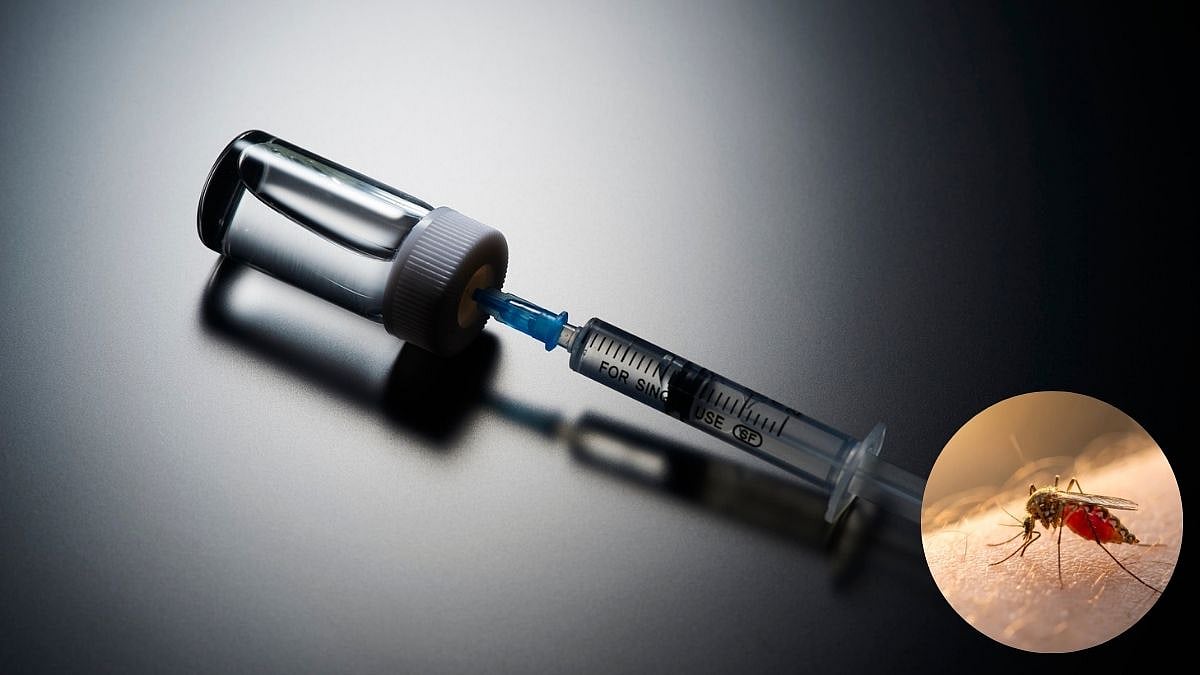
India has taken a significant step in combating dengue fever with the approval of QDENGA, the country's first dengue vaccine, by the Central Drugs Standard Control Organisation (CDSCO). Developed by Japanese pharmaceutical company Takeda, QDENGA offers protection against all four dengue virus serotypes.
The vaccine, also known as TAK-003, is a live, attenuated dengue vaccine administered in two doses, with the second dose given three months after the first. One of its major advantages is that it can be given to individuals regardless of their prior dengue infection history.
According to Dr. Rajiv Bahl, Director General of the Indian Council of Medical Research (ICMR), the dengue vaccine is entirely made in India, although the technology was initially developed by the National Institutes of Health (NIH) in the USA. The ICMR has played a crucial role in completing the development of the vaccine.
QDENGA has been shown to reduce the risk of hospitalization and severe dengue, which can lead to complications such as dengue hemorrhagic fever and dengue shock syndrome. While no vaccine provides 100% protection, it is expected to significantly lower the severity of the disease and reduce pressure on healthcare systems during dengue outbreaks.
The vaccine has already been approved in over 40 countries, including the European Union, the United Kingdom, Brazil, Indonesia, and Argentina. India's approval comes at a time when dengue is emerging as one of the country's biggest seasonal public health threats, with thousands of cases recorded every year, especially during the monsoon season.
Although QDENGA has received regulatory approval in India, its commercial launch will depend on manufacturing, supply, pricing, and distribution plans. Health authorities are expected to issue detailed recommendations regarding eligible age groups and vaccination guidelines.
The availability of QDENGA in India is expected to help reduce the burden of severe dengue infections, which can have a significant impact on the country's healthcare system. With its approval, India joins the list of countries that have taken a major step forward in the fight against dengue fever.
In the context of India's rising dengue cases, the approval of QDENGA is a significant development. The country has been struggling to combat the disease, which is spread by the Aedes mosquito. The vaccine is expected to play a crucial role in reducing the number of dengue cases and alleviating the pressure on the healthcare system.
In conclusion, the approval of QDENGA is a major milestone in India's fight against dengue fever. With its benefits and advantages, the vaccine is expected to make a significant impact on the country's public health landscape. As the vaccine becomes available in India, it is likely to bring relief to thousands of people who are affected by the disease every year.
The significance of QDENGA's approval extends beyond India's borders, as it highlights the country's commitment to combating mosquito-borne diseases. With the vaccine's availability, India is poised to become a model for other countries in the region, which are also struggling to combat dengue fever.
Overall, the approval of QDENGA is a major step forward in the fight against dengue fever, and its availability is expected to have a significant impact on public health in India and beyond.