IOC Won't Investigate Infantino Over Balogun Controversy
FIFA president Gianni Infantino won't face IOC investigation. Norway may file ethics complaint.
'%3E%3Crect%20width%3D'96'%20height%3D'96'%20fill%3D'%231B5E20'%2F%3E%3Ccircle%20cx%3D'30'%20cy%3D'24'%20r%3D'44'%20fill%3D'%23fff'%20opacity%3D'.12'%2F%3E%3Ccircle%20cx%3D'60'%20cy%3D'74'%20r%3D'40'%20fill%3D'%23000'%20opacity%3D'.10'%2F%3E%3C%2Fg%3E%3Cg%3E%3Ccircle%20cx%3D'48'%20cy%3D'48'%20r%3D'15'%20fill%3D'%23fff'%2F%3E%3Cpath%20d%3D'M43%2034%20Q50%2048%2043%2062'%20fill%3D'none'%20stroke%3D'%238a94a6'%20stroke-width%3D'2.4'%2F%3E%3Cpath%20d%3D'M47%2033%20Q54%2048%2047%2063'%20fill%3D'none'%20stroke%3D'%238a94a6'%20stroke-width%3D'1.8'%20stroke-dasharray%3D'1.5%203'%2F%3E%3C%2Fg%3E%3C%2Fsvg%3E)
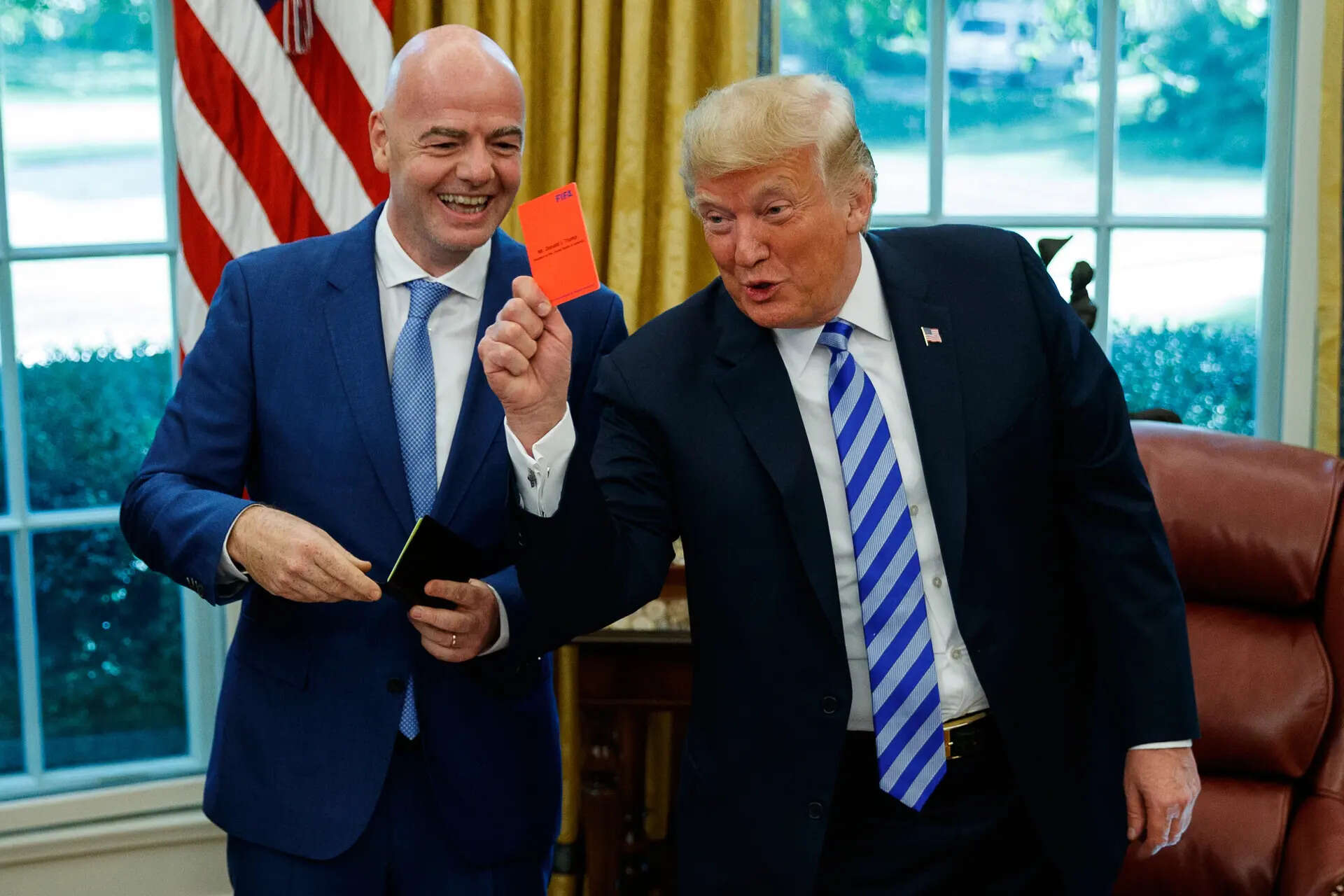
The International Olympic Committee (IOC) has decided not to investigate FIFA president Gianni Infantino over a complaint related to the reversal of Folarin Balogun's World Cup suspension. The controversy surrounding Balogun's red card and subsequent suspension reversal sparked a complaint, but the IOC has stated that it lacks jurisdiction over FIFA's internal governance matters.
The complaint was linked to the role of former US President Donald Trump in the controversy, although the exact nature of his involvement is unclear. Despite the IOC's decision not to investigate, Norway's Football Federation is considering filing its own ethics complaint against Infantino. This move suggests that the controversy is far from over.
FIFA has not yet commented on the ethics complaints or its decision regarding the suspension reversal. The organization's silence on the matter has only added to the speculation and debate surrounding the controversy. As the governing body of international football, FIFA's decisions and actions are under constant scrutiny, and the Balogun controversy has only highlighted the need for transparency and accountability.
The IOC's decision not to investigate Infantino is based on its jurisdictional limitations. The IOC is responsible for overseeing the Olympic Games and promoting the Olympic spirit, but it does not have the authority to interfere in the internal affairs of other international sports organizations, including FIFA. This means that any investigation or action related to the Balogun controversy will have to be taken by FIFA itself or other relevant authorities.
The controversy surrounding Balogun's suspension reversal has sparked a wider debate about the governance of international football and the role of external influences in the sport. The fact that Norway's Football Federation is considering filing an ethics complaint against Infantino suggests that there are concerns about the integrity of the decision-making process and the potential for external interference.
In the context of international football, the Balogun controversy is a significant development. It highlights the complexities and challenges of governing a global sport, where different interests and influences can come into play. The controversy also underscores the need for transparency, accountability, and good governance in international sports organizations.
The IOC's decision not to investigate Infantino may be seen as a missed opportunity to address the concerns and controversies surrounding the Balogun case. However, it is also a reflection of the jurisdictional limitations of the IOC and the need for other authorities to take action. As the controversy continues to unfold, it remains to be seen how FIFA and other relevant authorities will respond to the ethics complaints and the wider governance concerns.
In conclusion, the IOC's decision not to investigate Infantino over the Balogun controversy is a significant development in the ongoing debate about the governance of international football. While the IOC's jurisdictional limitations are clear, the controversy highlights the need for transparency, accountability, and good governance in international sports organizations. As the situation continues to evolve, it is likely that there will be further developments and potentially significant consequences for the sport.
Frequently asked questions
Why won't the IOC investigate Infantino?
The IOC lacks jurisdiction over FIFA's internal governance matters.
What is Norway's Football Federation considering?
Norway's Football Federation is considering filing an ethics complaint against Infantino.