India's Space Sector Booms With 440 Startups
India's space sector has 440 startups, up from 1 in 2014. Private sector investment and reforms drive growth.
'%3E%3Crect%20width%3D'96'%20height%3D'96'%20fill%3D'%23B3261E'%2F%3E%3Ccircle%20cx%3D'30'%20cy%3D'24'%20r%3D'44'%20fill%3D'%23fff'%20opacity%3D'.12'%2F%3E%3Ccircle%20cx%3D'60'%20cy%3D'74'%20r%3D'40'%20fill%3D'%23000'%20opacity%3D'.10'%2F%3E%3C%2Fg%3E%3Cg%20fill%3D'%23fff'%3E%3Crect%20x%3D'29'%20y%3D'49'%20width%3D'8'%20height%3D'19'%20rx%3D'1'%2F%3E%3Crect%20x%3D'39'%20y%3D'40'%20width%3D'9'%20height%3D'28'%20rx%3D'1'%2F%3E%3Crect%20x%3D'50'%20y%3D'45'%20width%3D'8'%20height%3D'23'%20rx%3D'1'%2F%3E%3Crect%20x%3D'60'%20y%3D'53'%20width%3D'7'%20height%3D'15'%20rx%3D'1'%2F%3E%3Crect%20x%3D'41'%20y%3D'34'%20width%3D'5'%20height%3D'6'%2F%3E%3C%2Fg%3E%3C%2Fsvg%3E)
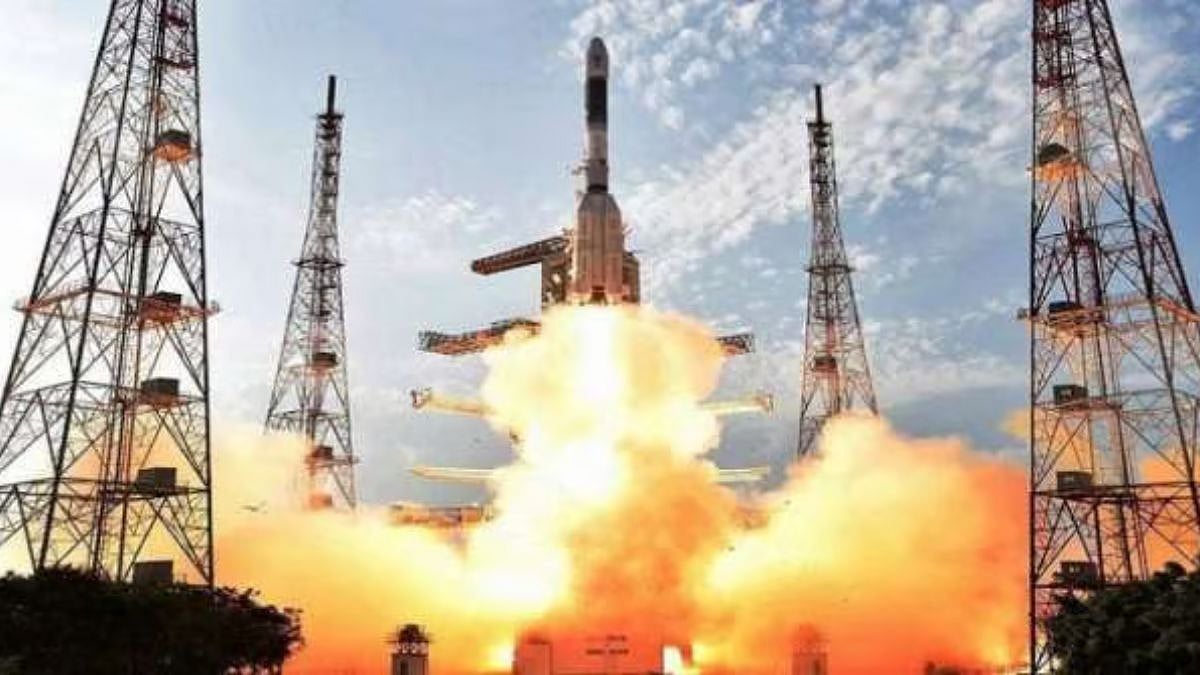
India's space sector has witnessed a significant expansion of private participation, with around 440 startups operating in the industry, according to ISRO Chairman and Department of Space Secretary Dr V. Narayanan. This marks a substantial increase from just 1 space startup in 2014.
The growth in the number of startups has followed reforms in the space sector, which opened greater opportunities for private companies and entrepreneurs. The reforms, introduced in 2020, have enabled the private sector to play a more significant role in the industry.
Dr Narayanan highlighted the achievements of India's space programme, which began in 1962. The programme has developed from its early years into a programme with applications directly serving ordinary citizens. Some of the country's major achievements include Chandrayaan-1's discovery of water molecules on the Moon, the advanced camera technology used on Chandrayaan-2, and the successful soft landing of Chandrayaan-3 near the lunar south pole on August 23, 2023.
The expansion of the private sector is also taking place as India pursues larger missions, including the Gaganyaan human spaceflight programme and the proposed Bharatiya Antariksha Station. The first module of the space station has been approved, with the target of establishing the station by 2035.
The private space sector has drawn over $618 million in investment, with more than eight commercial launches expected in FY2027-28. The growth of the private space sector is expected to drive the country's space economy, which is set to soar nearly fivefold to $44 billion by 2033.
The National Space Day celebrations, organised by ISRO's Space Applications Centre, included discussions on preparing young people for careers in space science and technology, expanding India's new space ecosystem, and developing international collaboration. Representatives from academic and research institutions, private space companies, and government agencies attended the event.
The theme of the event, 'Towards Viksit Bharat: Innovating, Collaborating and Aspiring to Global Space Leadership', reflected the country's ambition to become a global leader in the space industry. With its growing private space sector and ambitious missions, India is poised to play a significant role in the global space industry.
The growth of India's space sector has significant implications for the country's economy and its position in the global space industry. As the private sector continues to drive growth and innovation, India is likely to become a major player in the industry, creating new opportunities for investment, employment, and technological advancement.
In conclusion, India's space sector has witnessed a remarkable transformation, with the private sector playing an increasingly significant role. With its ambitious missions, growing investment, and expanding ecosystem, India is poised to become a global leader in the space industry, driving growth, innovation, and technological advancement.
Frequently asked questions
How many startups are operating in India's space sector?
Around 440 startups are operating in India's space sector.
What is the expected growth of India's space economy?
India's space economy is expected to soar nearly fivefold to $44 billion by 2033.